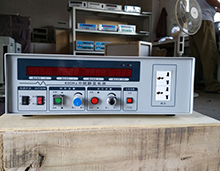


As electronic devices advance towards high precision, high stability, and high reliability, they demand a higher-quality power supply. The voltage regulation ratio (SV) is a critical indicator of the DC stabilized power supply's voltage regulation capabilities, also known as the voltage stability coefficient or stability coefficient. It measures the stability of the output voltage (VO) of the DC stabilized power supply when the input voltage (VI) changes, typically expressed as the percentage change in input and output voltages per unit output voltage. Voltage regulation formula. The current regulation ratio (SI) of the DC stabilized power supply is a primary target reflecting the load capacity of the DC stabilized power supply, also known as the current stability coefficient. It indicates the power supply's ability to suppress fluctuations in output voltage due to changes in load current (output current) when the input voltage remains constant. Under normal load current changes, the current regulation ratio of the DC stabilized power supply is usually expressed as the percentage change in output voltage per unit output voltage.