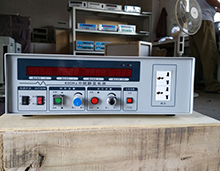


As electronic devices evolve towards higher precision, stability, and reliability, there is an increased demand for power supplies that can meet these requirements. The Voltage Regulation Ratio (SV) is a crucial indicator of the quality of a DC stabilized power supply's voltage regulation function, also known as the voltage stability coefficient or stability coefficient. It measures the stability of the output voltage (VO) of a DC stabilized power supply when the input voltage (VI) changes, typically expressed as the percentage change in input and output voltages per unit output voltage. Voltage Regulation Formula. The Current Regulation Ratio (SI) is a primary target reflecting the load capability of a DC stabilized power supply, also known as the current stability coefficient. It indicates the power supply's ability to suppress fluctuations in output voltage (VO) due to changes in load current (output current) when the input voltage remains constant. Under regular load current changes, the current regulation ratio of a DC stabilized power supply is usually expressed as the percentage change in output voltage per unit output voltage.