
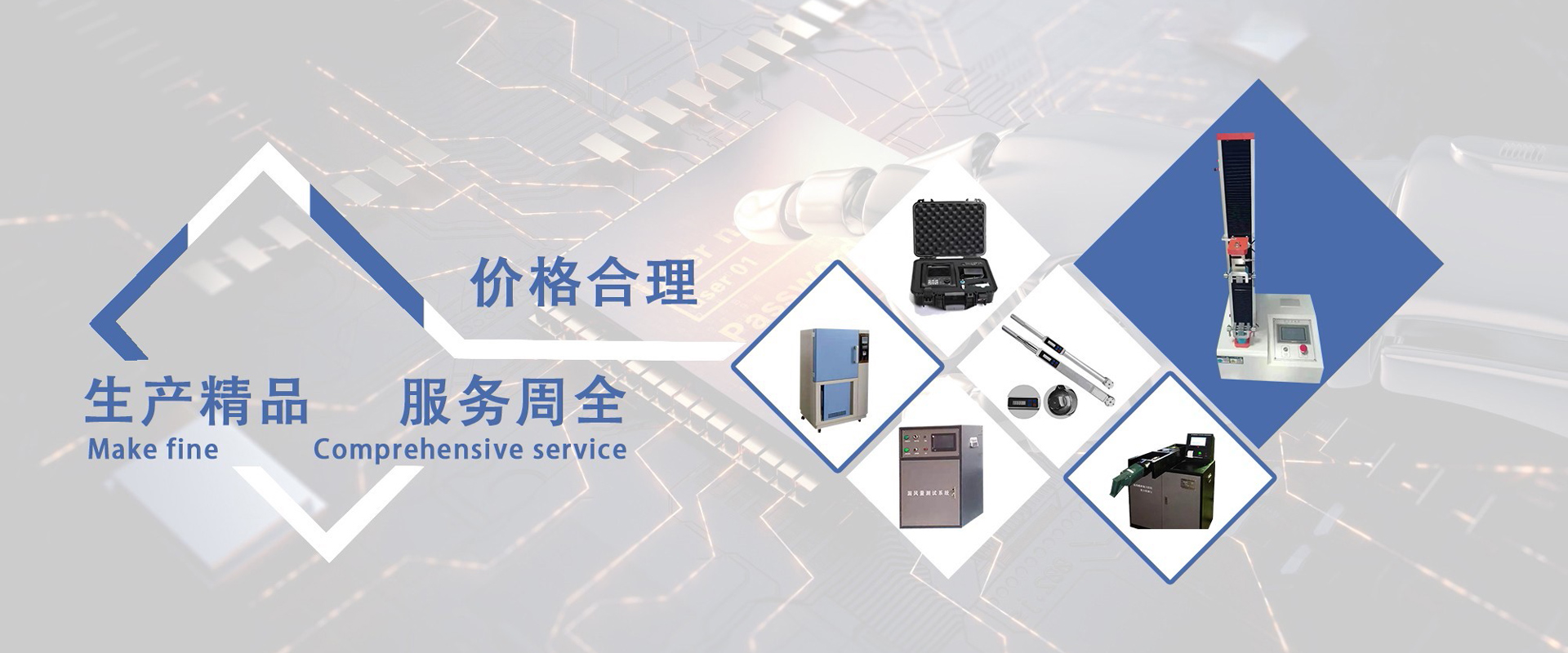


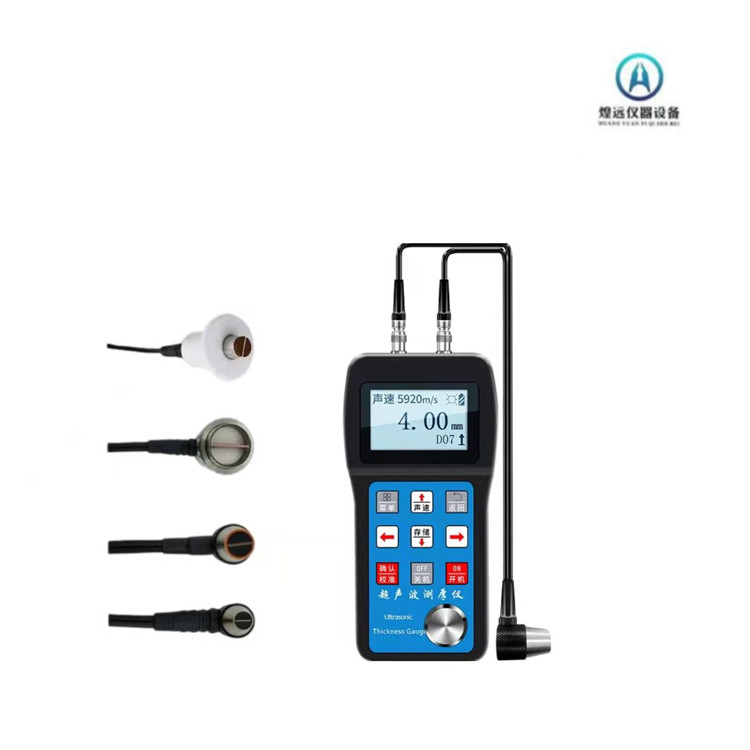
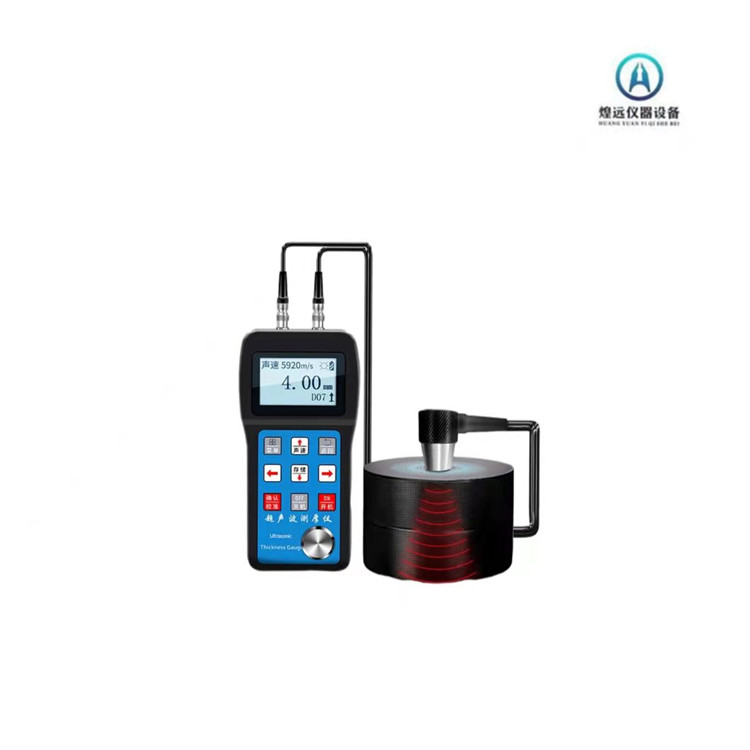
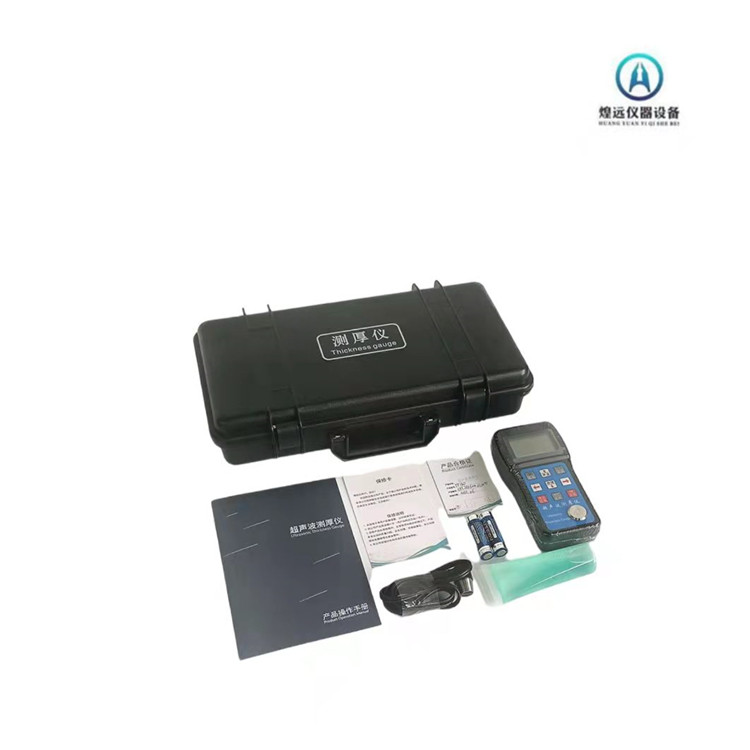
This instrument is an intelligent ultrasonic thickness gauge, utilizing high-performance, low-power microprocessor technology. Based on the principle of ultrasonic measurement, it can measure the thickness of metals and various other materials. It also allows for the measurement of the speed of sound in materials, monitoring various pipelines and pressure vessels in production equipment, and assessing the degree of thinning due to corrosion during use. Additionally, it can provide precise measurements for various sheets and components. This instrument is widely applicable in numerous fields, including petrochemical, chemical, metallurgical, shipbuilding, aerospace, and more.
Ultrasonic thickness gauges measure thickness by using ultrasonic pulses generated by the probe, which pass through a coupling agent to the object. Part of the ultrasonic signal is reflected from the object's bottom surface, and the probe receives the echo reflected from the object's bottom surface. It calculates the round-trip time of the ultrasonic waves and then displays the result.
Thickness value calculation formula:
H: Measure Thickness V: Measure Thickness t: The propagation time of ultrasonic wave for one round trip in the specimen
Work Conditions
Ambient Temperature: Operating Temperature-20°C to +50°C Storage temperature -30°C to +70°C Relative humidity ≤90% Surroundings free of intense vibration, strong magnetic fields, corrosive substances, and severe dust.
Technical Specifications
Measurement Range:0.75~600mm
Material Sound Velocity:1000~9999m/s
Measurement Cycle: Single-point measurement6 times per second
Resolution :0.01mm
Measurement Mode:R-B1) Transmitting a pulse to one echo
Office Hours:≥30h
Operating Temperature:-10℃~40℃
Product Weight: Approximately245g
Operation Method
1 Single Measurement Method
Apply the coupling agent evenly to the side area.
② Precisely couple the probe with the surface of the material to be measured
③ The screen will display the thickness of the measured area.
2 Continuous Measurement Method
Apply the coupling agent evenly to the side area.
②Couple the probe to the workpiece and move it along the path; the instrument will display the current measurement value in real-time, from which you can obtain the thickness value of the side body.

