


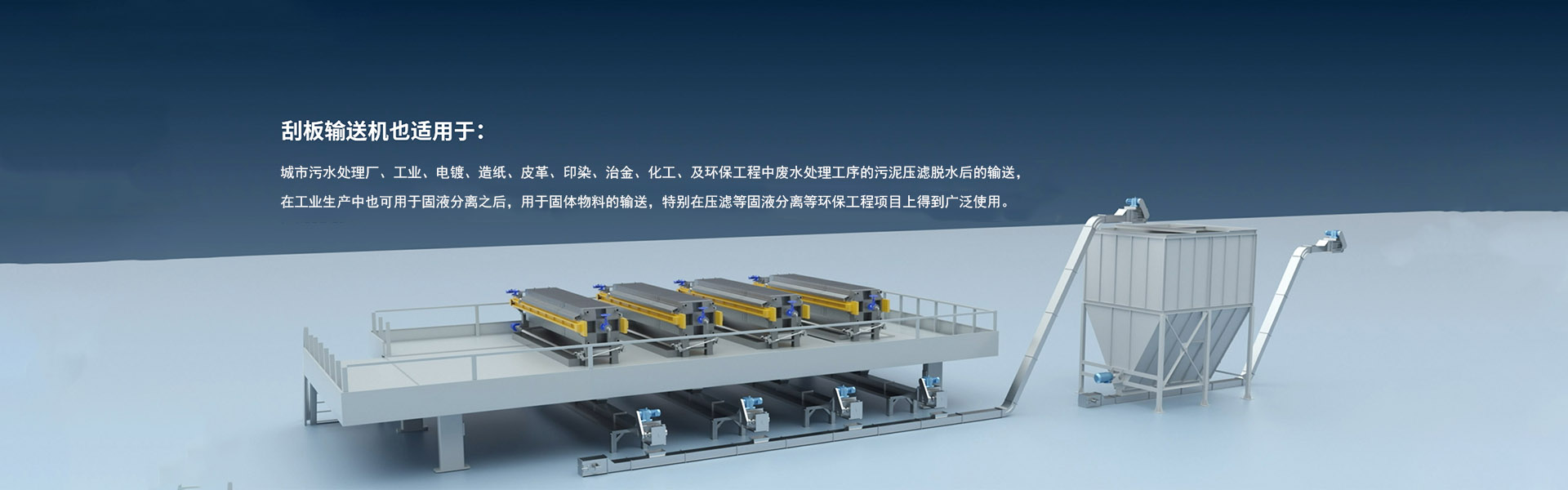

The troughed chain conveyor generates internal friction between materials during horizontal conveying due to the pressure exerted by the moving scraper chain in the direction of motion and the weight of the material itself. This friction ensures a stable state between the layers of material and is sufficient to overcome the external friction caused by the movement of materials within the trough, allowing the material to form a continuous, cohesive flow for conveyance. In vertical lifting, the material experiences a lateral side pressure in the direction of the moving scraper chain, creating internal friction within the material. Simultaneously, the continuous feeding at the lower horizontal section causes the lower materials to exert a pushing force on the upper materials. This friction and pushing force are sufficient to overcome the external frictional resistance and the weight of the material as it moves within the trough, enabling the conveyor to lift the material in a continuous, cohesive flow.
The drive sprocket of the scraper conveyor uses concave teeth, which offer greater adaptability to domestic circular chains compared to convex teeth sprockets. It remains unbroken even when the chain is severely worn and the pitch increases, significantly extending the replacement cycle of the chain. The chain tensioning adjustment employs a worm gear reducer with a self-locking tensioning mechanism, making it easy to adjust and operate, while ensuring synchronized tension on both sides. The high-strength mining circular chain of the scraper conveyor serves as the conveying chain, with a large carrying capacity and wear resistance. Material分流 prevents the return chain and scraper from contacting the material, thus avoiding chain and scraper accidents caused by sudden increases in feed quantity and blockages in the machine chamber.
