


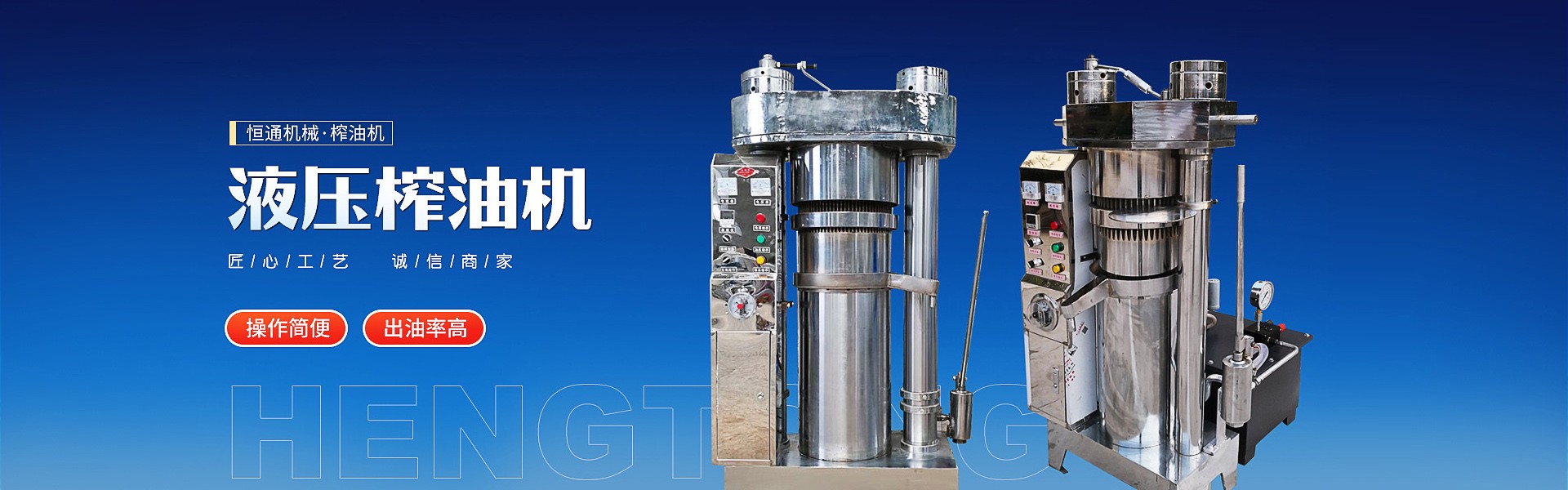

Henan Province Zhengzhou City Hengtong Machinery Manufacturing Factory is a professional manufacturer of oil presses, dedicated to the research and production of oil presses for many years, providing high-quality services to a wide range of customers.Oil Press MachineEquipment is our responsibility at Hengtong Machinery, and providing professional oil press services to our clients is our duty. Today, Hengtong Machinery Manufacturing will discuss the different methods of pressing oil from various raw materials.
1. Soybean Oil Press Machine: The traditional soybean pretreatment extraction process is relatively simple. Advanced soybean pretreatment extraction processes can utilize techniques such as peeling, extrusion expansion, and wet-heat treatment, and can also combine quality adjustment before soybean peeling with drying, omitting the softening process, and simplifying the pretreatment process flow.
2. Sesame Oil Press Method of Sesame Extraction: In China, the extraction of sesame oil mainly includes water replacement method, pressing method, and pre-pressing solvent extraction method. The water replacement method is predominant, and the sesame oil extracted through this method is known as "small mill oil," which boasts high quality and a unique aroma, deeply favored by the Chinese people. It is primarily used as a dressing oil for cold dishes and seasoning. However, the production scale of the water replacement method in China is small, with scattered processing, outdated technology, outdated equipment, low labor productivity, and high residual oil content in the by-products (usually 9-12% on a dry basis), with high moisture content (the moisture content in the by-products can reach about 65%). It is prone to spoilage and odor, leading to very low utilization rates. Additionally, due to the high temperature during the roasting process, some components may undergo caramelization and become bitter under high-temperature conditions, which all negatively impact the quality of the by-products.
3. Cottonseed Pressing Method for Fully Automatic Oil Extractors: Cottonseeds contain gossypol, which requires high-moisture steaming and roasting during the pretreatment process to reduce the content of gossypol in crude oil. Refined cottonseed oil is completely safe for consumption and improves the quality of crude cotton oil. However, the gossypol in cottonseed meal affects its feed value. The meal needs to be detoxified before it can be used as feed. To date, there is no ideal detoxification process.
4. Rapeseed Oil Press Technology: In recent years, the development of rapeseed oil technology, especially for low erucic acid and low glucosinolate rapeseed, has seen the rise of rapeseed skin removal oil extraction, cold pressing oil extraction, and extrusion expansion oil extraction methods. The products include green rapeseed oil and feed rapeseed meal.
After years of toiling in the oil press machine market, Hengtong Machinery has gradually established our own production and sales style. A pragmatic approach with strict self-discipline is more persuasive than anything else. Hengtong Machinery, as an oil press manufacturer, clearly understands that equipment safety is crucial to the downstream industry and even the personal safety of consumers. Therefore, we uphold stringent standards to ensure the quality of our equipment.
News Center Co., Ltd.
