

 通过认证
通过认证 
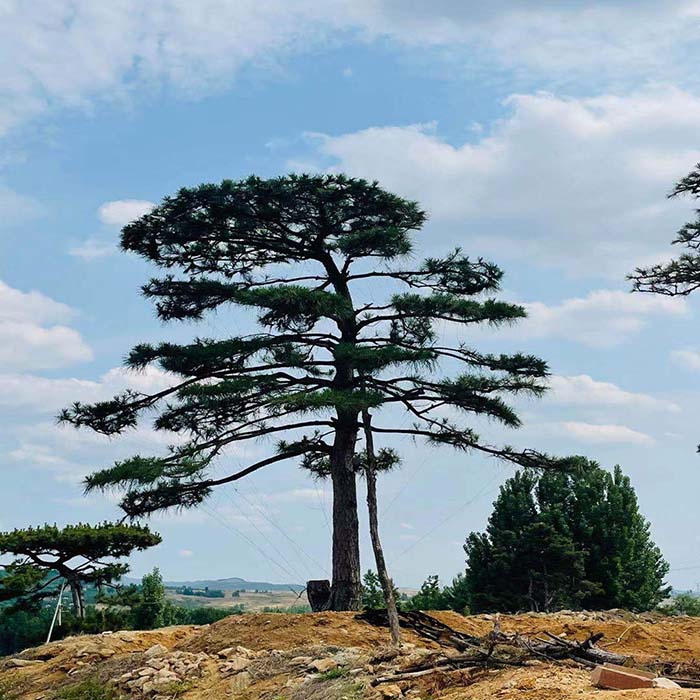
Large Japanese Black Pines, such as these towering conifers, require infrequent watering. Overwatering can lead to root rot and other issues. What should be done during the rainy season?
1. Fill the soil to elevate the planting plane; or, create proper drainage ditches to lower water levels.
2. Select the waterlogging-resistant variety of black pine, but it's important to note that they are merely waterlogging-resistant, not aquatic plants, and should not be planted in areas that are frequently submerged in water.
3. Raised bed and ridge planting elevate the terrain.
4. Utilize loose and permeable soil. Particularly for seedling trees, when preparing nutrient soil (planting soil), it is essential to consider using sandy loam, rather than relying solely on clayey soil with strong cohesion.
5. For soils with poor permeability and high粘性, consider adding a 10-centimeter layer of gravel at the bottom of the planting hole when transplanting black pine trees to prevent and reduce waterlogging damage.
In addition to the aforementioned measures, the Shaping Black Pine Base must also prepare drainage equipment in advance: prepare for the worst, and have tools ready for clearing and draining, such as pump machines for drainage, in case the water intake is blocked.