



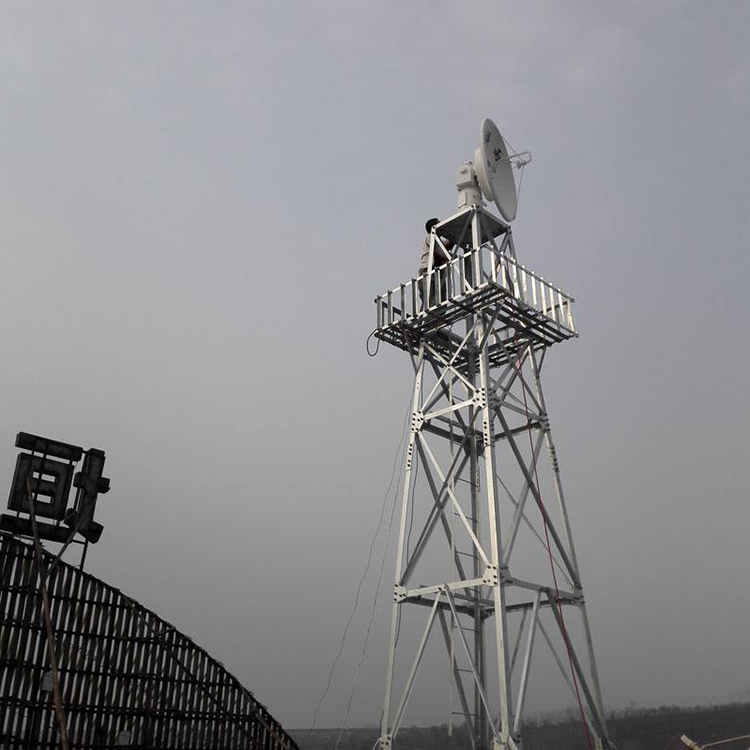

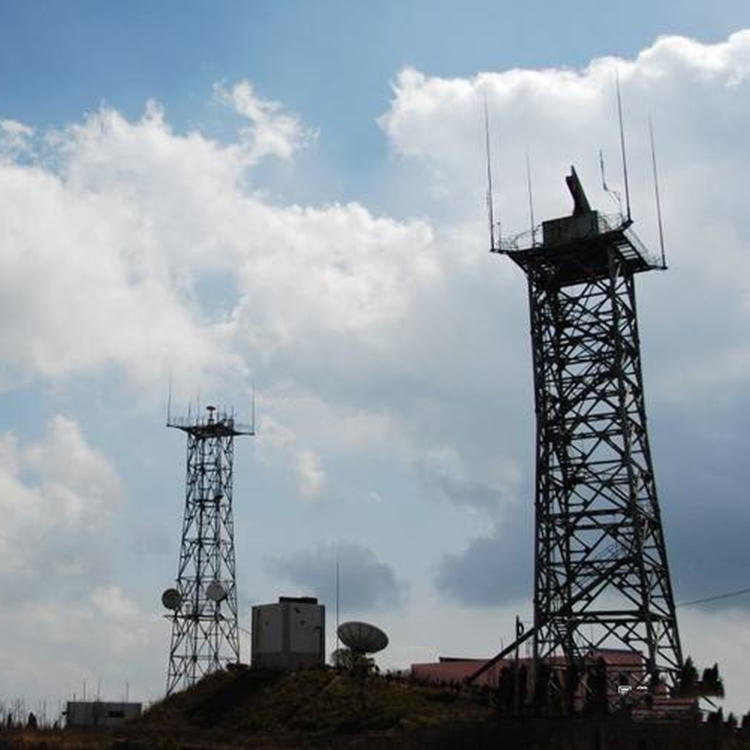

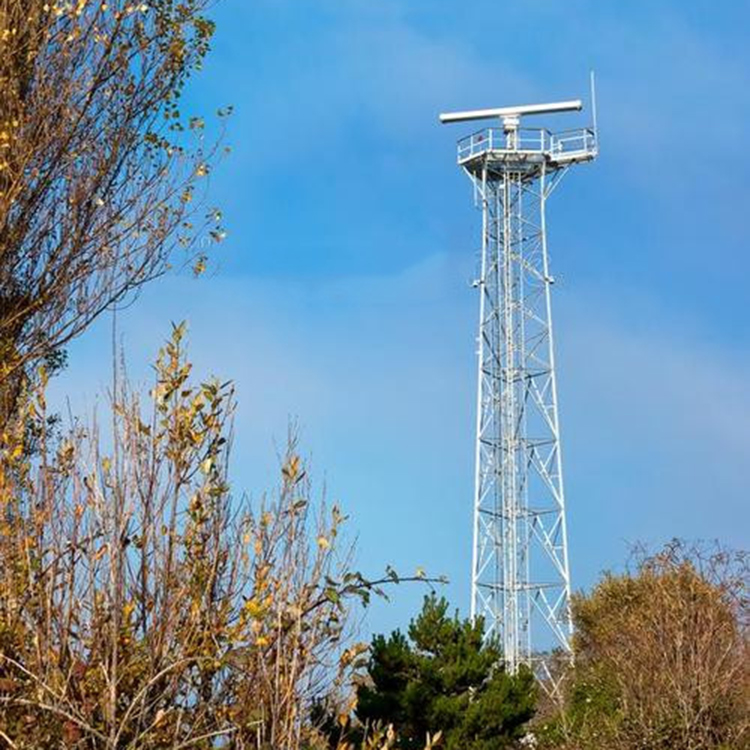



Radar is a radio device that uses radio waves to determine the location of objects. To avoid interference from surrounding buildings, radar towers are typically as tall as 100 meters.
Approximately m Hz, due to the requirements of the radar's performance, the base frequency of the radar tower must not be less than 1.0 Hz. Through extensive calculations and analysis, several improvements have been identified.
The regularity of the fundamental frequency of high radar towers. Radar towers are extensively used in modern applications, both on land and at sea, in traffic and other applications, for positioning
Position, speed measurement, search, etc. Additionally, the seismic response of the radar tower was analyzed using the response spectrum method, time-history analysis, and random vibration method. Calculations
The results indicate that the radar tower meets the seismic code requirements for inter-story displacement.
Tower Structure:
The entire steel tower is primarily composed of three main parts: the tower head, the tower body, and the tower legs. For guyed towers, an additional guy part is included. The tower head extends upwards from the tower legs to the tower frame section.
Sharp changes (represented by a break in the line) above the specified section are the tower head. If there is no sharp change in cross-section, the part above the lower horizontal brace is considered the tower head. Tower leg
Above the base, the section of the tower frame is called the tower leg, the tower body, and the part between the tower leg and the tower frame is called the tower body.
Technical Specifications:
1. Basic Wind Pressure: w0 = 0.4 - 0.8 KN/m²
2. Seismic fortification intensity: 8 degrees and below
3. Foundation bearing capacity: 100 and 200 KN/m²
4. Ice Thickness: ≤10mm
5. Verticality: ≤1/1000
6. Corrosion Treatment: Hot-Dip Galvanizing
Technical Specifications:
1. Code for Design of Lightning Protection for Buildings (GB50057-94)
2. Tall Structure Design Code (GBJ135-90)
3. Steel Structure Design Code (GB50017-2003)
4. Steel Tower Construction and Acceptance Code (CECS 80:2006)
