

Insulating Glass:
1. Concept: Insulated glass is an energy-efficient glass product composed of two or more glass panes separated by an effective spacer and sealed around the edges, creating a dry gas space between the glass layers for insulation and heat retention. Insulated glass comes in double and multi-layered configurations, with double-layer being the most common. Transparent glass, reflective glass, low-e glass, or tempered glass can be used as the base material for insulated glass. Insulated glass is typically manufactured in a factory and is not formed on-site through installation.
2. Features: Excellent optical performance; thermal insulation and energy consumption reduction; condensation prevention; good soundproofing properties.
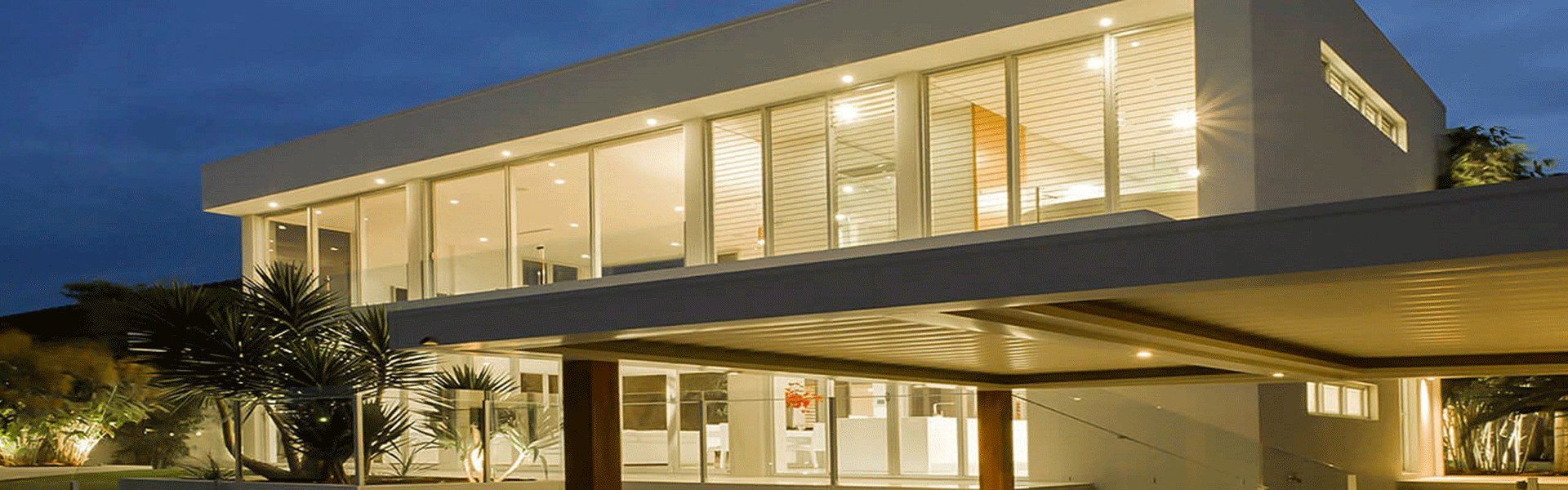
3. Application: Insulating glass is primarily used in buildings with high requirements for thermal insulation, sound insulation, and other functions, such as hotels, residential complexes, hospitals, shopping malls, office buildings, etc., and is also widely employed in vehicles and ships.
Layered Glass:
1. Concept: This refers to a type of composite glass product made by bonding two or more glass sheets together with PVB (polyvinyl butyral) resin film through heating and pressure. The base materials for producing the interlayer glass can be float glass, tempered glass, colored glass, heat-absorbing glass, or heat-reflective glass, among others. The number of layers in the interlayer glass can range from 2 to 9, with options including 3, 5, and 7 layers.
2. Features:
Transparency is high.
2) The impact resistance is several times higher than that of ordinary flat glass. By combining multiple layers of ordinary glass or tempered glass, high-impact-resistant safety glass can be produced.
3) Due to the adhesive properties of PVB film, glass shards will not scatter and injure people even when broken.
4) Typically made with various types of original glass, laminated glass can also feature durability, heat resistance, moisture resistance, and cold resistance, among other properties.
3. Application: Laminated glass offers high safety, commonly used in buildings for high-rise windows, skylights, stair railings, and high-security areas requiring impact resistance, such as shops, banks, display windows, partitions, and underwater construction projects.
