





详情描述
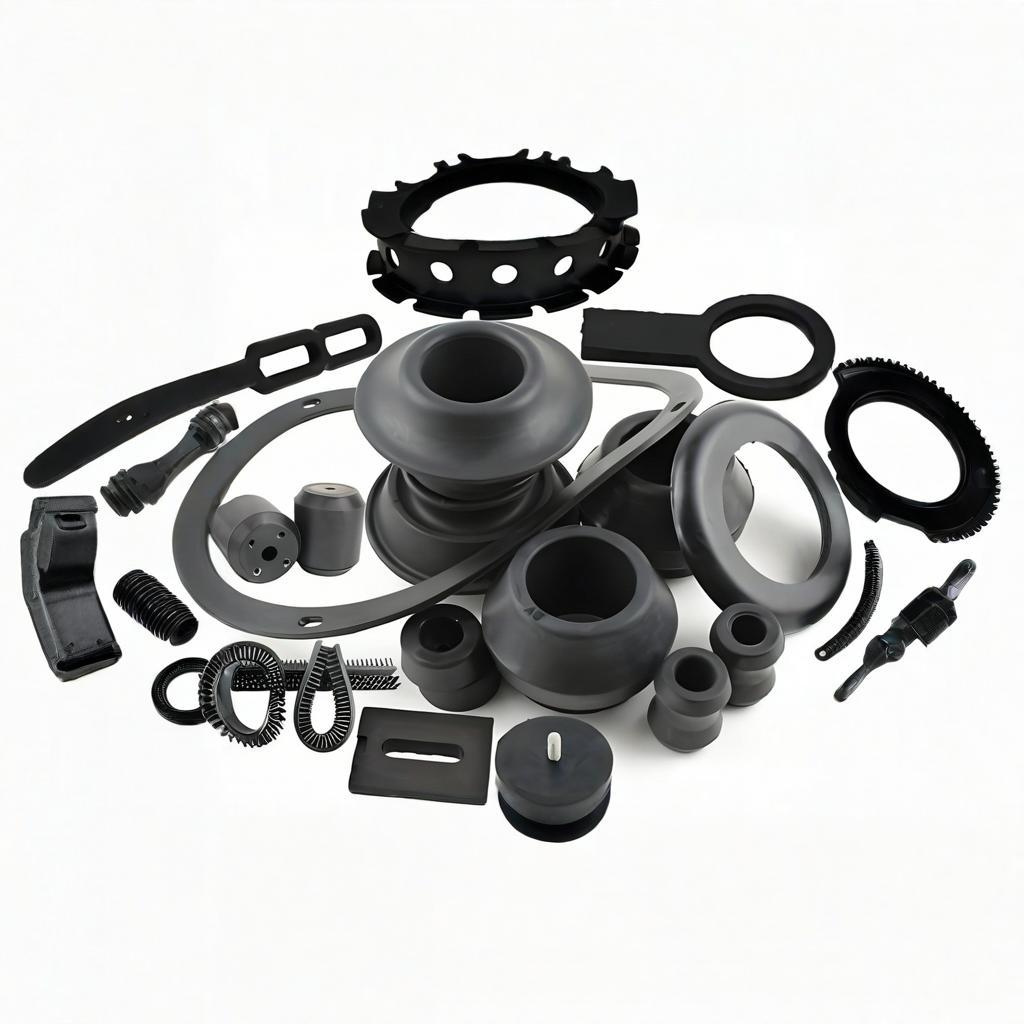
Rubber parts are manufactured fromRubber (Natural rubber or synthetic rubber)Core materials are processed into functional components through vulcanization and molding techniques, leveraging the core properties of rubber such as "high elasticity, sealing, shock absorption, and insulation." These components are widely used in industries, automotive, electronics, and daily commodities, serving as indispensable basic accessories in various equipment and products.
Core Features (Determining Core Applications)
- High elasticityWith high tolerance for deformation (tensile, compressive), it can quickly return to its original shape after the external force is removed, key for shock absorption and cushioning (such as shock absorbers, seals).
- Sealing PerformanceTightly seals contact surfaces, effectively preventing gas and liquid leakage (such as water, oil), commonly used for pipe and equipment interfaces (e.g., O-rings, oil seals).
- Weather-resistant / Chemical-resistantSome synthetic rubbers (such as nitrile rubber, fluoro rubber) can withstand oil, acids, alkalis, and extreme temperatures (-50℃ to 200℃), suitable for complex environments (like automotive engine seals, chemical pipeline gaskets).
- Insulating / Anti-slipRubber is non-conductive and has a high coefficient of friction, making it suitable for insulating components (such as wire sheaths) or anti-slip parts (such as anti-slip mats, rubber shoe soles).
In summary, rubber components are functional parts made from natural or synthetic rubber, relying on core properties such as high elasticity, sealing, shock absorption, and insulation. They are widely used in industries such as automotive, machinery, electronics, and everyday products, commonly in the form of O-rings, shock absorbers, oil seals, and silicone buttons. Their performance can be adjusted by modifying the raw materials to fit various applications.
All products are custom-made, with quotes based on specific requirements and no fixed prices. Please contact for inquiries.


