


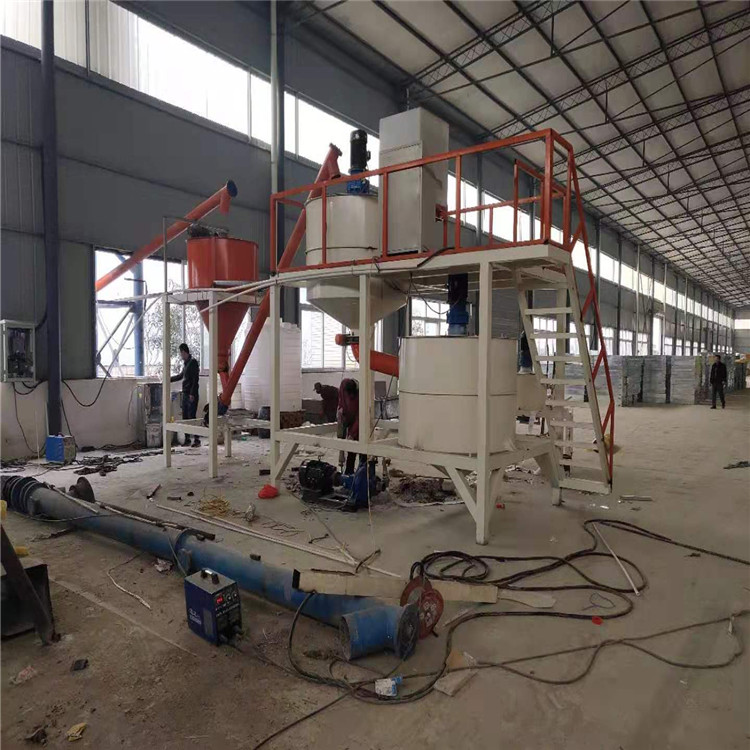
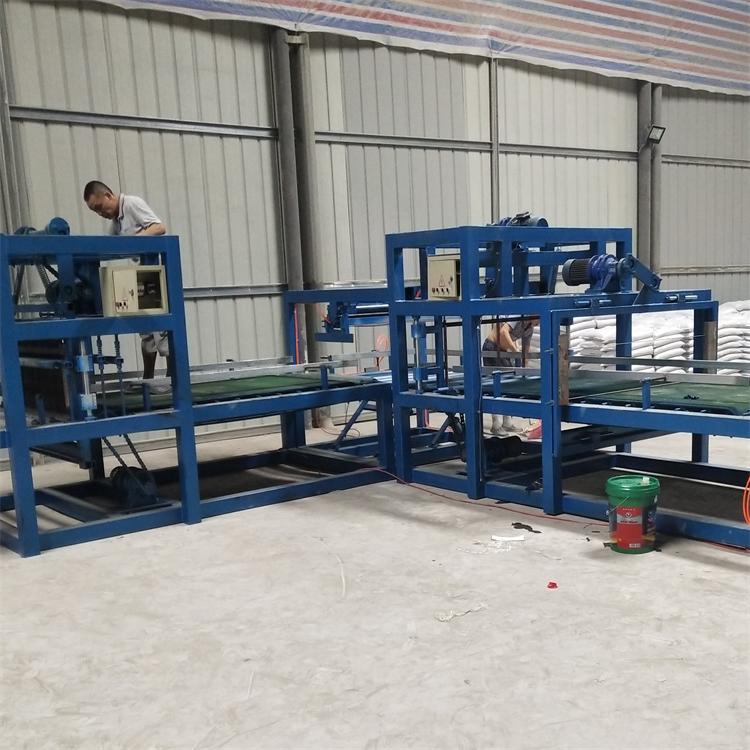
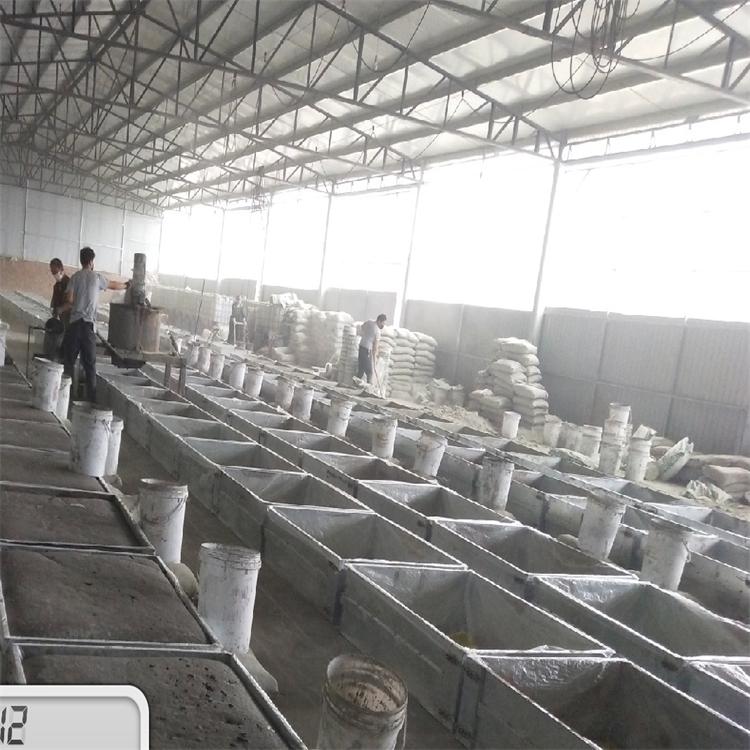


 Cement foamed thermal insulation board equipment is made from fly ash, ordinary silicate (rapid-setting cement), and a small amount of stabilizing agent, foaming agent, and calcium fiber material as raw materials. It undergoes scientific mixing with water, casting, and initial curing for a certain period to form a certain strength green body. After demolding, it is peeled, cut, and sliced, followed by heat-shrink packaging. After a period of curing, it is inspected and released upon passing quality checks. The cement foamed thermal insulation board equipment is a complete production line, utilizing full automatic control, quantitative feeding, ensuring production process accuracy, reducing labor costs, and improving efficiency. More importantly, the produced thermal insulation boards have high strength, uniform pores, high closed-cell rate, no spalling, non-breakable during drilling, high fire resistance, and no harmful gases, making them widely used in the market.
1. Our company utilizes an automatic feeding, weighing, mixing, casting, and foaming system to ensure uniformity in feeding, mixing, and casting processes, also enhancing production efficiency while saving 3-4 laborers.
2. The cutting system is fully automatic as well, with automatic loading, peeling, cutting, flipping, and slicing. This reduces costs and enhances production efficiency. This process also minimizes the land area required and employs wet cutting to avoid the generation of dust.
3. The packaging uses shrink-wrap film, which is beneficial for the maintenance of the finished products. The equipment can be customized according to customer requirements, and can not only package 300*300, but also 600*300 and more.
Compared to traditional exterior insulation boards, the properties of fire-resistant insulation boards
1. Fire and Insulation: Foam concrete thermal insulation boards are A1-rated inorganic fire-resistant materials, with a fire resistance limit exceeding 3 hours and do not produce toxic gases in high temperatures or during fires. Due to their closed cell rate of >95%, they offer excellent insulation properties.
2. Excellent thermal insulation: The product has a light weight and dry density of 180-250 kg/m3; low thermal conductivity, less than 0.06 W/m.k; low water absorption rate, less than 8%; ideal for exterior wall insulation and heat insulation materials.
3. High compressive strength and strong adhesion: The foamed cement thermal insulation board has a high compressive strength over 0.5Mpa; the system materials have good compatibility, with high bonding strength to the walls; the board has a low drying shrinkage value, no hollowing or cracking; and strong wind pressure resistance.
4. Excellent Soundproofing: Foam cement is a material with many sealed pores, making it an excellent soundproofing material. It provides good soundproofing effects, reduces noise interference, and improves living conditions.
5. Long Service Life: The system boasts excellent stability, high resistance to carbonization, aging, and freezing, and superior weather resistance, matching the lifespan of the building. The current design lifespan of buildings is 50-100 years, while the lifespan of organic materials is typically 20-25 years, resulting in high re-construction costs, significant environmental pollution, and inconvenience to people's production and daily life.
6. Easy Installation and Shorter Cycle: The specialized mortar is directly bonded, easy to handle, and allows simultaneous construction, significantly reducing the construction period.
7. Energy-saving, eco-friendly, and waste utilization: Made primarily from cement and fly ash, this material does not burn or emit toxic gases at high temperatures, is non-radioactive, and is a safe and eco-friendly product. No harmful gases are emitted during production, construction, or use, and there is no harm to humans from dust from mineral wool-like materials. After the building is decommissioned and demolished, the material can be crushed and reused, causing no environmental pollution and achieving sustainable production. Additionally, as a waste utilization product, it complies with the national policy on energy conservation and emission reduction in the industry.
