


Material Differences
Rubber tracks are a high-elastic polymer compound, made from the latex of rubber trees, rubber grass, and other plants, offering elasticity, insulation, permeability, and breathability. They are categorized into natural rubber and synthetic rubber. Natural rubber is derived from rubber trees, rubber grass, and other plants. Synthetic rubber is composed of various monomers. Rubber products are widely used in both industrial and daily life applications.
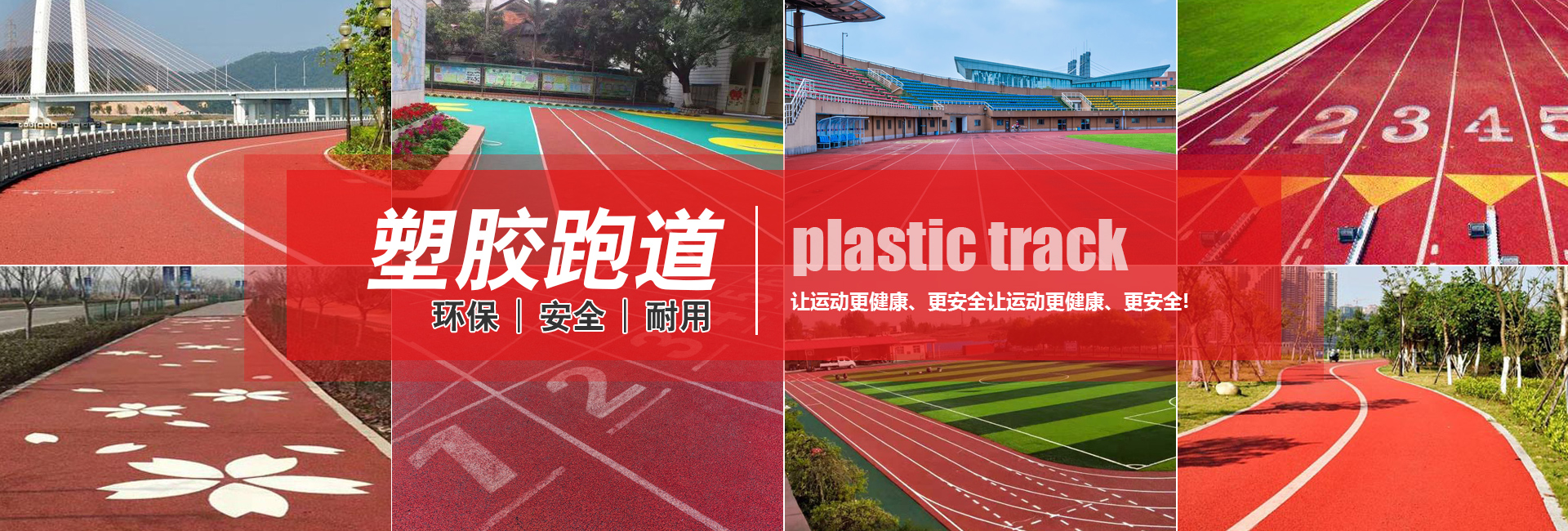
The plastic on the plastic track is primarily composed of organic or inorganic elements such as carbon, oxygen, hydrogen, and nitrogen. The finished product is the liquid dissolved during the production process. Therefore, it can be heated and melted, pressurized and moved, cooled, and hardened to form various shapes. This large and diverse material is called plastic.
II. Differences in Construction Methods
Rubber tracks are typically pre-rolled and directly packaged for on-site delivery, requiring high precision in the ground's levelness.
Plastic tracks should be evenly transported to the construction site, with minimal requirements for ground flatness.
Section 3: Differences in Service Life
Preformed rubber tracks have a normal service life exceeding 10 years. Even after more than 4 years, the surface texture shows minimal change and is resistant to particle loss and damage.
The normal lifespan of a plastic track is three years. EPDM rubber granules are prone to appear on the anti-slip surface, leading to shedding, cracking, and wearing off on the starting stretch of the track.
Recyclable Differences
Rubber tracks are difficult to dispose of at the end of their service life, as the materials from废弃的跑道 cannot be recycled. Burning and landfilling waste a significant amount of energy and harm the environment.
At the end of a plastic track's lifespan, it can be recycled into rubber, significantly reducing environmental damage and energy waste.
Section V: Price Variations
Rubber Track Pricing: Made primarily with eco-friendly materials and raw materials, rubber tracks are slightly more expensive than standard plastic tracks.
Plastic track prices are composed of polyurethane pre-polymer, mixed polyether, waste tire rubber, ternary ethylene rubber granules or polyurethane granules, pigments, additives, fillers, and more. The materials are relatively affordable. Prices generally range around $100 to $200.
News Center Co., Ltd.
