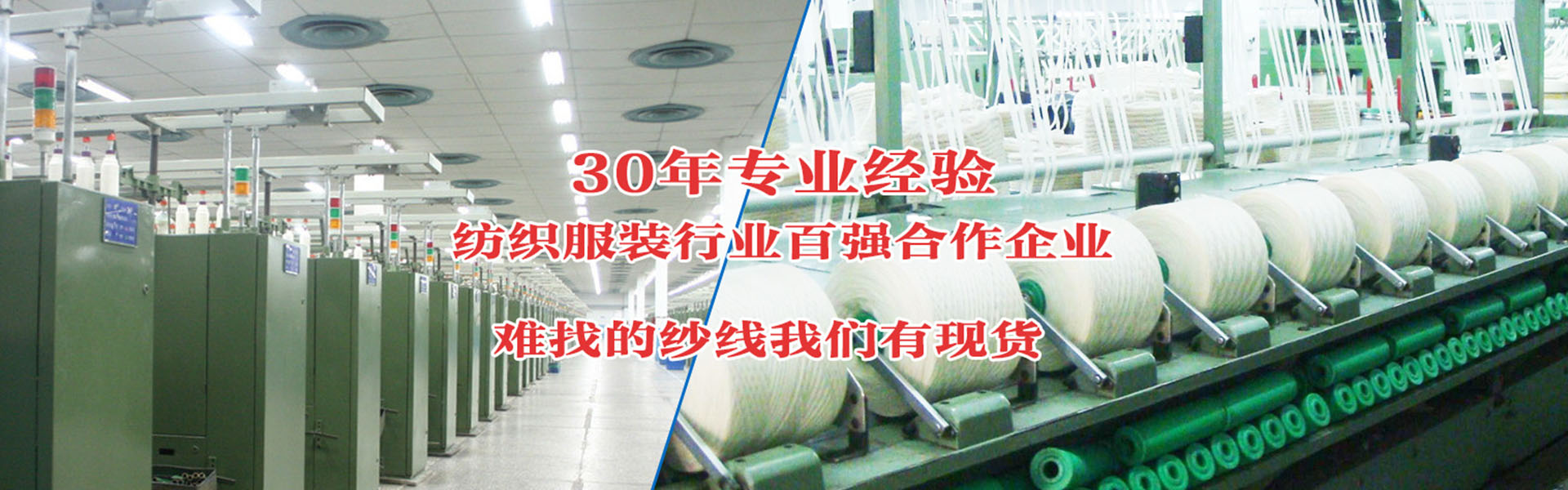

Henan QiangNian Textile specializes in the production and sales of "specialized, refined, unique, and innovative" yarn varieties, including high twist yarn, low twist yarn, high strength yarn, vortex spun yarn, and anti-twist yarn. For more details, please search "Henan QiangNian" on Baidu.
Henan QiangNian (Wei Shu He Sheng) Product Hotline: 13903781186, Mr. Liu
The characteristic of this type of weft slant is that the weft yarns are mostly straight, with an inclination of approximately 30° to the horizontal standard. This type of weft slant occurs during the dyeing and finishing process when the fabric is pulled forward under tension. When there are variations in force at the warp and weft intersections, the weft yarns cannot progress horizontally evenly, resulting in differences in speed or hesitation in their advance, which causes the weft slant. The causes are multifaceted.
Textiles from the weaving factory sometimes have tight edges or both edges tight with a loose center, which can cause rolls during rope processing, making it difficult to open the width and prone to straight weft skewing.
b. Occasionally, when fabric is being cut at the weaving mill, the cuts are not straight. During the dyeing and printing process, the seams are not torn evenly before being stitched, resulting in crooked seam widths. This issue is not corrected during the subsequent finishing process, and the degree of crookedness becomes even more pronounced.
c. During flat rolling, the roller surface is uneven; roller installation is not level; roller diameters vary and are not parallel to each other; pressure at both ends of the roller differs; the machine centerline is not straight, causing the fabric to run crookedly; poor machine installation quality with loose local feet; some parts are tilted, unevenly distributing tension along the warp edges of the fabric; the length of the cloth clamps on the silk finisher is uneven on both sides, leading to weft misalignment; the angle between the cloth puller roller and the fabric on the cloth feeding edge is too small, resulting in uneven tension on both sides; bubbles or "water bags" may form locally during flat rolling; wear on guide roller bearings or damaged probes; uneven pressure on both sides of the pressure roller on the fabric inspection machine and unequal blade edges on the bundling machine can all cause weft misalignment.
The aforementioned situations are indicative of abnormal equipment conditions. Improper operation or failure to adhere to standard procedures can also lead to weft twist. For instance, during the processing phase, when seams are joined for convenience, knots are loosely tied; upon entering the flat roller, incorrect operation can cause the fabric to wrinkle or roll; the uneven wrapping of the cloth on the fall roll; and during the feeding or unwinding process, the fabric may歪斜 or sway from side to side. Additionally, during the rope-like processing, uneven tension, unevenly worn roller of the rope washing machine, and inconsistent fabric stress can cause weft twist, with periods of looseness and tightness; the overlap of threads within the rope machine, uneven tension along the warp direction due to excessive threading, and overly tight fabric can also lead to weft twist; sometimes, the rope washing machine's threading angle is too large, resulting in high tension and significant weft twist. Local "water bags" during rope processing can cause irregular weft twist, and the formation of bubble "water bags" during desizing is even more pronounced. When the fabric transitions from flat width to rope-like, if the porcelain ring is not centered, or if the transition between flat width and rope-like, or vice versa, is too short, the fabric may easily wrap around, leading to weft twist. In large fall-off J-boxes, the large arched bottom makes it difficult for the fabric to glide, causing it to be pressed tightly and resulting in high tension. After rope processing, if the fabric contains too much moisture, it can be difficult to open, leading to weft twist.
Henan QiangNian Textile specializes in the production and sales of "specialized, refined, unique, and innovative" yarn varieties such as high twist yarn, low twist yarn, high strength yarn,涡流纺 (wōliú fǎng), and reverse twist yarn. For more details, please search "Henan QiangNian" on Baidu.
Henan QiangNian (Weixian Hesheng) Product Hotline: 13903781186 - Mr. Liu