

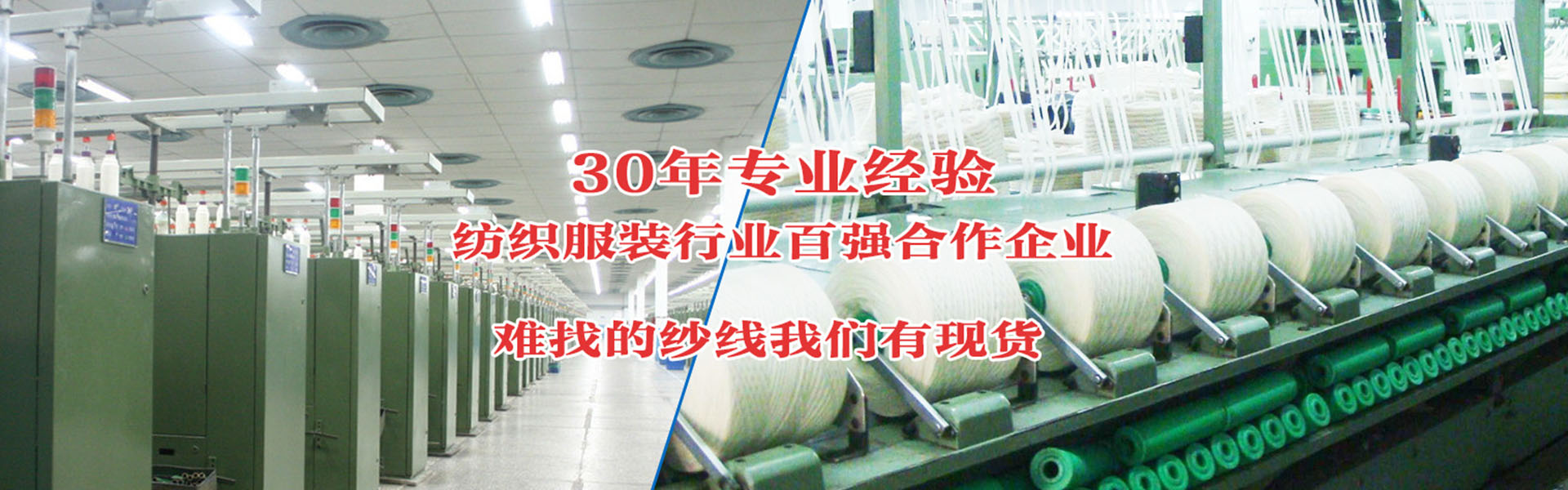


"Specialty yarns including涡流纺, 反捻纱, and 竹节纱. Offering quality cotton (BCI), organic cotton (GOTS, OCS), recycled cotton, polyester (GRS), African cotton, and Pima cotton yarns along with certificates. Hard-to-find yarns, we have in stock."
Henan QiangNian (Wei Shu He Sheng) Product Hotline: 13903781186, Mr. Liu
Sirospun, also known as twisted together or AB yarn, is a novel spinning technique developed by Dieter Plate of the Australian Textile Industry Department and his colleagues around 1973.
The initial design of the open-end spinning technology was for wool spinning, characterized by its minimal woolly ends, high strength, and excellent wear resistance, achieving the effect of single yarn weaving for wool yarns to achieve the thinning of wool fabrics. After several years of testing in spinning mills in Australia, the UK, and Germany, it was assessed that this new technology would bring significant economic benefits to the Australian wool industry. Consequently, the CSIRO (Commonwealth Scientific and Industrial Research Organisation) and the International Wool Secretariat (IWS) established a syndicate in 1980 to officially launch the open-end spinning system and jointly promote its commercialization. By 2000, open-end spinning was mainly distributed in developed countries such as Europe, the US, and Japan, primarily for wool spinning applications, with only about 170,000 open-end spinning spindles globally at the time. Despite significant improvements over conventional yarns in many aspects, there was still a considerable distance to reach single yarn weaving without sizing in wool spinning, and this method was later largely abandoned in wool spinning.
Since the year 2000, the Spun Yarn technology has been gradually transferred to cotton spinning and continuously developed. Now, it is widely used in blended fibers like T/C and CVC, as it produces a twist effect after dyeing, resulting in a good hand feel and popularity. Furthermore, it has been employed to improve the problem of hairiness in fibers that are prone to it, such as artificial cotton, Modal, Tencel, soybean fiber, and even 100% cotton.
The principle of the rotor spinning process involves feeding two coarse yarns into the same drafting system unit of a ring spinning fine yarn machine through two separate bell mouths. Due to the spacing between the bell mouths, the two slivers within the drafting zone remain separated. After drafting, the slivers are combined and twisted together by the same spindle to form a yarn with a double-threaded structure, thereby achieving the combined spinning, combining, and twisting. In the event that one of the two yarns breaks, a reliable automatic stop device interrupts the spinning process to ensure yarn quality. Consequently, a yarn breakage detection and automatic stop device is installed at the output point of the front roller.
"Specialty yarns including strong twisted, low twisted, untwisted, high tenacity,涡流纺, reverse twisted, and bamboo yarn. Offering fine cotton (BCI), organic cotton (GOTS, OCS), recycled cotton, polyester (GRS), African cotton, and Pima cotton yarns with certificates. Hard-to-find yarns, we have stock available."
Henan QiangNian (Weixian Hesheng) Product Hotline: 13903781186, Mr. Liu

