

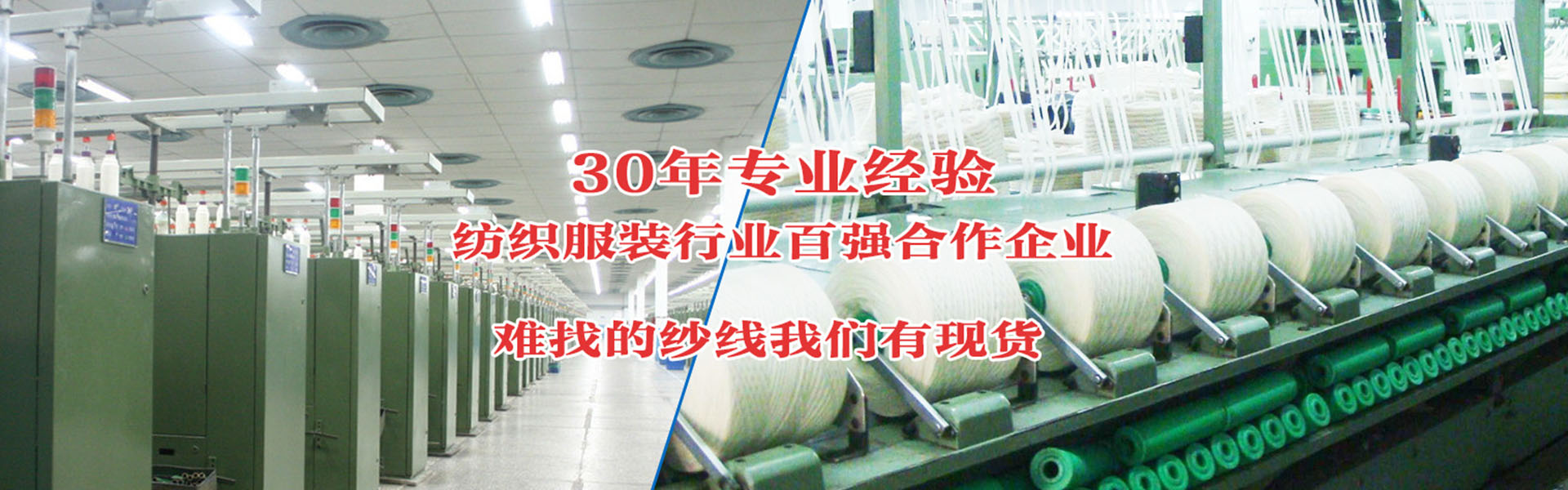



Specialty yarns including strong twisted, low twisted, untwisted, high tenacity, vortex spun, anti-twisted, and bamboo yarn. Offering fine cotton (BCI), organic cotton (GOTS, OCS), recycled cotton, polyester (GRS), African cotton, and Pima cotton yarns along with certifications. Hard-to-find yarns, we have them in stock.
Henan QiangNian (Wei Shu He Sheng) Product Hotline: 13903781186, Mr. Liu
Cotton knitted fabrics, especially single-sided knitted fabrics, often exhibit a phenomenon during dyeing and finishing processing where seemingly crumpled creases cannot be eliminated through post-treatment, significantly affecting the fabric's surface appearance. The root cause of this issue is closely related to the swelling of the fibers.
Cotton fiber swelling inevitably leads to changes in yarn and loop structures. Yarn structure changes are characterized by yarn thickening, shortening, and increased twist, while loop structure changes are indicated by larger loop arcs, shorter loop columns, or reduced spacing between loop columns. These changes result in fabric contraction and densification. Due to the constraints imposed by yarn interlacing resistance and the cohesive forces between fibers on the fabric's structure, despite the reversibility of the fiber swelling process, the contracted and dense fabric shape will not be restored even as the fiber shape recovers.
Loosely woven single-sided cotton knitted greige fabric, during the initial wet processing (such as bleaching), if the fabric is subjected to irregular external forces (of varying sizes and directions), such as rope-like movement, roller compression, dyeing machine nozzle compression, or fabric stacking compression, before the fibers have adequately swelled or the swelling effect is poor, due to the poor fiber cohesion and lower yarn interlacing resistance, the yarn structure (manifested as twist) and fabric structure (manifested as the three-dimensional space of the loop nodes) will undergo uneven changes. Consequently, the contraction and densification effect of the fabric caused by fiber swelling will also be uneven. This uneven fabric density and abnormal three-dimensional space of loop nodes, however, cannot be restored due to the greatly increased fiber cohesion and yarn interlacing resistance after swelling and contraction, resulting in a phenomenon resembling creases and folds. Double-sided knitted fabrics, due to their fabric structure, have a high yarn interlacing resistance and fiber cohesion from the greige state, making it less prone to uneven contraction during the initial wet processing (such as bleaching).
Due to the fact that the initial wet processing of cotton knitted fabrics is commonly scouring and dyeing machines are often used for rope-dye scouring, many dyeing and finishing factories mistakenly believe that the wrinkles and creases on single-sided cotton knitted fabrics, which cannot be eliminated through finishing, are caused by rope-dye scouring. Only flat-dye scouring can overcome this issue.
High-tenacity, low-tenacity, untwisted, high-strength,涡流纺, reverse-twist, and bamboo-core yarns, among other "specialized, refined, and innovative" varieties. We offer premium cotton (BCI), organic cotton (GOTS, OCS), recycled cotton,涤纶 (GRS), African cotton, Pima cotton yarns, and certifications. Hard-to-find yarns, we have in stock.
Henan QiangNian (Wei Shu He Sheng) Product Hotline: 13903781186, Mr. Liu

