
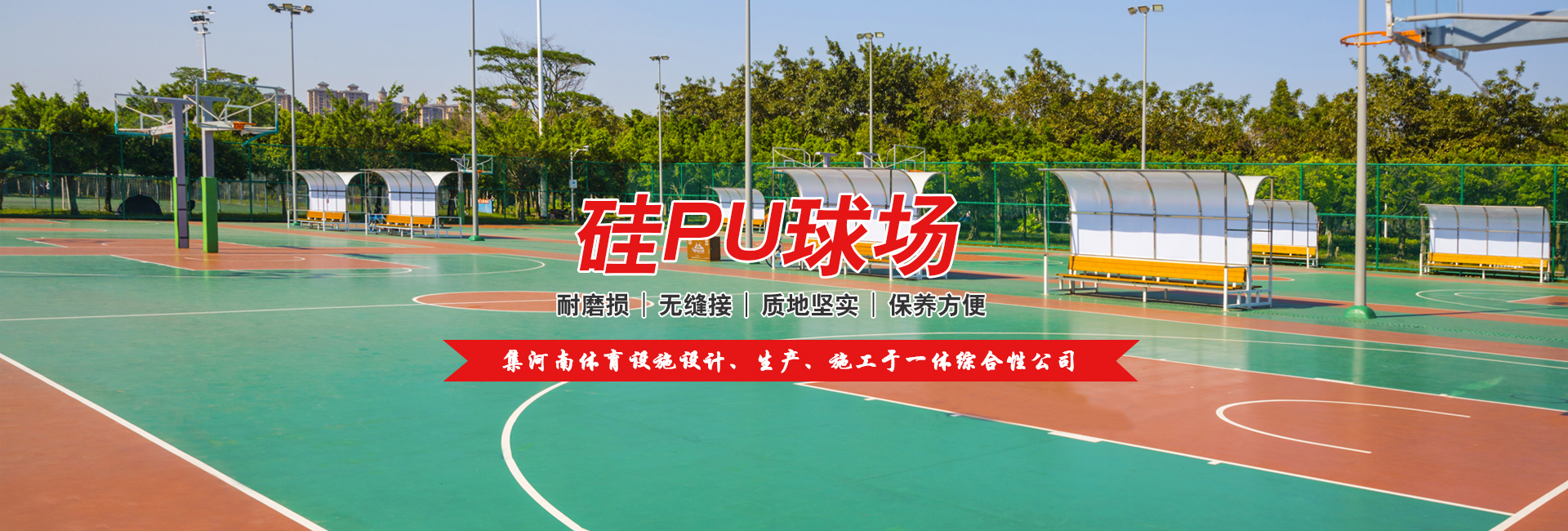
During the construction of general silicone PU courts, the standard thickness used is typically 3-5MM. Does that mean the thicker the silicone PU塑胶 court, the better? When it comes to thickness, those unfamiliar with the process might think, "The difference isn't that great; isn't it better to make it thicker?" Of course, it's understandable for someone who's not in the know to ask that.
Silicone PU court surfaces are a highly stain-resistant layer, which is tough and dense, and not easily scratched by soles or other hard objects. If the surface is too thin, it may not meet the national standards and can be easily scratched by hard objects, thereby not performing as intended for sports activities. Does this mean that the thicker the silicone PU court, the better? Not necessarily. Silicone PU sports courts are an elastic material; an increase in thickness can lead to a decrease in ball rebound rates. Excessively thick silicone PU surfaces can result in a poor sports experience. Therefore, to ensure a good sports experience and protection for athletes, the thickness of the silicone PU surface should be moderate.
Moreover, the silicon PU court material features an upper hard and lower soft structure. The force and time of ball contact with the ground are limited, which determines that the ball bounces back before the lower elastic structure has time to react upon contacting the upper hard structure of the silicon PU, ensuring the ball's rebound rate. When athletes fall due to collisions, the large force involved causes the bottom elastic layer to participate in the process, serving as a shock absorber at this point. This is where the silicon PU structure's both fascinating and praiseworthy aspect lies—it ensures the ball's rebound rate while also protecting athletes from injury.
News Center Co., Ltd.
