

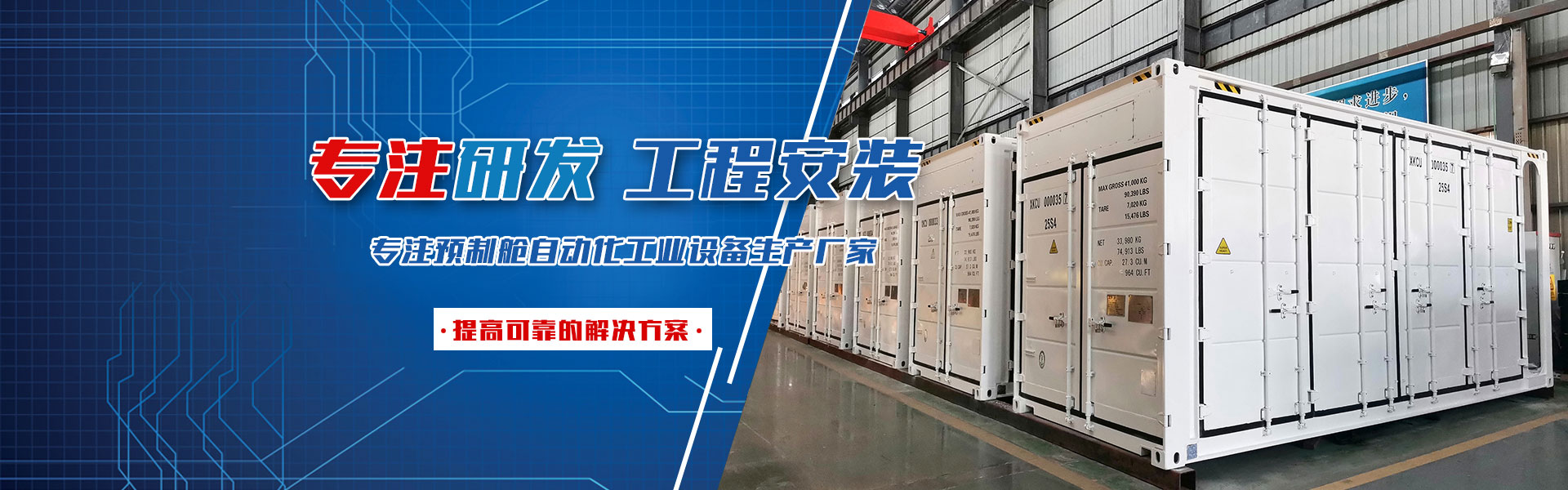
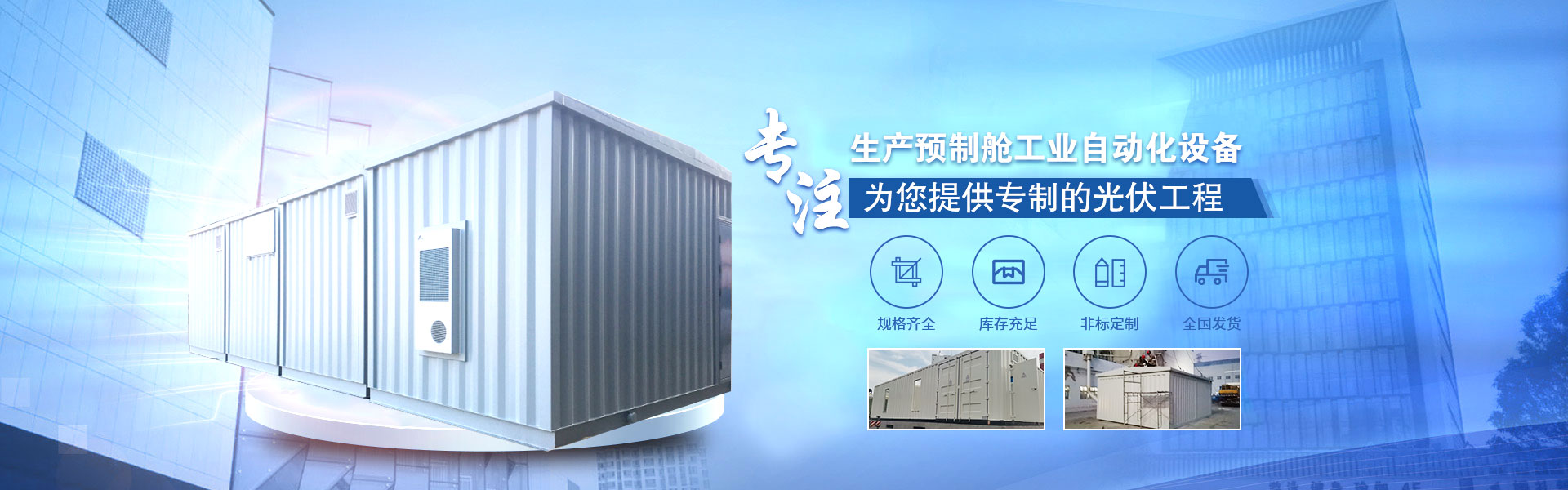



The Energy Storage Prefabricated Module is a compact, factory-produced electrochemical energy storage system, primarily applied in the battery system technology field. This equipment revolutionizes the electrical system layout, civil design, and construction methods of traditional substation. During the manufacturing process, the main工艺流程 includes base welding and prefabricated module wall beam welding, among other steps.
Specifically, the first step is to pre-weld the base of the prefabricated cabin, ensuring continuous welding to prevent water intrusion. Next, the base for the screen cabinet installation is welded onto the lower base. Then, the wall frame welding of the prefabricated cabin is carried out, including the vertical column welding and horizontal brace welding of the wall frame, while leaving fixed holes for the screen cabinets, as well as installation holes and brackets for air conditioners. The outer surface of the wall frame is then welded with galvanized sheets.
The shell of prefabricated modules commonly features galvanized channel or flanged steel welded frames with reinforcing ribs. The exterior panels can be made of Q235 steel plates with high hardness, cold-rolled steel, or galvanized steel plates. The walls are insulated and fireproof, with fire-resistant materials used for the interior panels. Special attention must be given to the selection of floor materials, with anti-static and lightning protection being crucial.
Moreover, energy storage technology refers to a series of related technologies that enable the storage and release of electrical energy through physical or chemical methods. Electrochemical energy storage involves storing and releasing electrical energy in the form of chemical energy. Current electrochemical energy storage primarily utilizes devices such as batteries and electrochemical capacitors. Common batteries include lead-acid batteries, lead-carbon batteries, sodium硫 batteries, flow batteries, and lithium-ion batteries.
