
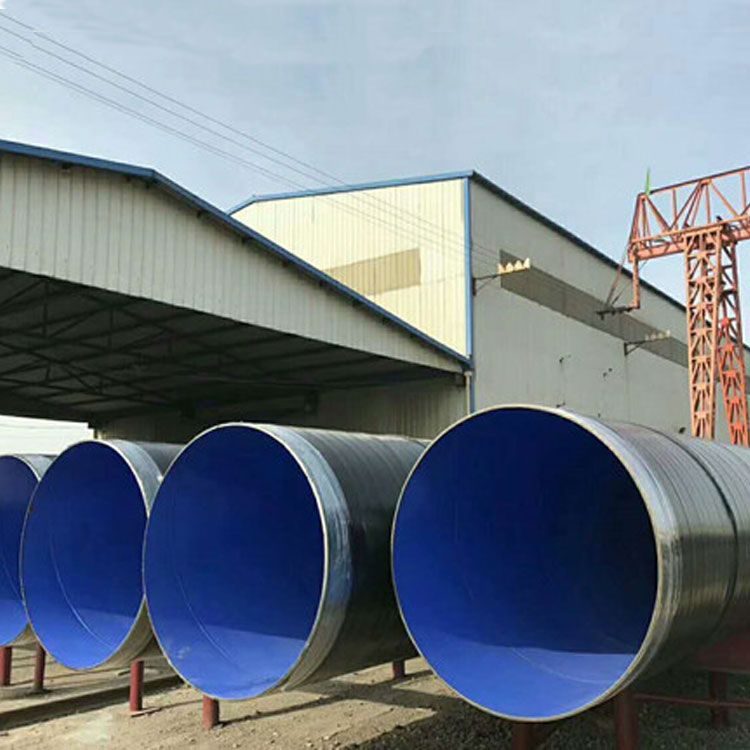
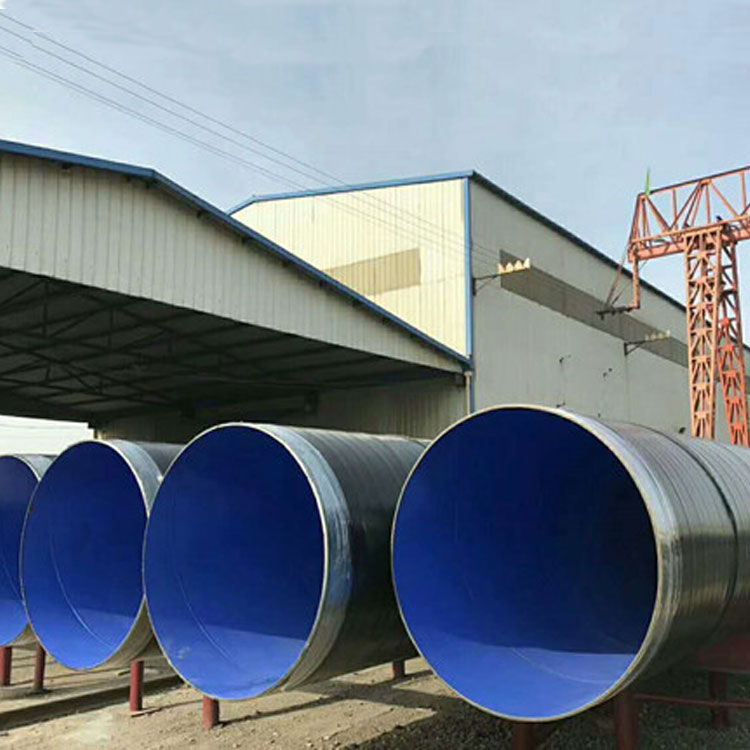
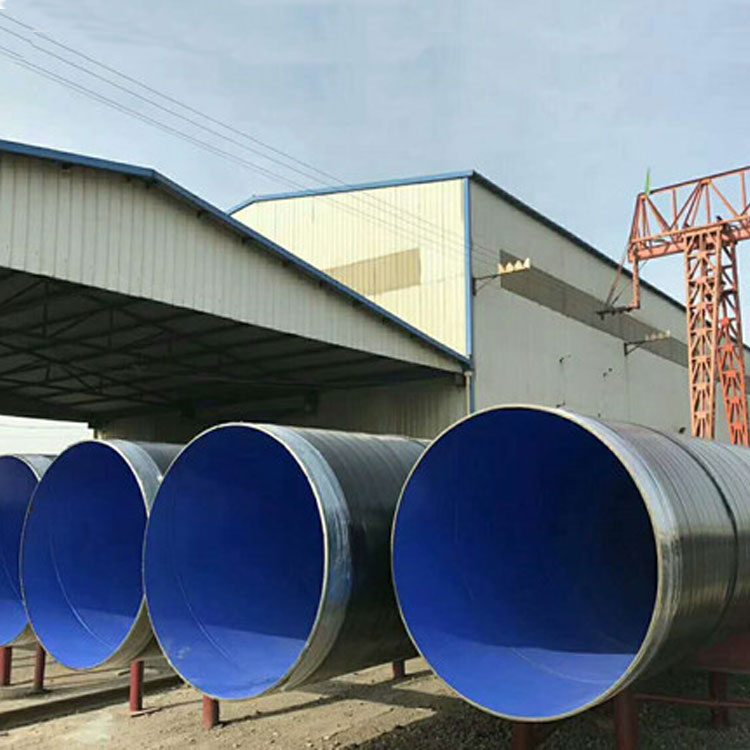
Introduction to the Anti-corrosion Coating Characteristics of TPEP Anti-corrosion Steel Pipe
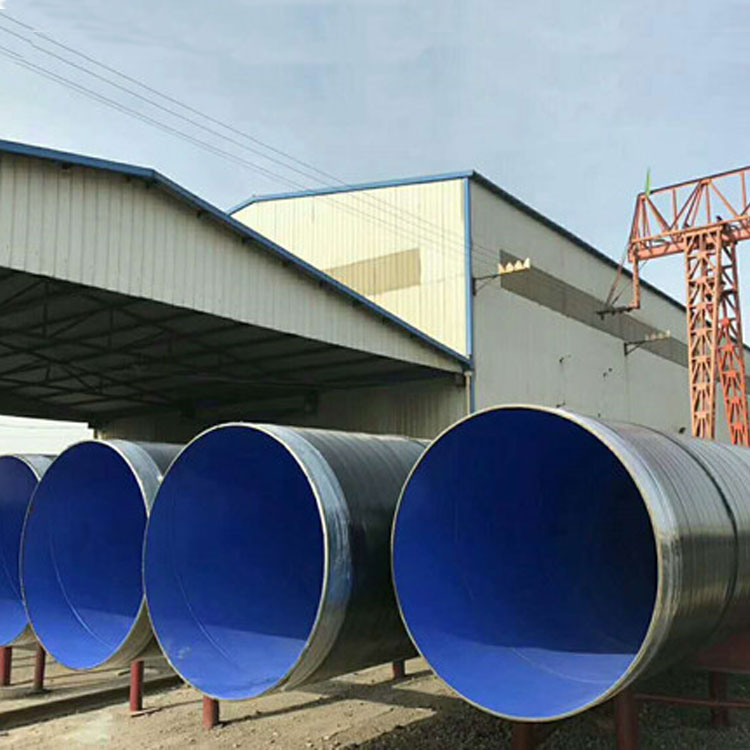
Drinking water TPEP anti-corrosion steel pipe coating's superior performance is primarily due to its organic integration of the base epoxy powder, intermediate adhesive layer, and outer polyethylene layer into a single unit, thereby endowing the coating with the benefits of both Fusion Bonded Epoxy (FBE) and polyethylene coatings. The fusion epoxy forms ionic bonds and physical interlocking forces with the steel pipe surface through its active groups and activated ions, ensuring a firm adhesion to the metallic substrate. The adhesive obtained from polyethylene-modified copolymer not only has the capability to form covalent bonds (ester bonds) through chemical reaction with fusion epoxy but also, through graft modification, disrupts the electronic dipole balance of polyethylene materials, enhancing the bonding strength between fusion epoxy and copolymer molecules, effectively increasing the adhesive strength between the two interfaces.
Corrosion-resistant steel pipes are those that have undergone anti-corrosion processing, effectively preventing or slowing down corrosion due to chemical or electrochemical reactions during transportation and use. The base materials for corrosion-resistant steel pipes include spiral pipes, straight seam pipes, and seamless pipes, which are widely used in China in long-distance water transmission, oil, petrochemical, gas, thermal power, wastewater treatment, water source, bridge, steel structure, and offshore water transmission pile projects.
Advantages of the drinking water TPEP anti-corrosion steel pipes produced by Hongkehua:
1. Polyethylene's corrosion resistance, capable of withstanding various forms of corrosion present in the natural environment.
2. Offers a high quality-to-price ratio.
3. Polyethylene insulation properties, with electrical performance remaining essentially unchanged under both dry and long-term immersion conditions, effectively preventing electrochemical corrosion caused by stray currents.
4. Resistant to microbiological corrosion and strong against root penetration by deep-rooted plants; no root penetration occurs.
5. High strength, allowing direct backfilling with non-artificially crushed gravel containing a diameter ≤ Φ25mm without causing any damage.
6. The overall bending resistance of the coated pipe is strong, generally allowing cold bending of 1.5° per pipe diameter.
7. Strong resistance to cathodic spalling, which is crucial for cathodically protected pipelines.
8. The production process is fully continuous and mechanized, ensuring stable product quality and facilitating quality control.
9. All raw materials for the production of polyethylene-coated steel pipes are sourced from large-scale enterprises, ensuring reliable origins and guaranteed quality.
10. Long lifespan, theoretically usable for over 50 years.
Drinking Water TPEP Anti-corrosion Steel Pipe Product Features:
1. TPEP corrosion protection is the most advanced in China and even globally, with a service life of over 50 years. The 3PE external corrosion protection has nearly 70 years of history, with the inner coating being a fusion-bonded epoxy powder coating, which also boasts a 50-year history of use.
2. Smooth inner wall with roughness of 0.0081-0.0091 (tested by the China Institute of Water Resources and Hydropower Research Testing Center), resulting in minimal head loss. For the same flow rate of medium transportation, the diameter can be reduced by one grade.
3. Excellent terrain adaptability. Strong flexibility in steel pipes.
4. Easy installation, reliable. Single pipe length can reach 12 meters, with a reduced connection point by half.
5. The inner wall is smooth and anti-scaling, meeting food-grade standards.
Development of drinking water TPEP anti-corrosion steel pipes:
TPEP anti-corrosion steel pipes have undergone four generations of upgrades in China. Initially, in the 1980s, they were introduced from Japan with a single dipping process for forming a film, using modified polyethylene for corrosion protection. Due to the adhesion issue between polyethylene and steel pipes, the technology gradually evolved to both internal and external coatings of epoxy resin powder. However, the outer epoxy resin coating was brittle and prone to damage from impacts, leading to the development of the third-generation coating with internal epoxy and external polyethylene. Yet, the adhesion problem persisted when polyethylene was directly bonded to the steel pipe, and accidents during construction were inevitable. The latest upgrade is the fourth-generation corrosion protection—external 3PE and internal fused epoxy powder coating. The 3PE coating consists of a fused epoxy powder (FBE) as the base layer, adhesive as the intermediate layer, and extruded polyethylene as the outer sheath, either wrapped or extruded together to form a single entity. It boasts excellent insulation and resistance to mechanical damage, offering advantages over single-layer polyethylene coatings.