
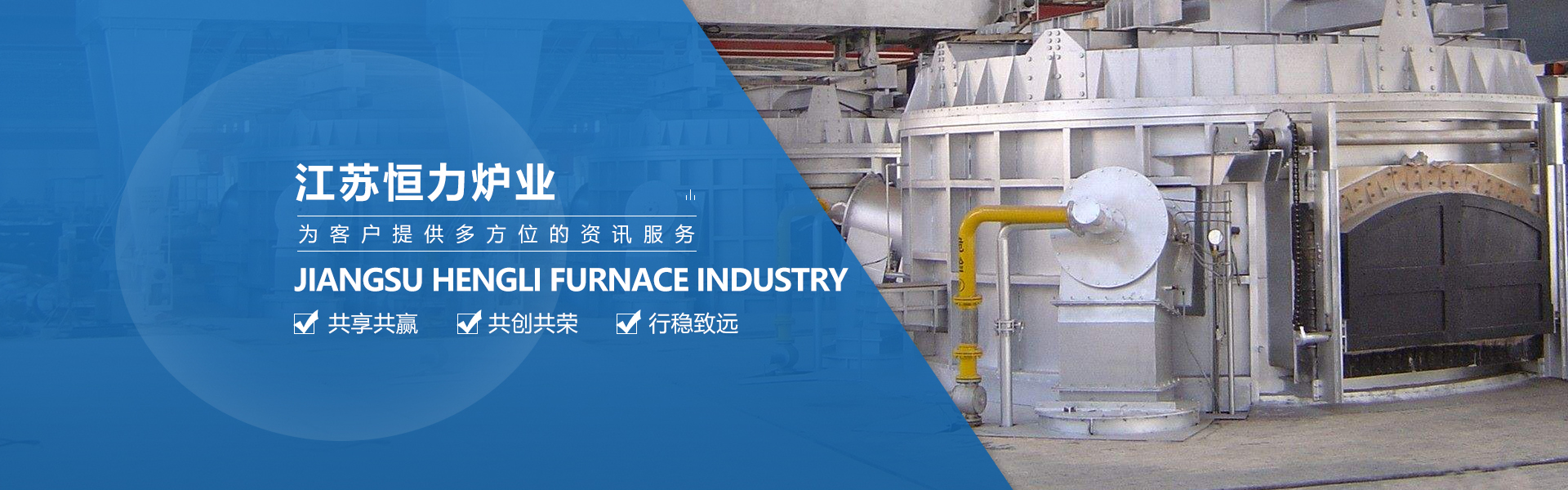

The car-type annealing furnace is commonly used for producing high-quality home appliance and automotive panels, typically including sections such as the jet preheating section (JPF), radiant tube heating section (RTF), uniform heating section (SF), slow cooling section (SCS), rapid cooling section (RCS), and exit section (ES). The car-type annealing furnace employs advanced energy-saving technologies, such as three-stage waste heat recovery (used for preheating combustion air, preheating strip steel, and producing superheated water), a push-pull combustion system, and a corresponding ON/OFF combustion control system, as well as a composite furnace lining.
The structural components of the car-type annealing furnace mainly include the furnace shell support frame and the drive equipment support frame (platform steel structure). Considering the potential thermal expansion and contraction of the furnace shell, each section of the furnace shell support frame and the platform steel structure adopt an independent structural design. The bottom roller rooms of each furnace section are first installed and positioned, with the four corner columns serving as the basis for completing the welding of four reference columns; then, the two overall end plates on the left and right sides are welded. The operating side and the drive side are each assembled from the bottom up with several independently manufactured side plates, sequentially welded and installed. The top roller room is also equipped with four reference columns, which, upon alignment and welding with the furnace body's four reference columns, complete the manufacturing and installation of the car-type annealing furnace's furnace shell. A widened platform is installed on the drive side, intended for storing the furnace top cover.
Based on the working principle of the cooling section, the preliminary analysis indicates that the uneven thermal expansion in that area is causing the channel steel to crack. Due to the circulating fan's suction effect for cooling, the negative pressure draws air into the furnace, resulting in a higher oxygen content in that section. When the steel grade specification E7J is not changed, the furnace condition remains stable. However, once the steel grade specification is switched and the temperature changes frequently, the crack will worsen further, and it will be difficult to maintain stable furnace conditions.
During the steel grade specification change, the temperature difference between the inlet and outlet of the hot-dip galvanizing unit's slow cooling section is typically required to be around 200 K. This accounts for the gap between the cooling air box and the furnace shell, where the high-temperature circulating gas undergoes heat exchange. Additionally, due to the welding of the I-beams and channel steels to the furnace shell steel structure, a thermal gradient is produced on the corresponding channel steel between the ambient air outside the furnace and the high-temperature gases inside. Alternatively, due to the expansion and contraction of stainless steel and the difficulty in satisfying the deformation requirements of the duct temperature difference, the channel steel may also crack.
News Center Co., Ltd.
