

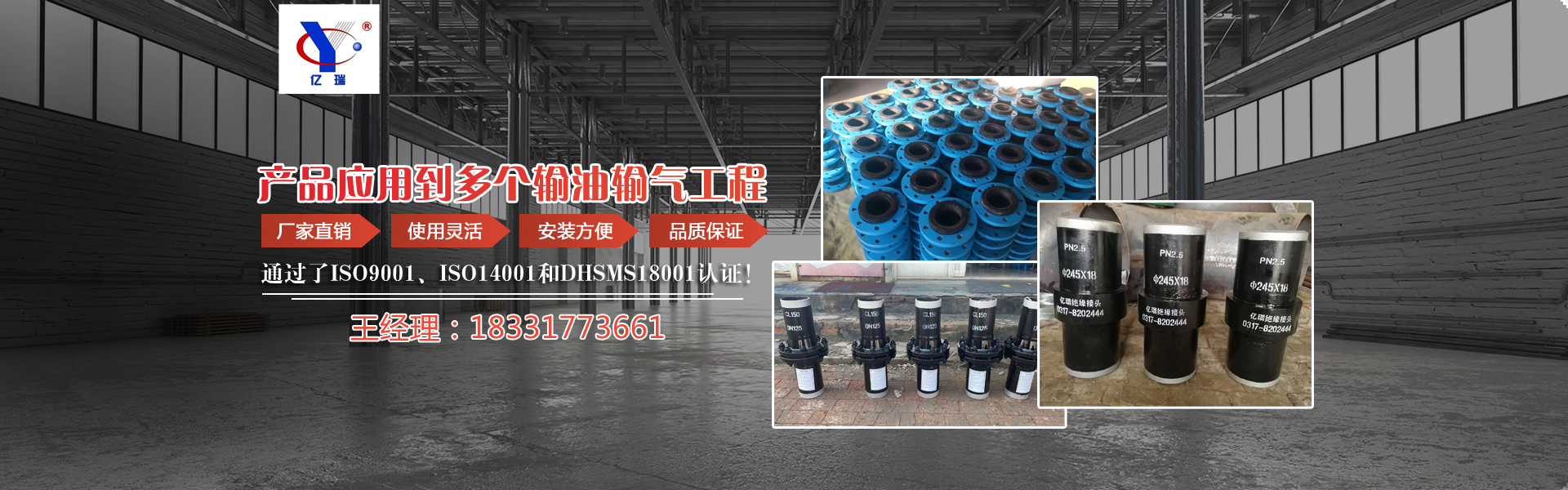

Insulating Joints vs. Insulating Flanges: What's the Difference? Insulating joints and insulating flanges are not the same; their products differ, and naturally, the functions they serve are also distinct. Let's delve into the specific differences between insulating joints and insulating flanges. An insulating joint is a new-generation product developed based on the issues encountered with the use of insulating flanges. The cathodic protection system for steel pipes is a critical pressure component. Our company's insulating joints, with their innovative design and reference to new product structures, overcome the drawbacks of insulating flanges such as rigidity, leakage, inability to be buried, and short lifespan, thus achieving maintenance functions and extending the lifespan. The overall insulating joint consists of the following parts: upper and lower pipes, a sleeve, insulation, sealing, and an insulating coating. On the upper and lower pipe ends of the insulating joint, a sealed structure with insulation is formed. Therefore, the performance of insulating joints is superior to that of insulating flanges.
Insulating joints are a general design requirement for pipeline sealing performance, which also necessitates the adoption of electrical corrosion protection engineering and the protection of buried steel pipelines. The management of insulating joints must be stringent to prevent failures that could affect normal operation. Maintain the cleanliness and order of indoor equipment to ensure there are no faults, defects, corrosion, or foreign objects. Implement the "Three Up on the Wall" approach, which includes line-to-map, protection potential curves, and job responsibility systems. Each cathodic protection pipeline should be equipped with operation regulations for cathodic protection, tailored to the actual conditions of the pipeline. Daily testing, control, adjustment, and maintenance of cathodic protection should be based on these regulations. The cathodic protection station should not interrupt power supply to the pipeline, ensuring that the supply is maintained at 98% or above. After the cathodic protection station is put into operation, unauthorized changes to electrical equipment wiring are prohibited, and any changes must be approved by the competent authority. Conduct daily checks and measurements of electrical potential, record operation logs, and report the operation status of the cathodic protection station to the production scheduling department. Maintain the potential at the specified value along the pipeline to determine the cathodic protection potential; this measurement is conducted once a week at early operation cathodic protection stations and every two weeks or as required. Insulating joints must be inspected and any pipeline grounding faults eliminated to achieve complete cathodic protection throughout the line.
