

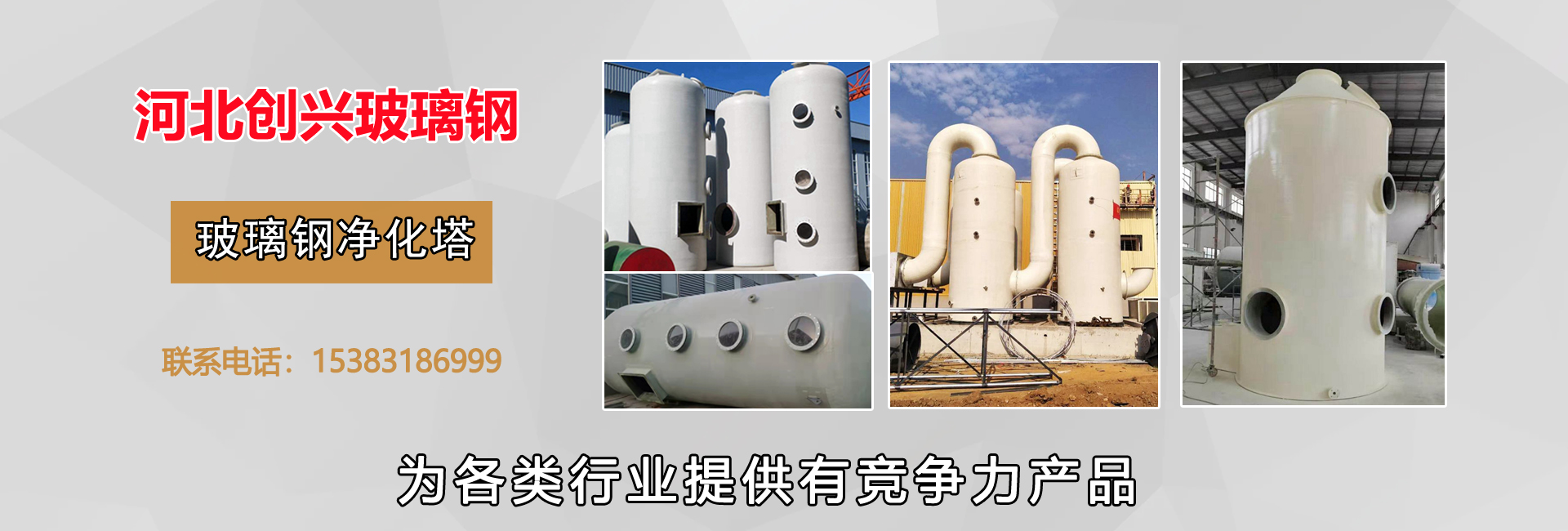
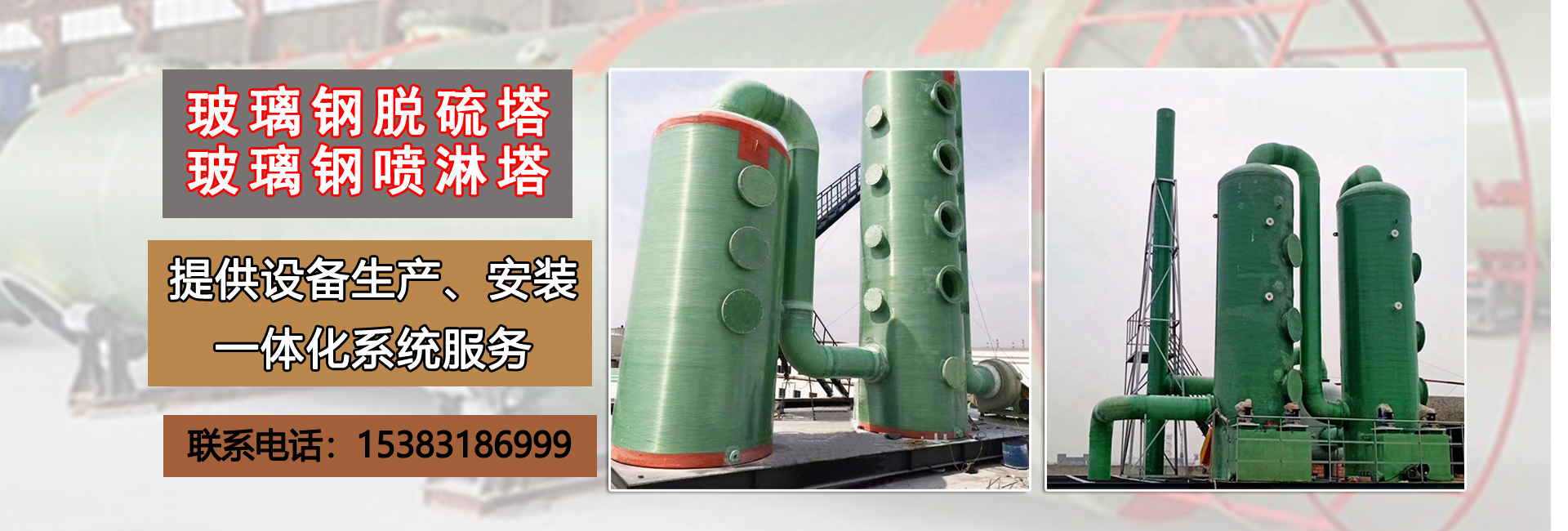


Waste Gas Treatment Equipment, FRP Waste Gas Treatment Equipment. Analyze the technological trends of waste gas treatment equipment.
From the perspectives of achievements and experiences in the development of green dyeing and finishing technology, the烟气治理 technology for dyeing and finishing machines shows the following four distinct trends.
Energy Utilization and Oil Recycling -- Waste Gas Treatment Equipment
Heat recovery and oil recycling can generate significant economic benefits, transforming enterprises from "passive" to "active" in the power source of the calendering machine. Calendering machines are energy-consuming equipment, with their energy consumption typically accounting for over 40% of the total energy consumption in dyeing and finishing enterprises, making them a crucial link in energy conservation and emission reduction. The high temperature and large volume of exhaust gas from calendering machines lead to substantial energy waste if directly emitted. The high temperature of the exhaust gas also hinders the operation of subsequent purification units. Heat recovery is an essential pre-treatment unit in the exhaust gas treatment process.
Recycling a portion of the waste gas heat through heat exchange methods can yield significant economic benefits. The heat recovered by water/gas heat exchangers is often stored in the form of hot water, which can be used in the scouring process in the dyeing and finishing industry. By using gas/gas heat exchangers, the heat from waste gases is utilized to preheat fresh air for thermal setting processes, with one setting machine potentially reducing boiler fuel consumption by over 100,000 yuan annually.
Waste Oil Recycling. The high-temperature waste gases emitted from shaping machines contain various organic compounds, which are highly harmful to both human health and the ecological environment; the waste gases emitted during the heat-setting process in the processing of synthetic fiber fabrics contain a high concentration of high-boiling-point, viscous oil-like compounds. During the waste gas purification process, the black-brown oil (commonly known as "fiber oil") is separated out and can be used as an excellent industrial building membrane agent, with a price of 35,000 to 40,000 yuan per ton. Assuming each shaping machine recovers 50 kg of waste oil per day, it can generate tens of thousands of yuan in economic benefits annually.
Combination Technology and Deep Purification
The waste components from setting machines are complex, often containing a large amount of sticky micrometer-sized particles. Conventional single-process treatment is inefficient, and a combination of processes, including high-voltage electrostatic dust removal technology, is required for deep treatment of flue gas to achieve good purification effects. The combination process allows some organic compounds to condense and aggregate into liquid particles from gaseous molecules, which helps to improve the efficiency of subsequent purification units. Purification methods such as filtration adsorption and wet scrubbing can achieve purification efficiency of 60% to 75% for oil smoke, while methods like electrostatic capture and incineration purification can yield purification efficiency above 95%.
Our country's flue gas treatment for fixed-type machinery has gone through two stages: the "simple treatment" mainly using mechanical dust removal and the "standard-compliant treatment" mainly using wet scrubbing. There are significant differences among various treatment methods in terms of maintenance cycles, investment operation costs, ease of operation, and safety reliability. Practice has proven that a single process equipment is difficult to achieve the goal of effective flue gas treatment. For example, when using the wet scrubbing method, the flue gas at the outlet not only contains a large amount of oil smoke but also more white water vapor, still affecting the health of employees and the normal lives of residents around the area.
Deep Purification. Although incineration combustion has a high removal efficiency for oil smoke, it is rarely used in practice due to concerns over operational costs, ease of use, and safety reliability. Among various oil smoke gas treatment technologies for molding machines, the high-voltage electrostatic dust removal method shows significant purification effects, boasting advantages such as high dust removal efficiency and compact equipment structure. Proper maintenance, elimination of fire hazard risks, timely cleaning, and mitigation of high-voltage electrode pollution are crucial for ensuring the normal and stable operation of high-voltage electrostatic dust removal equipment.
News Center Co., Ltd.
