
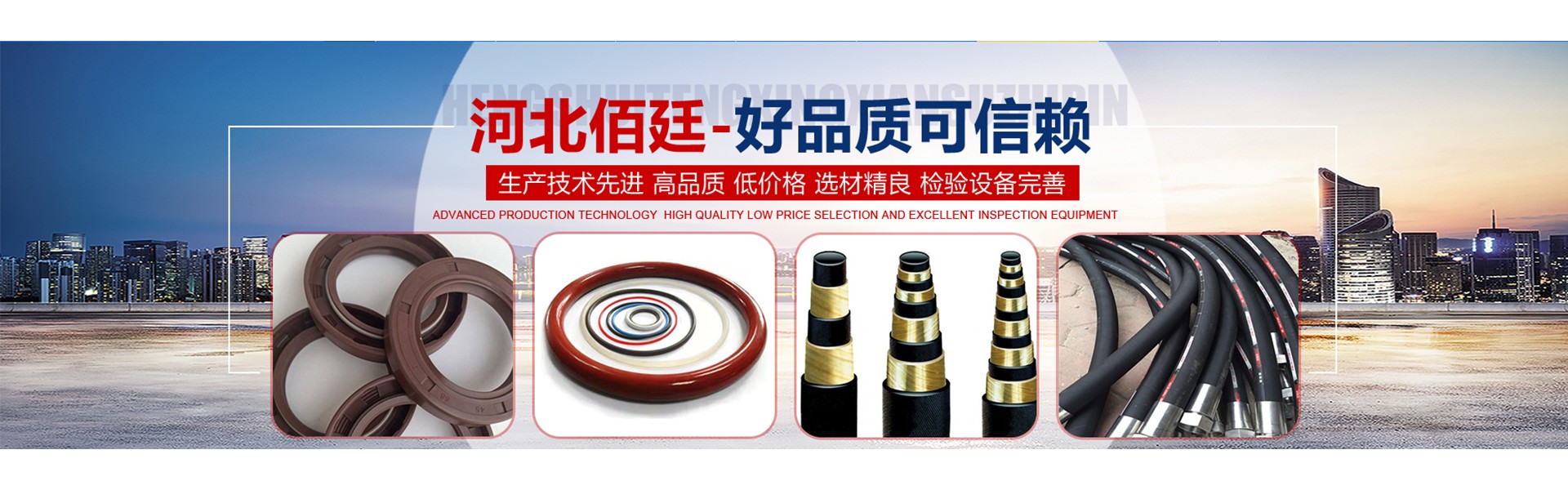

Due to the presence of an oil film between the oil seal and the shaft, this film exhibits fluid lubricating properties. Under the action of surface tension, the stiffness of the oil film forms a crescent-shaped surface at the contact end with the air, preventing the leakage of the working medium and thus achieving shaft sealing. The sealing capability of the oil seal depends on the thickness of the sealing surface oil film; an excessive thickness leads to oil seal leakage, while a insufficient thickness may cause dry friction, leading to wear on the oil seal and shaft. The absence of an oil film between the sealing lip and the shaft can easily cause overheating and wear.
Therefore, when installing, apply some oil to the seal ring and ensure that the skeleton oil seal is perpendicular to the axis line. If not, the sealing lip of the oil seal will drain the lubricating oil from the shaft, leading to excessive wear on the sealing lip. During operation, a small amount of lubricant may seep out from within the housing to achieve the ideal state of forming an oil film at the sealing surface.
The function of the oil seal frame is generally to isolate the lubricated components from the output components in the transmission parts, preventing oil leakage. It is commonly used for rotating shafts, serving as a rotating shaft lip seal. The frame, akin to steel reinforcement in concrete structures, strengthens the seal and maintains its shape and tension. Oil seal frames can be categorized into inner frame, outer frame, and exposed frame types. These seals are made from nitrile rubber and steel plates, ensuring stable quality and long service life. They are widely used in automotive applications such as crankshafts, camshafts, differentials, shock absorbers, engines, axles, front and rear wheels, and more.
News Center Co., Ltd.
