



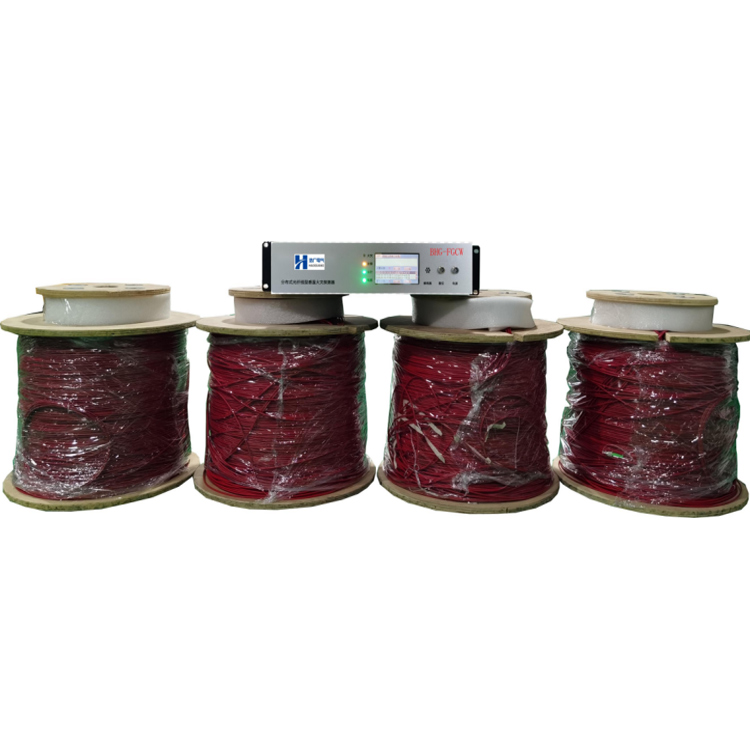

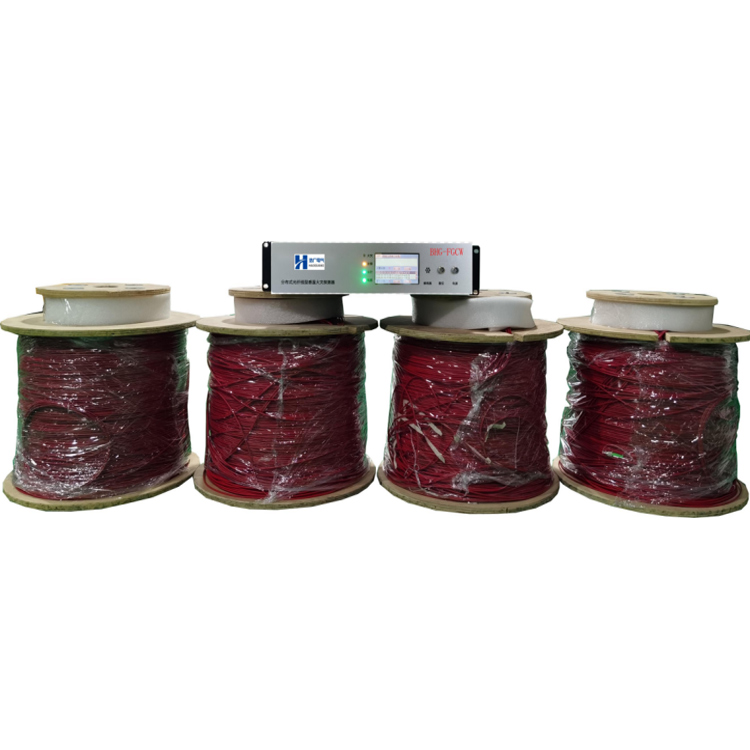
The recoverable linear fiber optic differential temperature fire detector, BHG-FGCW, is a continuous distributed fiber optic temperature sensing system. Utilizing OTDR technology and the temperature-sensitive characteristics of Raman scattering light, it detects temperature variations along different positions of the fiber, achieving truly distributed measurements. In addition to timely warning of fire hazards, the linear fiber optic differential temperature fire detector can also locate the fire's origin. As a mature distributed temperature measurement method, it boasts advantages such as long measurement distance, high measurement accuracy, fast response time, resistance to electromagnetic interference, and suitability for flammable and explosive hazardous areas. It can be widely applied in fields such as online monitoring of high-voltage cables, power load flow analysis, fire monitoring in traffic tunnels, oil and gas storage tank fire monitoring, coal conveying belt fire monitoring, and dam leakage monitoring.
The temperature measurement of BHG-FGCW is based on the spontaneous Raman scattering effect. High-power narrow pulsewidth laser pulses from LD are incident on the sensing fiber, where the laser interacts with the fiber molecules, producing weak backscattered light. The scattered light has three wavelengths: Rayleigh, anti-Stokes, and Stokes light. Among them, the anti-Stokes light is temperature-sensitive and serves as the signal light, while the Stokes light is temperature-insensitive and serves as the reference light. The signal light scattered from the sensing fiber is then passed through the splitting module WF, isolating the Rayleigh scattered light, and transmitted through the temperature-sensitive anti-Stokes signal light and the temperature-insensitive Stokes reference light, which are both received by the same detector (APD). The temperature can be calculated based on the intensity ratio of the two. The determination of the location is based on the optical time-domain reflectometry (OTDR) technique, where the position of the scattered signal is determined by measuring the echo time of the scattered signal with high-speed data acquisition.
1.3 System Features and Functions
The BHG-FGCW Distributed Fiber Optic Temperature Measurement System boasts the following technical advantages:
Speediness
The system features high temperature measurement and positioning speed. To enhance measurement time, it utilizes the advantages of high-speed, low-level signal processing technology, with each measurement taking as short as 3 seconds and offering a rapid response.
Distribution Characteristics
The Distributed Fiber Optic Temperature Measurement System offers continuous dynamic monitoring of temperature change signals at every 0.25-meter interval over a range of up to several kilometers, with customizable temperature alarm thresholds at various levels.
Please provide the Chinese content you would like translated into American English.
This system is a high-performance, feature-rich, and reliable distributed temperature measurement product. Key components are selected from high-performance imported devices from abroad, and the core algorithms have undergone rigorous testing.
Compatibility
The system host utilizes an open communication protocol, offering communication interfaces for connection with workstations. In the central control room's fire alarm workstation, it displays all information such as temperature curves, alarm locations, and alarm temperatures in a localized, graphic format. The system can be interconnected with other control devices like PCs and fire alarm systems via TCP/IP protocol, enabling audio-visual alarms with accurate and complete signal output.
Safety
The Fiber Optic Distributed Temperature Monitoring System features a secure recording function, capable of storing no less than 999 historical alarm data, and is subject to effective auditing. It operates unidirectionally, supports remote diagnostics, and can be remotely diagnosed with minimal intervention by specialized engineers via a local area network. In the event of fiber damage, the DTS system can immediately locate the damaged point and perform splicing using a fiber optic splicing machine, without halting measurements. This is crucial for the effective implementation of online monitoring.
Thermally sensitive optical fiber is inherently safe, utilizing light signals and does not produce electromagnetic interference with power cables.

