

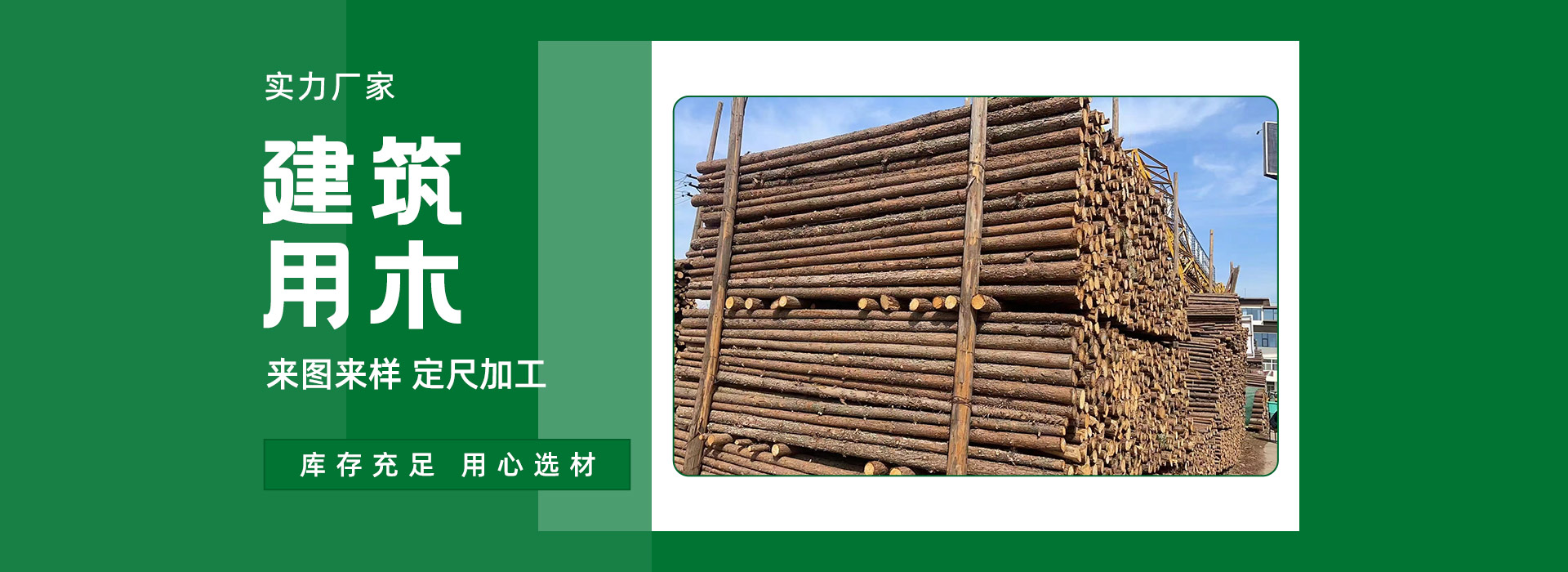


The drying of cedar posts typically refers to the process of removing moisture from cedar posts through evaporation or boiling under the action of heat.
To remove moisture from cedar posts, there must be a source of heat in their surrounding environment, which is typically the heat source itself. At certain temperatures, the moisture in the cedar posts wholesale from Zhengzhou is expelled into the surrounding air through evaporation or boiling, thereby drying the posts. Once the moisture content in the cedar posts reaches a certain level, we can then use them to process and manufacture the products we need.
What factors affect the drying of cedar posts?
I. External Factors
Temperature
Temperature is the primary factor affecting the drying speed of cedar posts. As the temperature rises, the water pressure within the cedar posts increases, and the viscosity of the free liquid water decreases, which promotes the flow and diffusion of moisture within the cedar posts. The moisture adsorption capacity of the copper wire drying medium improves, accelerating the evaporation speed of surface moisture on the cedar posts. However, it is important to note that if the temperature is too high, it can cause cracking and deformation in Zhengzhou cedar posts, reduce mechanical strength, and lead to discoloration, so it should be appropriately controlled.
Humidity
Relative humidity is a key factor affecting the drying speed of cedar piles. Under the same temperature and air flow velocity, the higher the relative humidity, the greater the water vapor partial pressure within the medium, making it more difficult for surface moisture of cedar piles in Zhengzhou to evaporate into the medium, thus slowing down the drying speed. Conversely, when the relative humidity is low, surface moisture evaporates quickly, reducing the moisture content of the surface, increasing the moisture content gradient, and enhancing water diffusion, leading to a faster drying speed. However, excessively low relative humidity can cause drying defects such as cracking and honeycomb structures, and even exacerbate these issues.
Airflow circulation speed
The speed of air circulation is another factor affecting the drying rate of cedar posts. High-speed airflow can break through the saturated steam boundary layer on the surface of cedar posts, thereby improving the heat and mass transfer conditions between the medium and the cedar posts, and accelerating the drying rate. For difficult-to-dry materials or when the moisture content of cedar posts is low, the movement of internal moisture within the posts determines the drying rate. Increasing the flow velocity of the medium to accelerate the evaporation rate of surface moisture has no practical significance and instead increases the moisture content gradient, raising the risk of drying defects. Therefore, for difficult-to-dry materials, there is no need for a high medium circulation speed.
II. Internal Factors
Sycamore post species and structural characteristics
Wholesale cedar poles from different tree species exhibit varying structures, with distinct sizes and numbers of pits, as well as the sizes of the micropores on the pit membranes. Consequently, the ease of water movement along these paths differs, making the tree species of cedar piles a primary internal factor affecting drying speed. Due to the presence of more filling material in the vessels and pits of ring-porous hard broadleaf woods (such as ironwood) and the smaller diameter of micropores on the pit membranes, their drying speed is significantly slower than that of diffuse-porous broadleaf woods. Within the same tree species, as density increases, the resistance to water flow in large capillary tubes grows, the diffusion path of water within cell walls extends, and drying becomes more difficult.
Sapling post thickness
The conventional drying process of cedar posts can be approximated as a one-dimensional heat and mass transfer process along the thickness direction. As the thickness increases, the heat and mass transfer distance lengthens and resistance increases, resulting in a significant decrease in drying speed.
Sycamore post moisture content
Below the fiber saturation point, as moisture content decreases, the lateral diffusion coefficient of absorbed water diminishes, while the diffusion coefficient of water vapor within the cell cavity increases. Since the proportion of water vapor diffusion within the cell cavity during the drying process is not significant, the longer the water diffusion path, the harder it is to dry as the moisture content decreases.
Sycamore post core sapwood
Heartwood cells of broadleaf trees contain more material, and the majority of vessels in coniferous tree heartwood are sealed, making it more difficult for the heartwood to dry than the sapwood.
Sycamore post grain direction
Wood rays facilitate moisture conduction, and the moisture conduction along the radial direction of cedar posts in bulk is approximately 15% to 20% greater than along the grain direction. Therefore, plank dried along the grain typically dries faster than plank dried along the radial direction.
The Haode Timber Marketing Branch in Xigong District, Luoyang City specializes in products such as larch, cedar poles, greenery support poles, topping poles, and pile driving wood. Our greenery supports, pile driving wood, and topping poles are made of durable cedar. We offer a variety of sizes from 1.5 meters to 6 meters, and can also customize to your specific requirements.
