




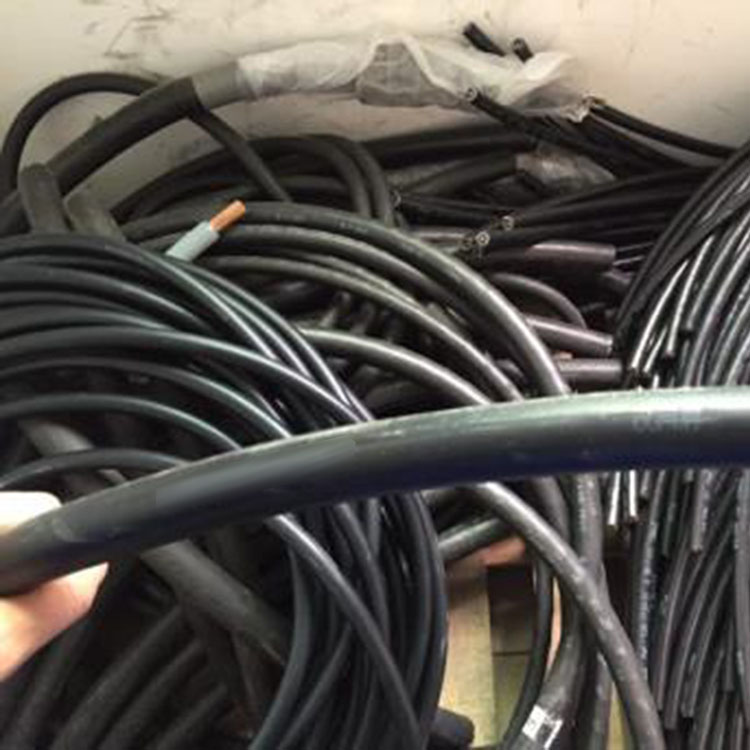
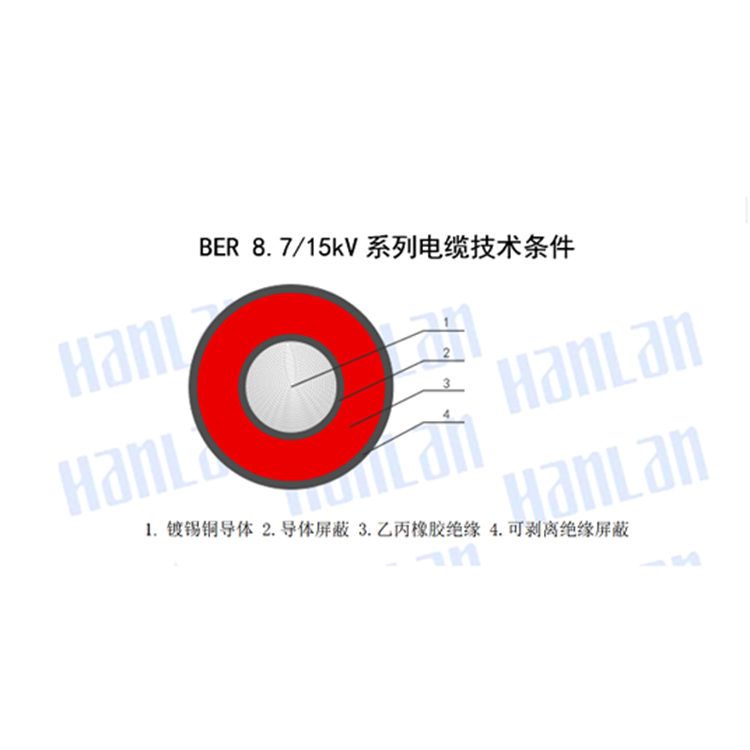
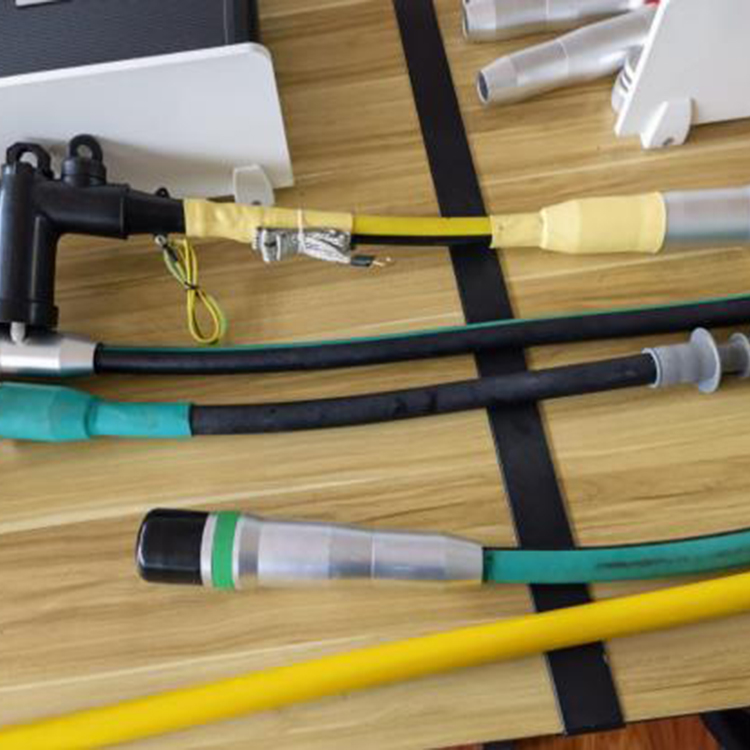
BER 8.7/15kV 1x35 cable
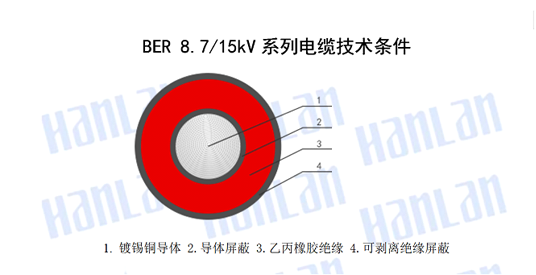
Model: BER
Voltage Grade: 8.7/15 kV
Square Numbers: 6mm² - 630mm²
1 Cable Technical Conditions
Conductor
Conductors use tin-plated annealed soft copper, which should comply with the specifications of the 5th type of soft copper conductor in GB/T 3956-2008, and are wrapped with semi-conductive tape externally.
1.2 Insulation
Insulation is made of EPDM rubber, adhering to the thickness specifications in Table 1, with the thin spot thickness not less than 90% of the nominal value minus 0.1mm. Insulation properties meet the requirements of EPR insulation blends as specified in GB/T 12706.2-2008.
Simultaneously extrude both semi-conductive conductor shielding and peelable insulating shielding during insulation extrusion.
2 Cable Testing Conditions
2.1 The DC resistance of the cable conductor at 20℃ should comply with the requirements of the 5th type of soft copper plated metal conductor specified in GB/T 3956-2008.
2.2 Cables should withstand an AC voltage of 18kV without puncturing during a 15-minute dielectric strength test.
3 The cable allows a bend radius of 6 times the outer diameter after insulation.
4 For other matters not specified, refer to the relevant provisions in GB/T 12706.2-2008.
Description of BER series ethylene propylene rubber insulated flexible cables
Product voltage ratings and production range
Voltage Range: 1-110kV
Specification Range: Up to 630 square
Product Applications (Potential Users)
Temporary work cables for power utility, internal connections in substation transformers and switch cabinets, external connections to substation transformers and switch cabinets, accessory factory testing cables (reusable).
The source for all applications lies in the product's flexibility, allowing for easy reuse, with a small bending radius (6D) and minimal space required.
Product Structure and Performance Features
Conductors are made of 5 types of soft conductors, typically tin-plated.
The insulation of cables with 6kV and above uses a three-layer co-extrusion process, featuring the same voltage resistance and partial discharge performance as cross-linked cables.
6kV and above cables use copper wire braid for shielding to accommodate bending and movement requirements, offering flexibility. For short distances (less than 5 meters), metal shielding may not be necessary, but must be confirmed by a technician.
The sheath is made of chloroprene, featuring flame retardant and oil-resistant properties.
Four Selection of Accessories for Medium and High Voltage Flexible Cables
Use cold shrink or heat shrink accessories for cross-linked cables, but note: due to the soft conductor being thicker than the same cross-sectional tightly compressed conductor, and the insulation layer usually being 0.5mm thicker than the cross-linked insulation, the overall outer diameter will be more than 1.5mm larger after insulation. There's no issue when crimping the terminal sleeves, but the accessory sizes may sometimes need to be a size larger than the cross-linked cable.
