




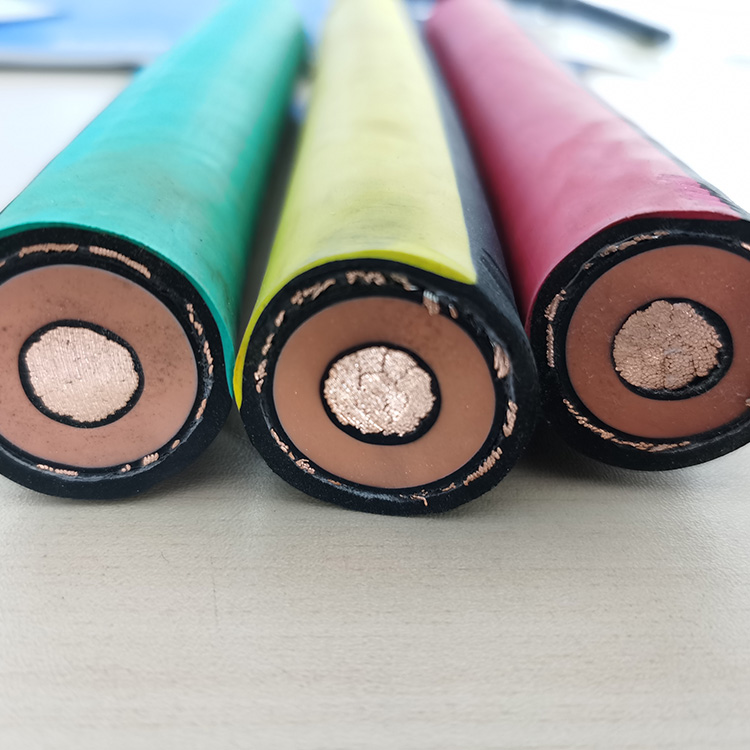
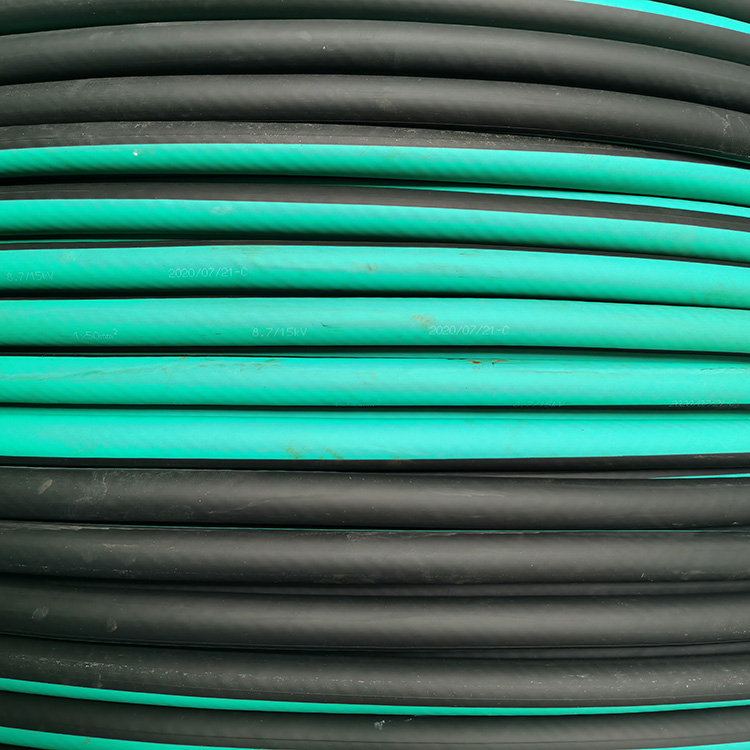

ERF 8.7/15KV 1x150 cable

Model: ERF 8.7/15KV 1*50
Voltage Ranges: 8.7/15KV
Conductor
The conductor uses tin-plated annealed soft copper, which should comply with the specifications of the 5th type of soft copper conductor in GB/T 3956-2008. The conductor is wrapped externally with a semi-conductive tape.
2.2 Insulation
Insulation is made of ethylene propylene rubber, and the nominal thickness is in accordance with Table 1. The minimum thickness at the thin point should not be less than 90%-0.1mm of the nominal value. The insulation performance meets the requirements of EPR insulation blend in GB/T 12706.2-2008, and the insulation adhesive is red.
Simultaneously extrude both a semi-conductive shield and a removable insulating shield during insulation extrusion.
2.3 Shielding Layer
The shielding layer for power cores of 50mm2 and below is composed of tin-plated copper wire and fiber interwoven; the shielding layer for power cores of 70mm2 and above is made of tin-plated copper wire woven.
Outer sheath
The outer sleeve is made of weather-resistant rubber. The nominal thickness of the sleeve complies with the specifications in Table 1, with the thin point thickness not less than 85% of the nominal value minus 0.1mm. The sleeve performance meets the requirements of the GB/T 12706.2-2008 SE1 sleeve compound. The color of the sleeve is black.
Primarily used for:
1. Temporary lines for reuse in the distribution network, emergency repair lines alongside roads, and temporary working lines for the electric power bureau.
2. Transformer cabinets, internal connections within switch cabinets, internal or inter-cabinet connections of ring main cabinets, mobile transformer stations, and high-voltage drop lines, etc.
3. Suitable for various low-voltage switchgear and motor connecting wires.
4. Attachment Factory Test Cables (reusable). Suitable for locations requiring flexible cables.
5. Connections for variable-frequency drives and similar equipment, insulated with ethylene propylene rubber (EP) flexible cables for variable-frequency units
1. Suitable for various low-voltage switch cabinets and motor connecting wires.
2. Conductors are made of tinned copper wires twisted together, with a continuous operating temperature of the cable conductor at 90°C.
3. This product features ethylene propylene rubber insulation and a mixed rubber sheath, meeting environmental protection standards.
4. The outer sheath features excellent flame-retardant properties, as well as oil and ozone resistance.
5. Production Range: 6mm² to 630mm²
6. Voltage Grades: 0.6/1KV, 8.7/15KV, 26/35KV, 64/110KV
Three: Product Structure and Performance Features
Conductors are made of 5e soft conductors, typically tin-plated.
Insulation for cables 6kV and above utilizes a three-layer co-extrusion process, offering the same dielectric strength and partial discharge performance as cross-linked cables.
6kV and above cables are shielded with copper wire braiding for flexibility and movement requirements, offering softness; for short distances (less than 5 meters), metal shielding may not be necessary, but must be confirmed by a technician; the jacket is made of chloroprene, featuring flame retardancy and oil resistance.
Selection of Accessories for Medium and High Voltage Flexible Cables
Just use cold shrink or hot shrink accessories for cross-linked cables, but note that:
Due to the softer conductor being thicker than the tightly compressed conductor of the same cross-section, and the insulation layer typically being 0.5mm thicker than the cross-linked insulation, the overall outer diameter will be larger by more than 1.5mm after insulation. There are no issues when crimping the terminal nuts, but the accessory sizes sometimes need to be one size larger than those of the cross-linked cables.
64/110KV Product Structure and Performance Features
6kV and above cables utilize a three-layer co-extrusion process for insulation, offering the same voltage withstand and partial discharge performance as cross-linked cables.
6kV and above cables use copper wire braid for shielding to accommodate bending and movement requirements, ensuring flexibility. For short distances (less than 5 meters), metal shielding is not required, but must be confirmed by a technician. Cold shrink or heat shrink fittings for cross-linked cables can be used, but note: the soft conductor is thicker than the tightly compressed conductor of the same cross-section, and the insulation layer is generally 0.5mm thicker than the cross-linked insulation, resulting in an outer diameter increase of more than 1.5mm after insulation. There's no issue with crimping termination nuts, but the fitting size may sometimes need to be a size larger than the cross-linked cable. For cables with special requirements, such as suitable for long-length suspended laying, resistance to low temperatures, flame retardancy, waterproofing, and tin-plated conductors, our company can provide customized services!
