


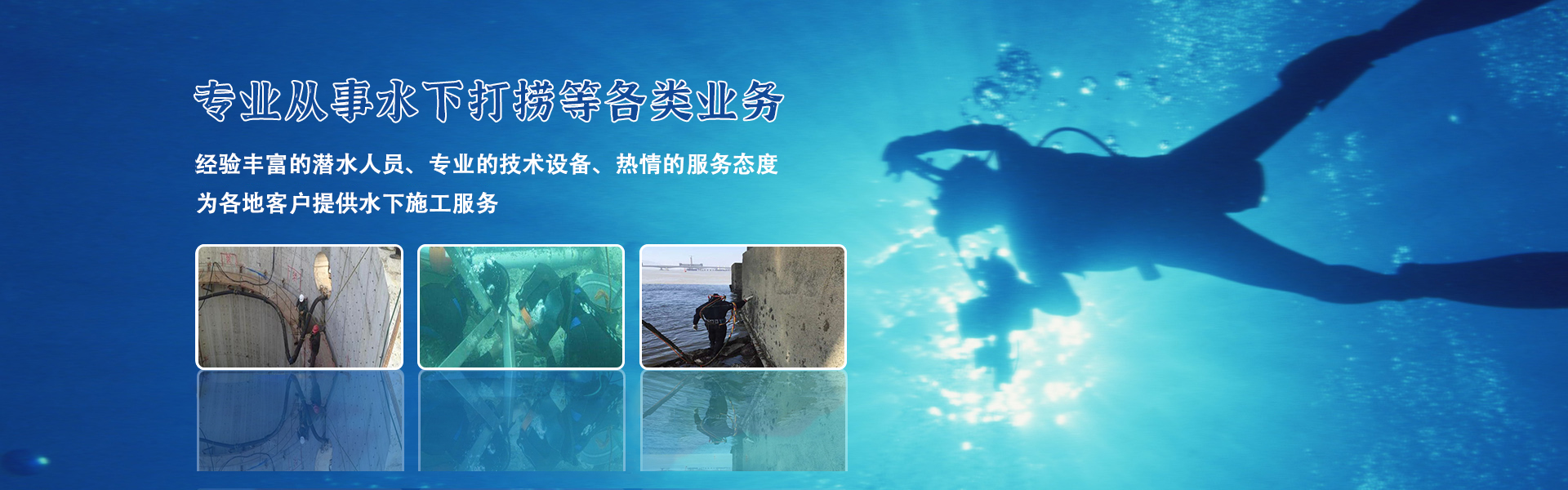

Diving and recovery operations can be dangerous, but they're not as terrifying as people might imagine. With the advancement of technology, diving and recovery skills have greatly improved, significantly reducing risks, and the required equipment has become more straightforward. Some diving and recovery techniques are now as simple as land welding. And for any engineering skill, as long as it's carried out according to regulations, the risk is minimal, and this applies to diving and recovery as well.
Together, it is necessary to set flags, lights, and buoys at prominent locations in the diving operation area and on the work vessels. Any unrelated vessels are prohibited from entering the diving operation area. Divers must be familiar with the rules of rope usage and pre-established contacts. Particularly in deep water, high flow, reservoirs, and dams, it is essential to use mooring lines for operations, so that winches can be used for transmission in case of malfunctions. The formulation of a recovery plan is an important part of underwater recovery. We must approach the task with a meticulous work ethic, carefully and thoroughly draft plans for each stage, and be prepared for emergencies. There are many unknown factors in underwater recovery operations. In the face of these factors, we must maintain a calm attitude and do the job well. We must never allow impatience and panic to arise to avoid unnecessary losses and injuries.
