


Insulating Tube Support Manufacturing and Processing Technology
1. The "rigid frame" section of the pipe support
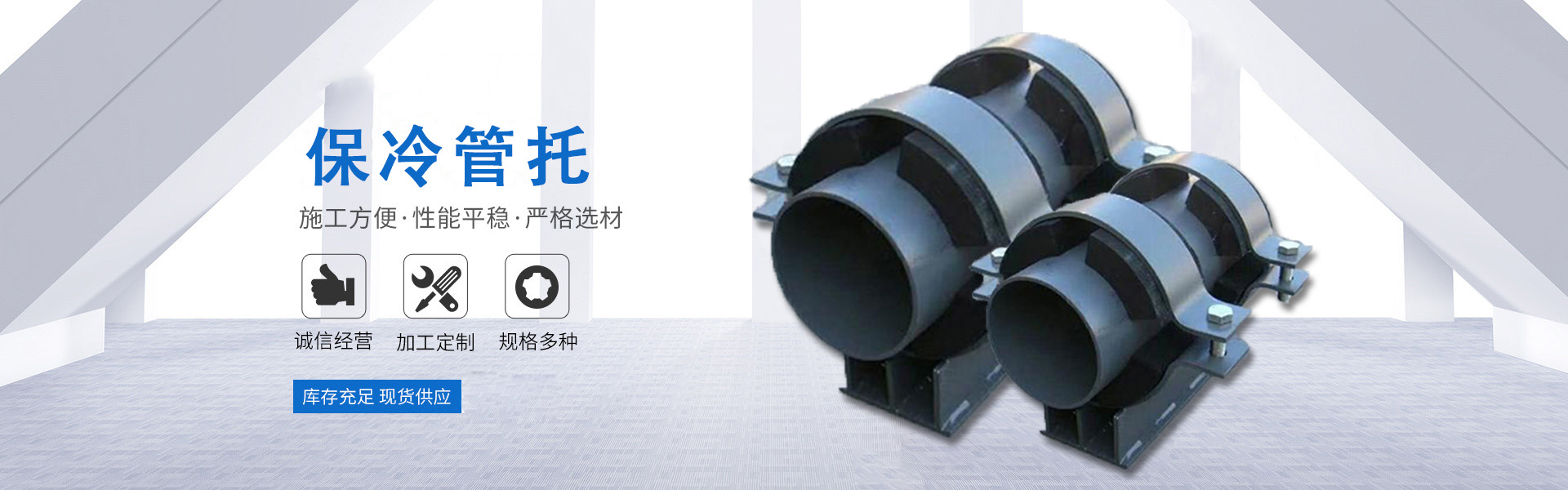
The "upper and lower tiles" for heat-insulating tube supports are formed using precision molds on large-tonnage (40~400T) press machines, minimizing the number of weld seams in the assembled components to ensure the product is aesthetically pleasing and spacious, with minimal dimensional errors.
2. Insulation Materials Segment:
After years of production practice and multiple collaborations with research institutions, we have developed a new thermal insulation material based on traditional formulations. This material is primarily composed of a mixture of various silicate compounds, supplemented with additives. It undergoes rigorous processes including precise blending, static pressure forming, drying, and inspection to achieve its final form. The resulting thermal insulation material boasts high hardness, excellent strength, and a low thermal conductivity coefficient.
3. Relative Sliding Section:
For sliding pipe supports, the friction coefficient between the base and the pipe support is also an important performance indicator affecting the pipe support parameters. The "SUS304" mirror panel is in contact with the modified polytetrafluoroethylene board; the denser polytetrafluoroethylene board is processed into one with carbon steel foundation through a unique sintering process, thereby ensuring that the bonding force between the surfaces of the two materials has reached the peak. Tests have proven that the lateral shear stress limit at the bonding surface exceeds the stress limit of polytetrafluoroethylene, enhancing the working strength of the bonding area under high thrust conditions.
4. Corrosion-Resistant Coating Technology
Insulating tube supports are typically installed on outdoor chemical pipeline galleries, where the working environment not only includes conventional atmospheric corrosion but also a small amount of chemical substance corrosion. If no special anti-corrosion treatment measures are taken on the exterior of the tube supports, their surfaces often become rusty after just one year of use. This not only affects the overall appearance of the pipeline gallery but also shortens its service life. Two anti-corrosion treatment methods have been adopted to meet different requirements:
1) Paint Finishing Process: Utilizes superior anti-corrosion paint material for two or more spray-baking treatments.
2) Hot-Dip Galvanizing: The overall outer surface of the pipe support assembly is subjected to hot-dip galvanizing, with the zinc layer thickness typically reaching about 0.7mm.

