

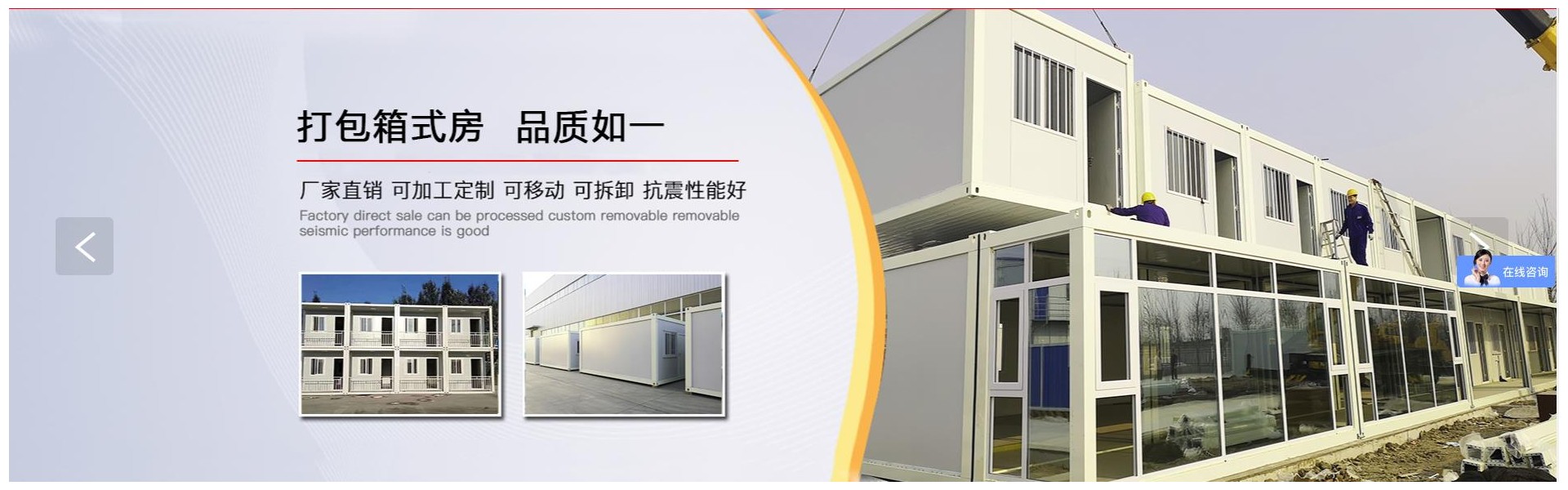




Caution for Occupied Container Installation:
1. Pay attention to drainage and water supply: As the container is an integrated ironwork structure, proper drainage and water supply are crucial to prevent moisture damage later on. Generally, the ground level of the container house should be higher than the surrounding area. Additionally, a drainage channel should be excavated around the container. During the summer rainy season, a "man" shaped canopy should be installed on the top of the container to allow for rainwater drainage. There are two main solutions for the water supply issue: connecting to the municipal water supply system or adding a water tank. These two methods can be used in conjunction.
Note insulation and heat preservation: Container houses are commonly used on construction sites to provide accommodation for workers. The containers themselves do not have insulation or heat preservation features, leading to cold in winter and hot in summer. In summer, when the outdoor temperature reaches 38°C, the internal temperature of the container can often soar to 42°C. Therefore, an insulation layer is crucial. After the container house is fixed, an additional layer of sound-insulating and heat-insulating cotton should be added, along with the installation of air conditioning facilities.
Three, Beware of Lightning Strikes: When installing container houses in mountainous wilderness, iron containers are prone to be targeted by lightning during thunderstorms. Therefore, the installation of lightning rods should not be overlooked. In addition to lightning protection measures, if the container house has structures like stairs, balconies, etc., welding a fence is also recommended.
One, pay attention to drainage and water supply: The container is an integrated ironwork structure. Ensuring proper drainage and water supply is essential to prevent dampness later on. Generally, the ground level of the container house should be higher than the surrounding area, and drainage ditches should be dug around the container. During the summer rainy season, a "man" shaped awning should be installed on the top of the container to allow rainwater to drain. There are mainly two solutions for the water supply issue of the container: one is to connect to the municipal water supply system, and the other is to add a water tank. These two methods can be used in conjunction.
Two, note thermal insulation: Container houses are commonly used on construction sites to provide accommodation for workers. The containers themselves do not have thermal insulation capabilities, leading to extreme temperatures inside. In summer, with outdoor temperatures reaching 38°C, the inside temperature of the container can soar to 42°C. Therefore, thermal insulation is crucial. After the container house is fixed, an additional layer of soundproofing and insulation cotton should be added, along with the installation of air conditioning equipment.
Three, Beware of Lightning Strikes: When installing container houses in mountainous wilderness, metallic container houses are prone to become targets during thunderstorms. Therefore, the installation of lightning rods should not be overlooked. In addition to lightning protection measures, if the container house has structures like stairs, balconies, etc., welding fences is also recommended.
One, Pay attention to drainage and water supply: As the container is an integral ironwork structure, ensuring proper drainage and water supply is crucial to prevent dampness later on. Generally, the ground level of the container house should be higher than the surrounding area. Around the container, a drainage ditch should be excavated. During the summer rainy season, a "man" shaped awning should be installed on the top of the container to facilitate rainwater drainage. There are mainly two solutions for the water supply issue of the container: one is to connect to the municipal water supply system, and the other is to add a water tank. These two methods can be used in conjunction.
Two, pay attention to thermal insulation: Container houses are commonly used on construction sites to provide accommodation for workers. The containers themselves do not have thermal insulation properties, leading to cold in winter and hot in summer. In summer, with outdoor temperatures reaching 38°C, the temperature inside the container often exceeds 42°C. Therefore, a thermal insulation layer is crucial. After the container house is fixed, an additional layer of sound-insulating and thermal-insulating cotton should be added, along with the installation of air conditioning facilities.
Three, Beware of Lightning Strikes: When installing container houses in mountainous wilderness, metallic container houses are prone to be targeted by lightning during thunderstorms. Therefore, the installation of lightning rods should not be overlooked. In addition to lightning protection measures, if the container house has structures like stairs, balconies, etc., it is also necessary to add welded fences.
