


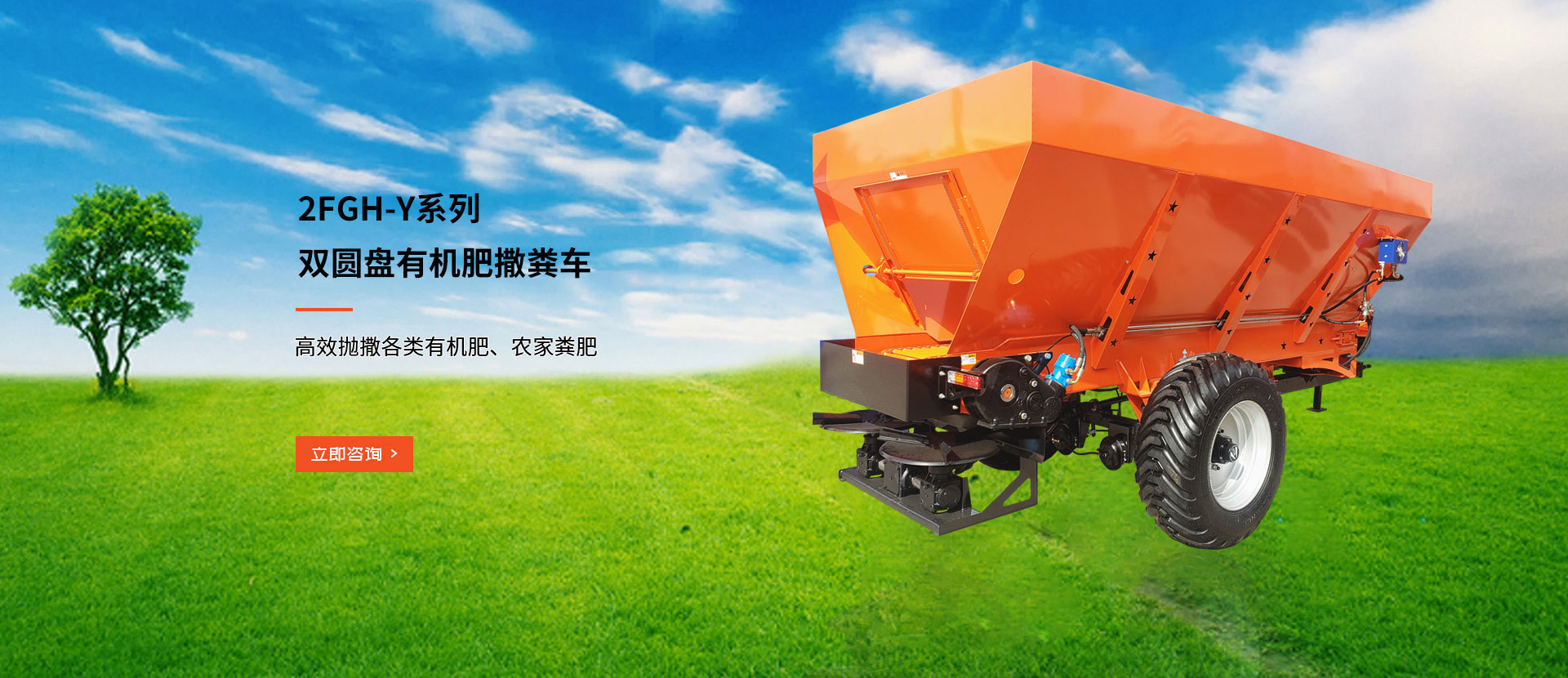

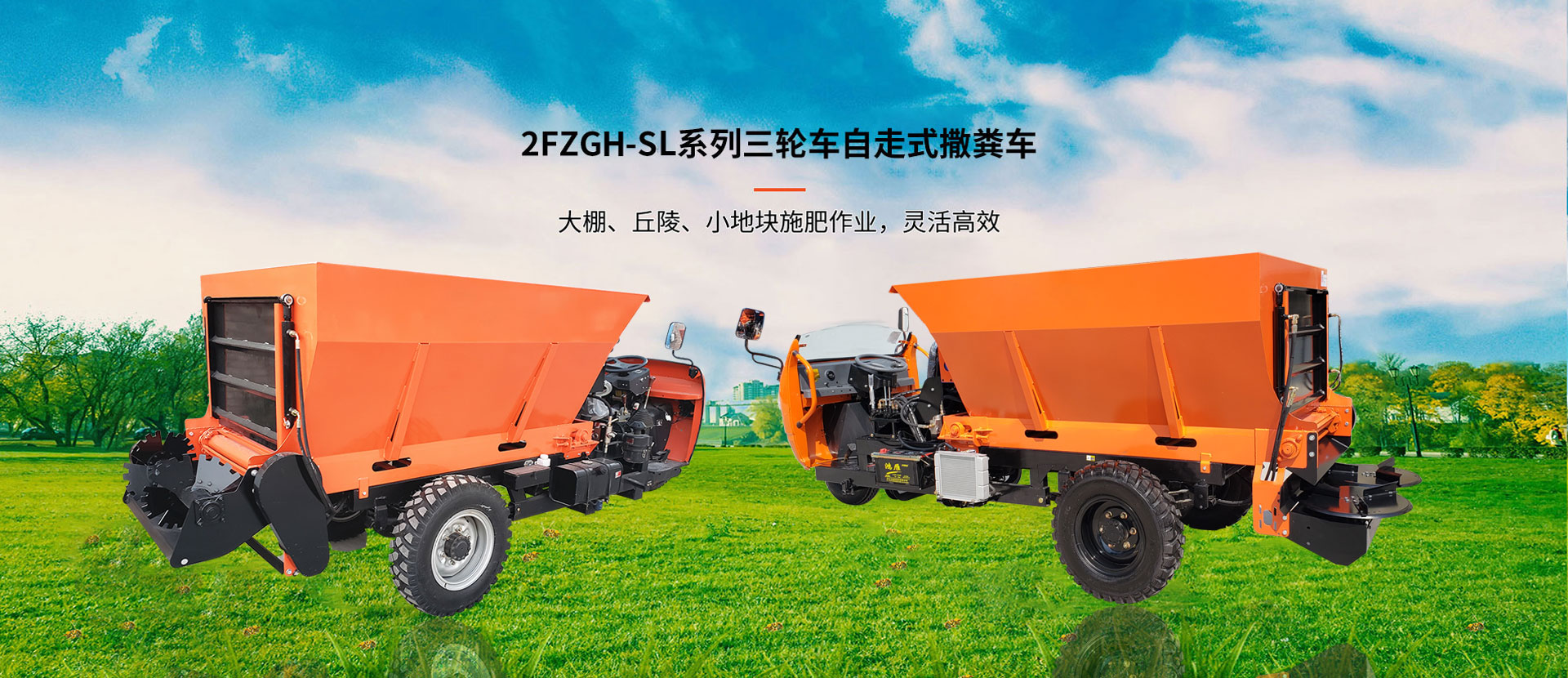

As spring planting season approaches, farmers often use farmyard manure as a fertilizer. This is spread onto the fields using manure spreaders and other mechanical spreading equipment. However, farmyard manure has a low content of effective ingredients and its fertilizing effect is slow. By adding a " additive" to the farmyard manure, not only can the volatilization and loss of effective ingredients be prevented, but the fertilizing effect can also be doubled. Let's take a look at the specific method below.
Add ferrous sulfate to human urine:
By adding 0.5 to 0.6 kilograms of ferrous sulfate per 100 kilograms of human urine, the ammonium bicarbonate in the urine can be converted into stable ammonium sulfate, which serves to preserve fertilizer, eliminate odors, and prevent nitrogen volatilization.
2. Adding superphosphate to the manure
Adding 20% superphosphate to the manure, mixing it thoroughly, and stacking it for 20 days not only prevents the volatilization and loss of nitrogen nutrients in the manure but also accelerates the composting process, increasing the effective phosphorus content.

The appropriate amount of farmyard manure is 500 to 1000 kilograms per mu. It can be applied by broadcasting, hole application, or spraying. When using farmyard manure, it should be mixed with chemical fertilizer.
3. Adding Ammonium Bicarbonate to Composted Fertilizer:
Chop plant stems and leaves into pieces, add 0.5% to 1% of ammonium bicarbonate and an appropriate amount of human feces urine, then pile and compost. After covering with mud and sealing for fermentation, it becomes high-efficiency organic fertilizer.
4. Adding superphosphate to the草木灰
Soak 3 kg of plant ash in 15 liters of water, then add 1 kg of calcium phosphate, stir until uniform. After 6 hours, add another 50 liters of water and mix well. Allow to settle and decant the clear liquid for application, which will yield a fertilizer effect similar to that of potassium dihydrogen phosphate.
Now that we've discussed enhancing the effectiveness of farmyard manure application, let's delve into the taboos and techniques for using various types of farmyard manure.
Human feces and urine, a mixture of human feces and urine, is a common type of farm fertilizer widely used in rural areas. Human feces contain approximately 20% organic matter, while human urine contains about 3% organic matter, with a higher content of urea and a small amount of uric acid and hippuric acid. Human feces and urine must be fermented and decomposed before use. Once composted, they should be diluted with water for application. Effective for the growth of various crops, it is suitable for leafy vegetables (such as cabbage, kale), hemp, etc. However, it is not recommended to use it excessively on crops that are sensitive to chlorine, such as tobacco, potatoes, and sweet potatoes.
Manure is a fertilizer made from the excrement and straw bedding of livestock such as pigs, cows, horses, sheep, chickens, and ducks. It is categorized into animal manure and poultry manure. Animal manure includes pig, cow, horse, and sheep manure. Pig manure contains more nitrogen, while cow manure has lower organic matter and nutrient content among domestic animals. Horse manure is rich in cellulose and hemicellulose, and sheep manure has a higher organic matter content compared to other animal manure. Animal manure must be composted and aged before use. It can be used as both base fertilizer and topdressing, with base fertilizer being preferable.
Poultry manure refers to a general term for chicken, duck, goose, and pigeon droppings. It is an easily decomposable organic fertilizer. The nitrogen in poultry manure primarily exists in uric acid form, which cannot be directly absorbed and utilized by crops and is harmful to the growth of crop roots. Additionally, fresh poultry manure tends to attract subterranean pests. Therefore, poultry manure should be composted before use as fertilizer. Composted poultry manure can be used as base fertilizer, topdressing, and seed dressing.
Compost is an organic fertilizer produced by decomposing various organic materials such as crop residues, waste, peat, green manure, mountain soil, and grass clippings, along with animal and human excrement. It is a complete fertilizer rich in nitrogen, phosphorus, potassium, and organic matter, suitable for a wide range of crops. Due to its ability to loosen soil upon application, it is particularly beneficial for root and tuber crops. Compost is a slow-release fertilizer and is best used as a base fertilizer, not as a top dressing. When used as a base fertilizer, it is typically applied during soil turning and preparation, allowing it to continue decomposing and releasing nutrients for the crop to absorb.


