


 通过中商114认证

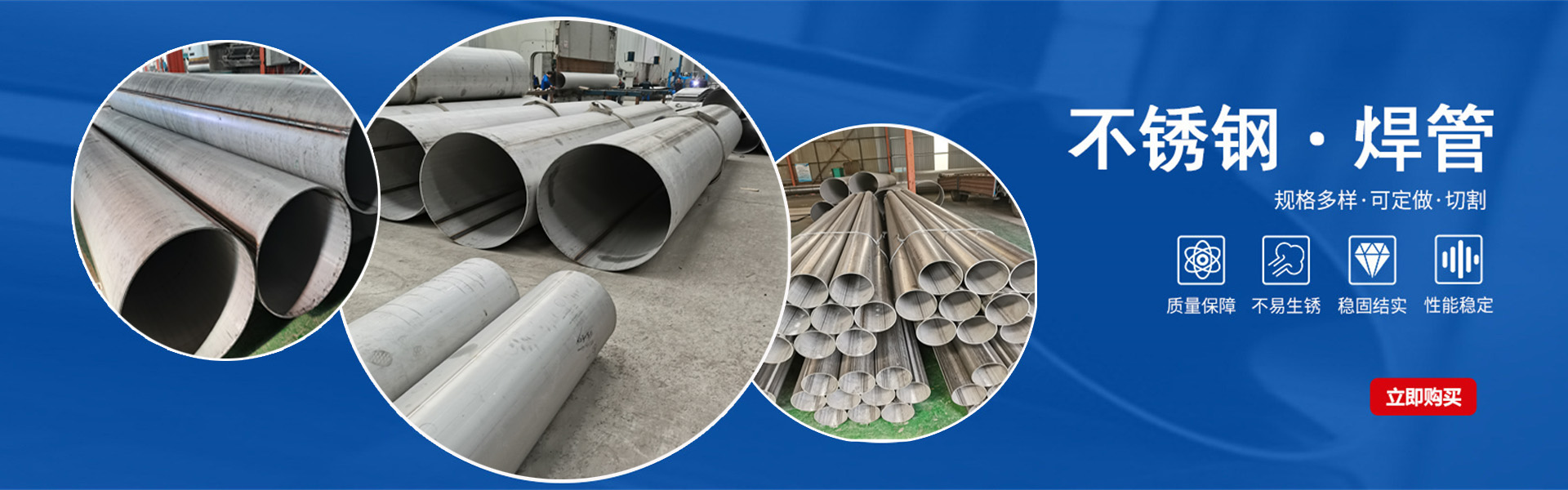
Welding of stainless steel tubes emphasizes the following key points: The development of steel tube technology originated with the rise of the bicycle manufacturing industry. The early 19th century oil exploration, ship, boiler, and aircraft production during World War I and II, the growth of the chemical industry, and the drilling and transportation of oil and natural gas all significantly propelled the steel industry's growth in variety, output, and quality. 1. Use a vertical external characteristic power source; during DC welding, the positive polarity (welding wire connected to the negative electrode). 2. Generally suitable for welding thin tubes of 6mm or less, with good weld bead appearance and minimal deformation. 3. The shielding gas is argon, with a purity of 99.99%. At a welding current of 50-50A, the argon flow rate is 8-0L/min; at a current of 50-250A, the argon flow rate is 2-5L/min. 4. The length of the tungsten electrode protruding from the gas nozzle is optimal at 4-5mm, 2-3mm in poor shielding areas like corner welding, and 5-6mm in deep slots. The distance from the nozzle to the workpiece should generally not exceed 5mm. 5. To prevent the formation of welding pores, the welding area must be cleaned of rust, oil, and other contaminants. 6. Welding arc length: for general steel welding, 2-4mm is ideal, while for stainless steel welding, 3mm is preferable. A longer arc length results in poor protection. 7. During weld prep, to prevent oxidation of the back of the weld seam, backside protection should also be applied. 8. To ensure effective argon protection of the weld pool and facilitate welding operations, the central line of the tungsten electrode should generally maintain an angle of 80-85° with the welding area, and the angle between the filler wire and the workpiece surface should be as small as possible, ideally 0°. 9. Wind protection and ventilation: In windy areas, use screens to block the wind; indoors, appropriate ventilation methods should be used.
News Center Co., Ltd.
