
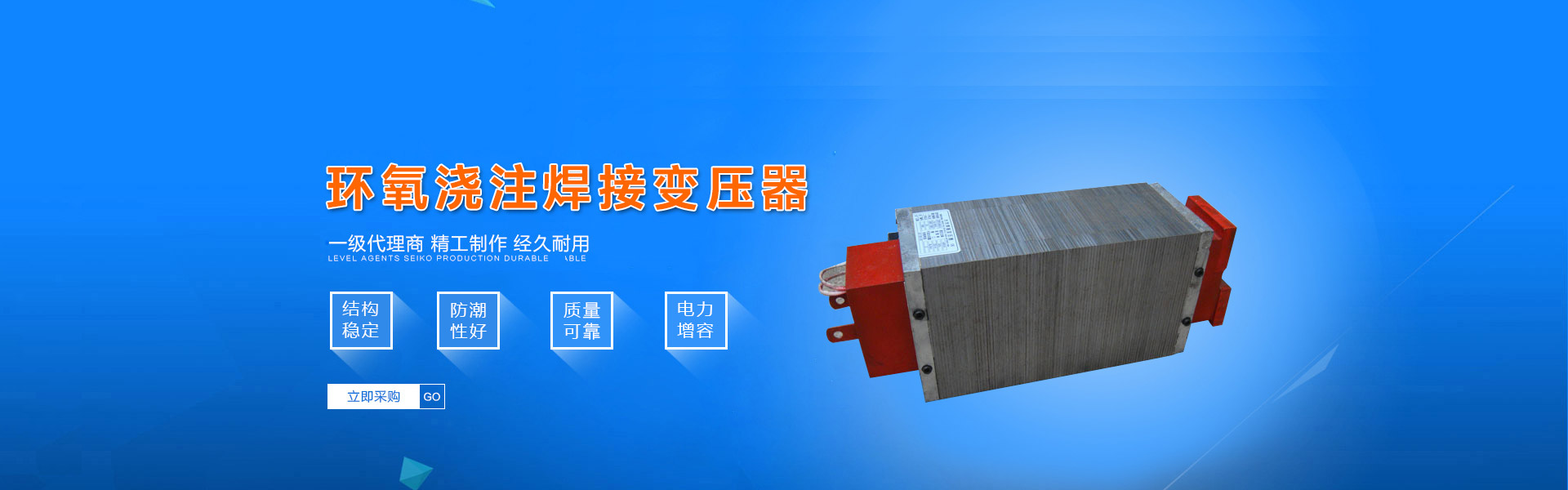


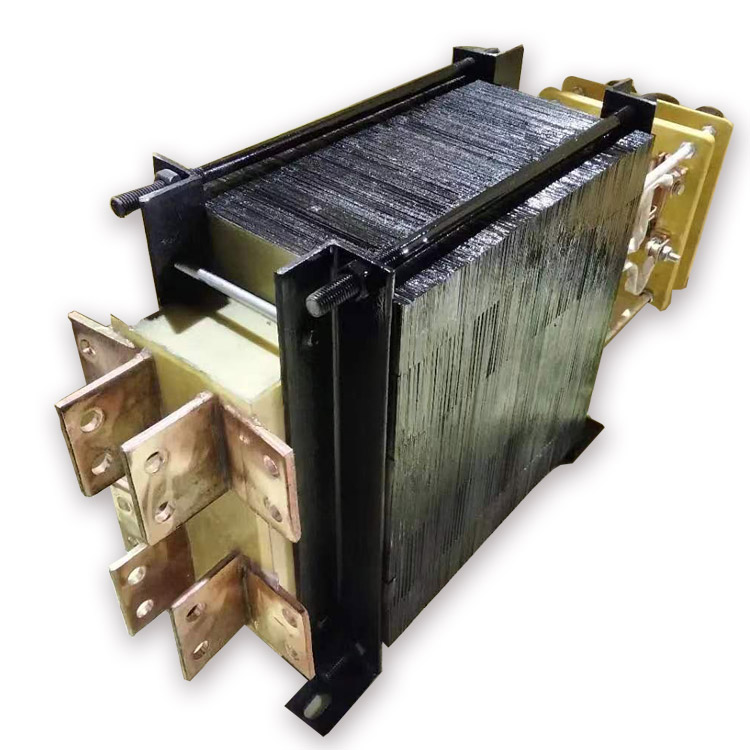
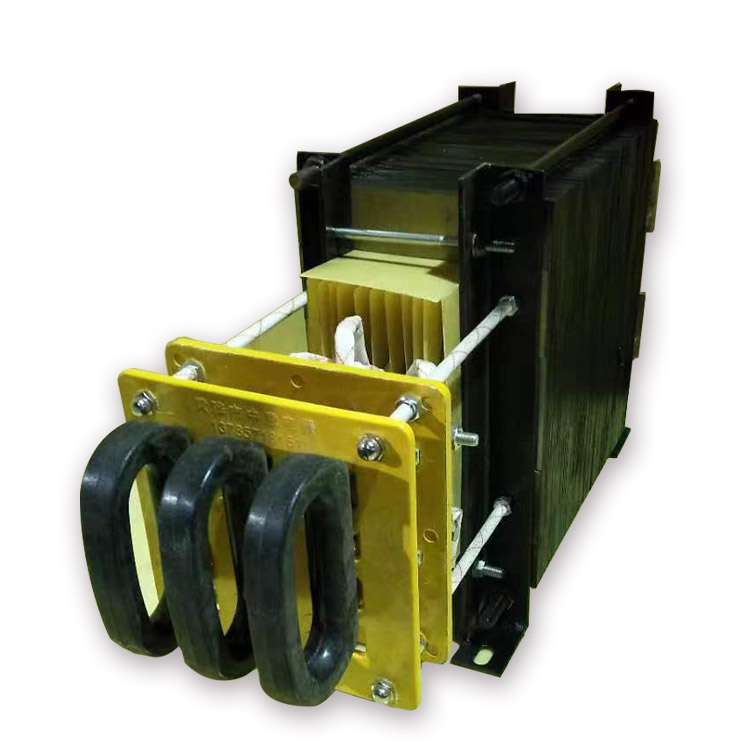
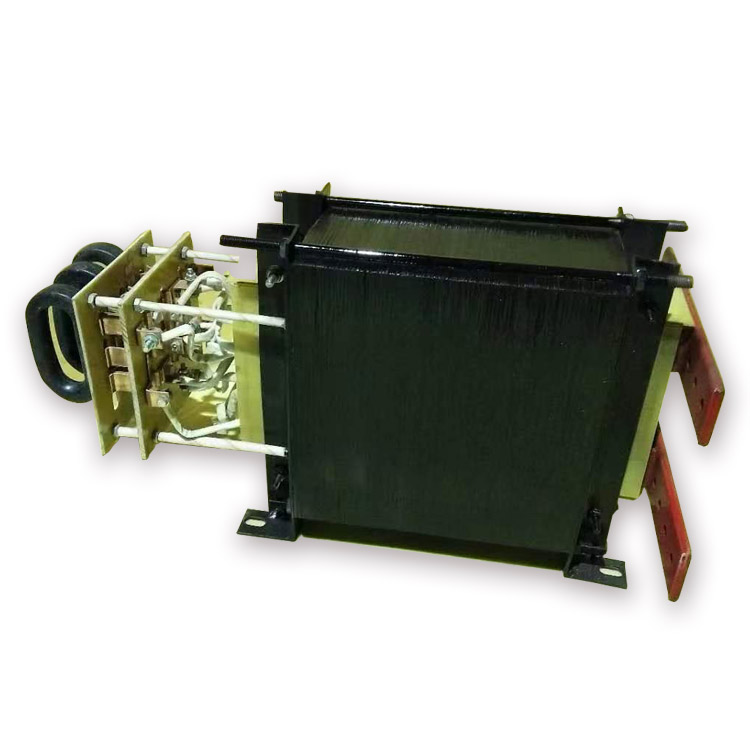
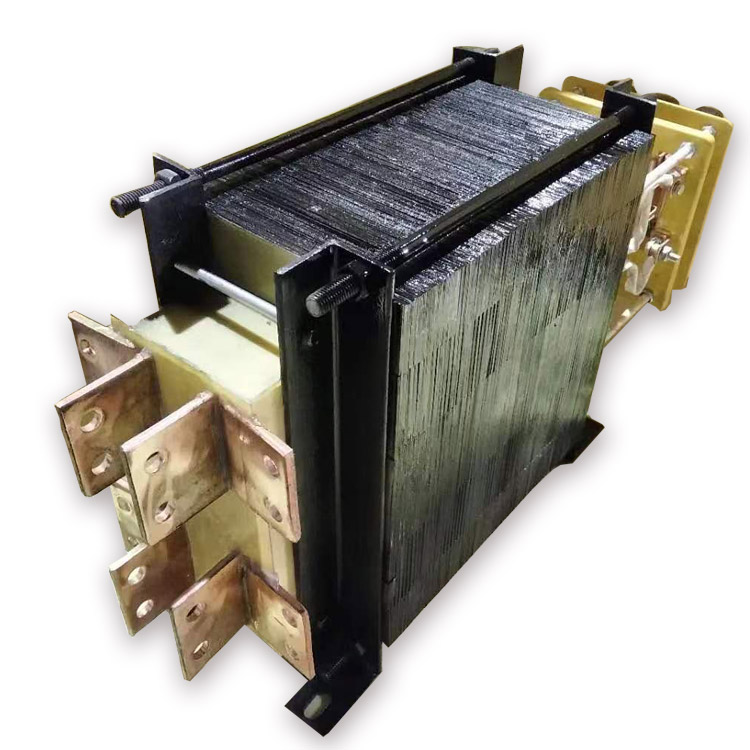

A welding transformer is a two-winding transformer. To adjust the arc ignition voltage, the primary winding is equipped with tap changers, and a tap switch is used to regulate the secondary side's no-load voltage. The primary and secondary windings are mounted on two core columns, which give the transformer a significant leakage reactance, causing the secondary side terminal voltage to sharply decrease with increasing current. An iron-core reactor is串联 in the secondary winding circuit for adjusting the welding current. By increasing the air gap length of the reactor, the current increases with the air gap's length.
Welding transformers primarily come in three types: iron-core, coil-core, and tap-changing. The basic principle of welding transformers has remained largely unchanged for decades. Both domestically and internationally, the welding transformers in use are a special type of step-down transformer with a steep external characteristic. Although they can be categorized into several types based on the method of achieving the steep external characteristic, the combination of reactors with transformers, and the method of adjusting current, the fundamental principle is still that of a general transformer.
w1 is the primary winding, and w2 is the secondary winding. Both w1 and w2 are wound on the same core. The primary winding transmits electrical energy to the core, creating an alternating magnetic field within it. The core then transfers magnetic energy to the secondary winding, which generates induced electromotive force. This is the basic working principle of a transformer. k is the ratio of the induced electromotive force in the transformer's primary and secondary windings, which is equal to the ratio of their turns.
Welding transformers are widely used in production, essentially being a specialized step-down transformer. Their operating principle is the same as that of a standard transformer, but their performance differs significantly. The characteristics of welding transformers include: before welding, the secondary winding must have sufficient arc voltage (60-75V), and during welding, as the welding current increases, the secondary voltage can quickly drop. Even if the secondary side is short-circuited (such as when the welding rod touches the workpiece, the secondary voltage is zero), the secondary current will not be excessively high. In other words, the relationship between the output voltage u2 and output current i2 of the welding transformer is illustrated in Figure 1 (b).
The welding transformer possesses these characteristics due to its distinct structure from a typical transformer. The principle of the welding transformer is illustrated in Figure 1(a). Its primary and secondary windings are mounted on two separate cores, with the secondary winding in series with an inductor. The inductor's core has not only a certain air gap but also a rotating screw that can adjust the length of the air gap to achieve different sizes of welding current. As the air gap increases, the current increases, shifting the external characteristic curve to the right. Conversely, when the air gap decreases, the current also decreases, shifting the external characteristic curve to the left.
