
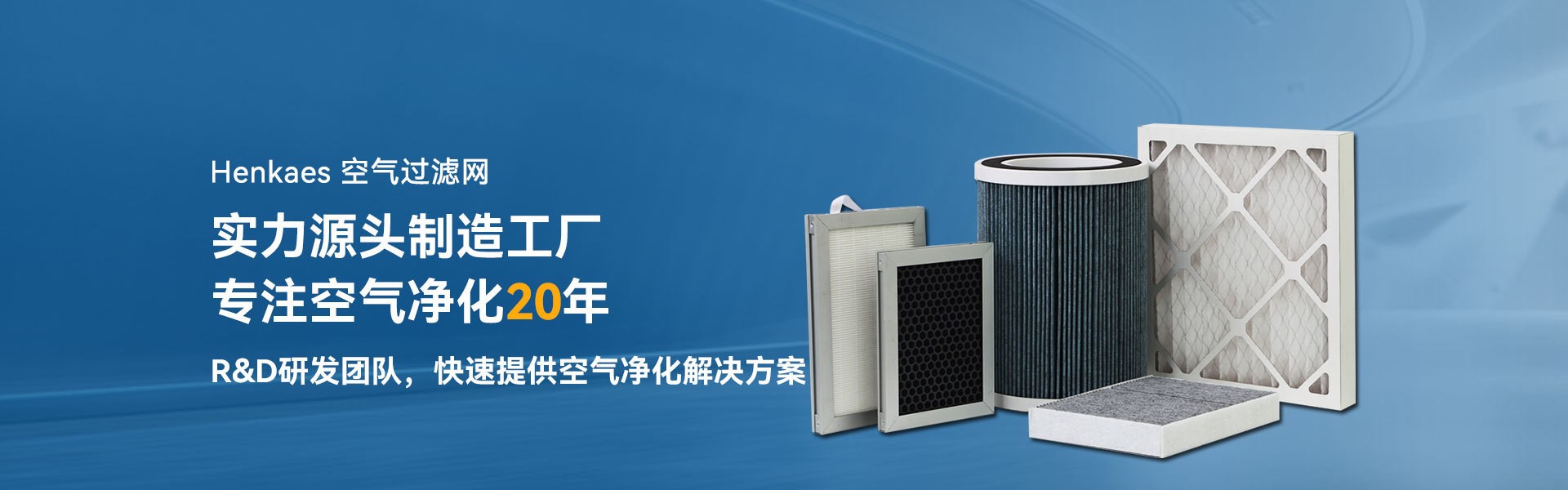





In environments or cleanrooms, high-grade HEPA (High-Efficiency Particulate Air) filters are often required. Technically, filter louvers and air intake grilles are installed on the side walls. The purification equipment features gas disinfection ports, filter sections, disinfection or purification validation devices, etc. Due to the stringent requirements, to ensure filter efficiency, the demands received by air filter factories often reach up to 99%@Mpps.
These air filters typically feature a dry seal between the filter and the equipment housing, with the sealing gaskets usually injection-molded as a single piece. Some customers may require the internal EPA filter paper to be UL-certifiable. The overall scan of the HEPA filter for local penetration or leakage should be less than 0.1%.
When manufacturing these air filters, it is essential to first upgrade the filter paper, as the efficiency is typically reduced after the air filter mesh is made. To achieve a filtration efficiency of H13, we opt for H14 filter paper. In terms of production, if the filter mesh size is small, it can be cut all at once, resulting in a good finish, although the development cost is higher. Flat foam adhesive is also a viable option.
It's worth noting that higher filtration efficiency is not always better. As the grade of filter paper increases, resistance also rises accordingly, which in turn lowers the airflow and reduces the unit-time air processing capacity. In an experimental setting, efficiency is tested once, but in actual use, it's about the overall capability to process a certain space, which is a different concept. It requires users to consider a balance when selecting the type.
