




Molecular sieves are crystalline silicate or silico-aluminates, formed by silicon-oxygen or aluminum-oxygen tetrahedra connected through oxygen bridge bonds. They possess a pore and cavity system with molecular sizes (typically 0.3-2.0 nm), thus exhibiting the property of sieving molecules. However, with the advancement in research on molecular sieve synthesis and application, researchers have discovered phosphoaluminate-based molecular sieves. The skeletal elements (silicon, aluminum, or phosphorus) of molecular sieves can also be substituted by B, Ga, Fe, Cr, Ge, Ti, V, Mn, Co, Zn, Be, and Cu, with pore and cavity sizes exceeding 2 nm. Therefore, molecular sieves can be classified into silico-aluminates, phosphoaluminates, and skeletal heteroatom molecular sieves based on their skeletal element composition. According to pore size, molecular sieves with pore sizes less than 2 nm, between 2-50 nm, and greater than 50 nm are respectively termed microporous, mesoporous, and macroporous molecular sieves. Due to their larger pore diameters, they serve as excellent carriers for reactions involving larger molecules. However, the non-crystalline walls of mesoporous materials currently do not meet the stringent conditions required for petrochemical applications in terms of hydrothermal and thermal stability.
Molecular sieves contain metal ions with low valence and large ionic radii, as well as water in a compound state. As they are heated, water molecules continuously evaporate, leaving the crystal lattice structure intact. This creates many cavities of the same size, which are connected by micropores of identical diameters. These uniform micropores can adsorb molecules smaller than the pore diameter into the cavity, while excluding larger molecules. This ability to separate molecules with varying shapes, polarities, boiling points, and saturation levels is what gives them their "sieve-like" action, hence the name "molecular sieve." Currently, molecular sieves are widely used in industries such as metallurgy, chemicals, electronics, petrochemicals, and natural gas processing.
Molecular sievetianranZeolite and synthetic zeolite.
① tianranZeolite is primarily formed through reactions of volcanic tuff and tuffaceous sedimentary rocks in marine or lacustrine environments. Over 1,000 types of zeolite deposits have been discovered, with 35 being particularly significant and common ones including fibrous zeolite, fibrous zeolite, woolly zeolite, and rhombic zeolite. They are mainly distributed in the US, Japan, France, and China, where substantial deposits of fibrous and fibrous zeolites have been found. Japan is a major country in the extraction of natural zeolite for molecular sieves.
② Due totianranZeolite, limited by resources, has largely adopted synthetic zeolite since the 1950s.
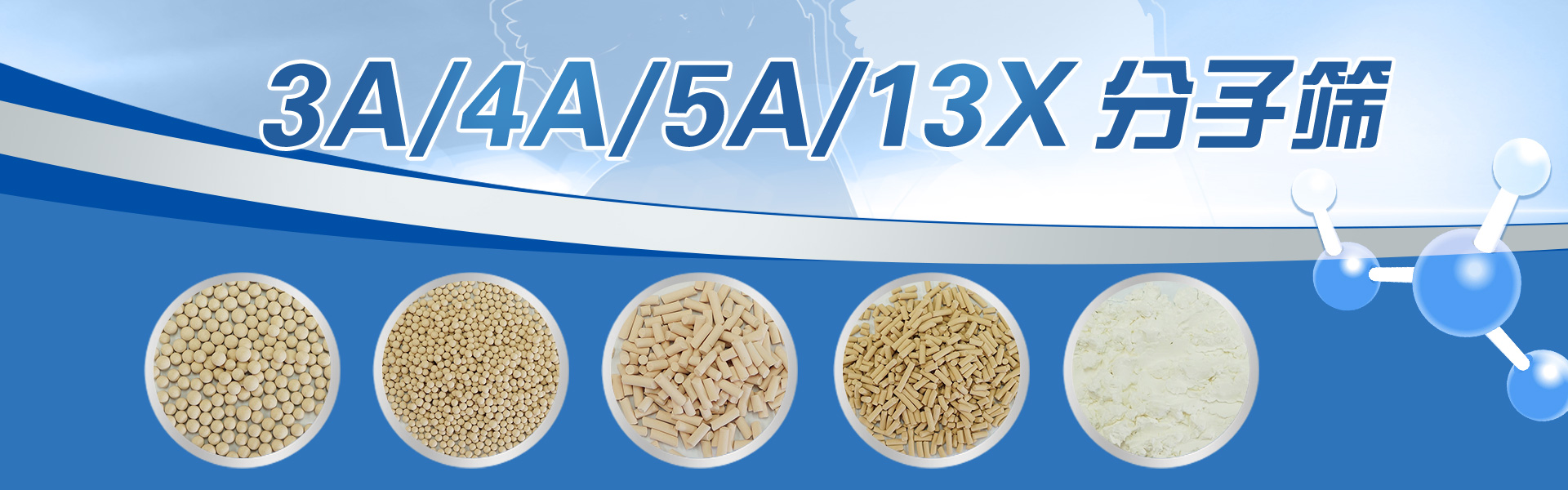
Molecular sieve products commonly use prefix numbers to classify sieve with different crystal structures, such as 3A, 4A, and 5A molecular sieves. The 4A type refers to Class A in the table, with a pore size of 4Å. Contains Na.+The A-type molecular sieve is denoted as Na-A, if it contains Na+Received a "K"+Exchange, with a pore size of approximately 3Å, it is a 3A type molecular sieve; if in Na-A, more than 1/3 of the sodium...+Please provide the Chinese content to be translated into American English.2+The exchange, with an aperture of approximately 5Å, is classified as a 5A type molecular sieve.
