

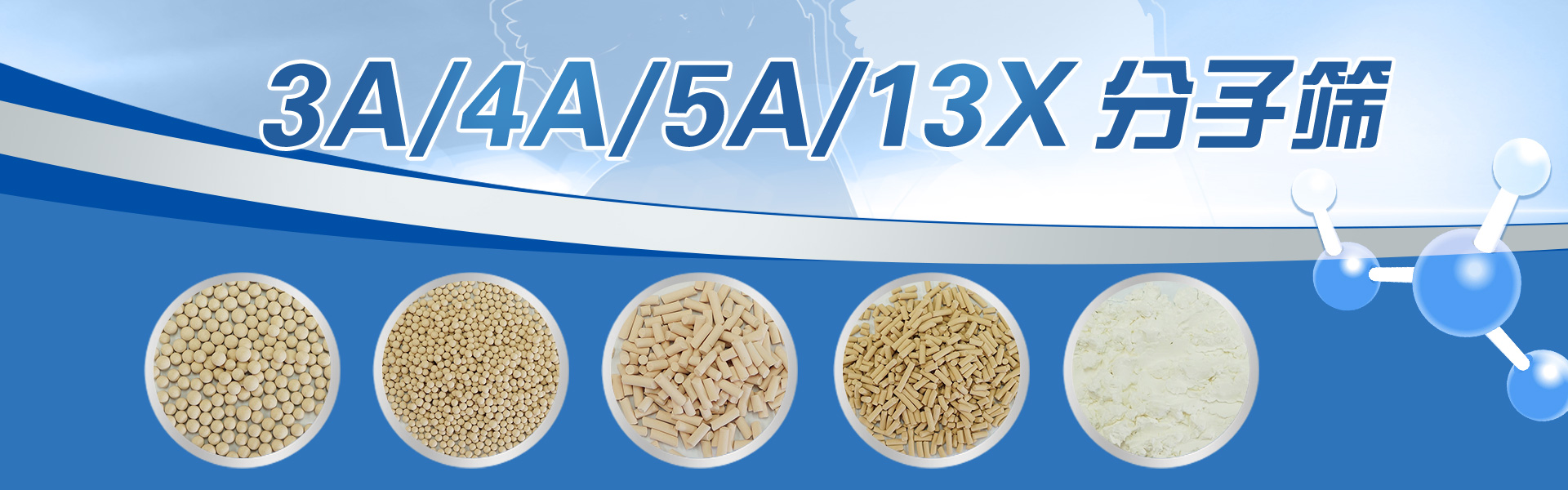



The desiccant principle of molecular sieves is based on their microporous structures' selective adsorption of water molecules. Water molecules are polar, and the pore walls of molecular sieves are composed of silicon-oxygen tetrahedra and aluminum-oxygen tetrahedra.
These tetrahedral charge distributions are uneven, resulting in a certain polarity on the surface of the pore walls. Consequently, water molecules can be adsorbed by the pore walls of the molecular sieve and form hydrogen bonds within the pores.
When gas containing water molecules passes through a molecular sieve, the water molecules are adsorbed by the walls of the sieve's pores, while other molecules cannot enter the sieve's micropores.
The water molecules are thus separated from the gas, achieving the goal of dehydration.
Furthermore, molecular sieve dehydration takes advantage of the characteristic that the equilibrium adsorption amount of the adsorbent decreases with the rise in temperature, employing the operation method of adsorption at room temperature and desorption by heating to achieve the separation of different gases.
The above content is for reference only. For more information, it is recommended to consult relevant literature or professional advisors.
