
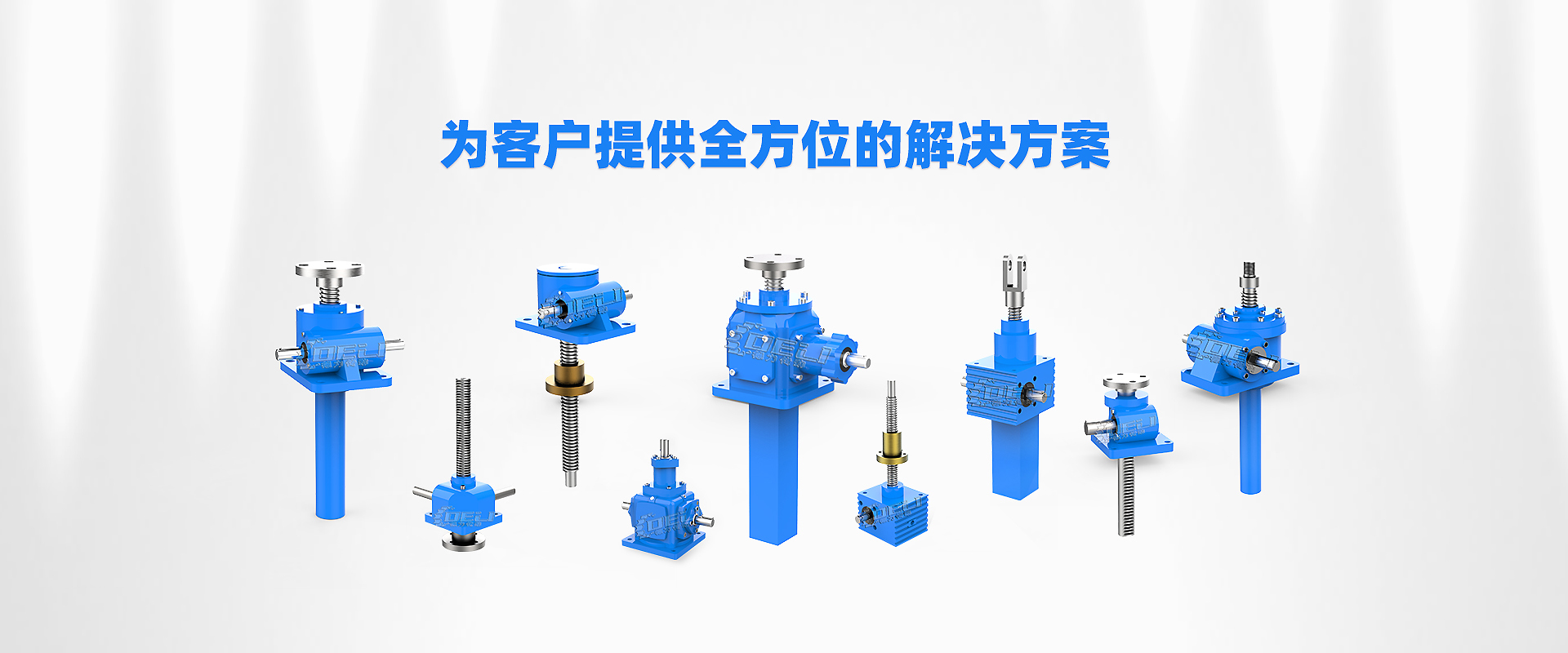
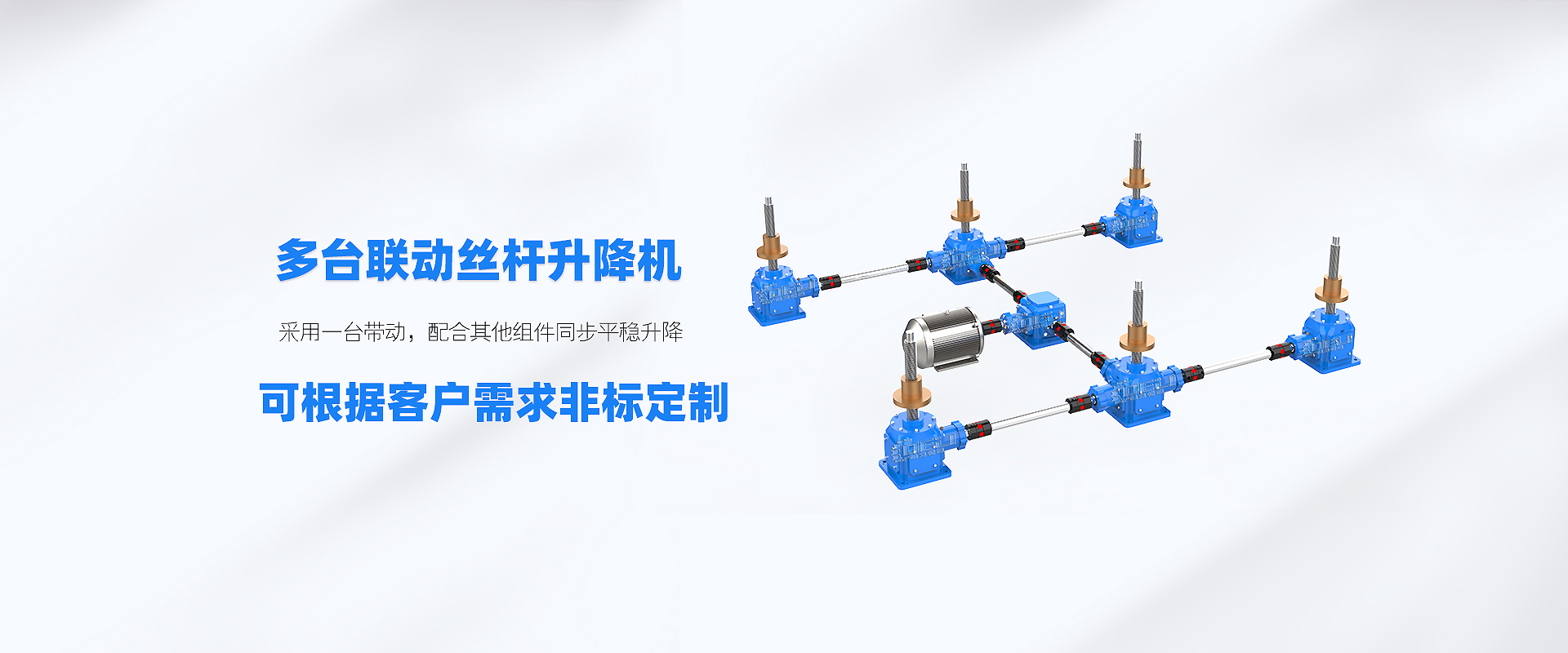

The worm and screw lifting jack, also known as a worm gear drive mechanism, is primarily used to convert rotational motion into linear motion or vice versa. The lifting jack consists of a worm gear reducer and a screw, with the worm gear being the component responsible for减速. The worm functions as the nut for the lifting screw, matching with it perfectly.
Frequent Questions and Their Causes
1 Elevator overheating and oil leakage
To enhance efficiency, worm gears in worm drives are made of non-ferrous metals, while the worm shaft is constructed from slightly harder steel. Due to the sliding friction transmission, the operation generates a significant amount of heat, causing varying thermal expansion between the components and seals of the lift. This results in gaps forming on the mating surfaces. The lubricating oil becomes thinner with the rise in temperature, which is prone to leakage.
The primary reasons for this situation include four factors: first, the irrational combination of materials; second, poor surface quality of the mating friction surfaces; third, incorrect selection of lubricant quantity; and fourth, poor assembly quality and usage environment.
2 Gear Wear
Worm gears are typically made of tin bronze, with mating worm materials hardened to HRC 45-55 using 45 steel or to HRC 50-55 with 40Cr, followed by grinding on a worm grinding machine to achieve a roughness of Ra0.8μm. Elevators operate smoothly with slow wear, with some models lasting over 10 years. If wear occurs more rapidly, consider whether the selection is appropriate, if the elevator is operating at overload, and factors such as the material, assembly quality, or operating environment of the worm and worm gear.
3 Small Helical Gears Wear
Generally occurring in vertical hoists, this issue is mainly related to the amount of lubricating oil added and the type of oil. During vertical installation, it's easy for there to be insufficient lubricating oil. When the hoist stops operating, the motor and the transmission gears between the hoist lose oil, leaving the gears without proper lubrication protection. Upon restarting the hoist, the gears, without effective lubrication, can lead to mechanical wear and even damage.
4 Helical Gear Bearings Damage
During malfunctions, it is common to find that the gear oil inside the elevator is emulsified, and the bearings are rusted, corroded, and damaged, even when the gear box is well-sealed. This is due to condensation water mixing with the oil as the gear oil temperature rises and then cools down after the elevator has been in operation for a period of time. Of course, it is also closely related to the quality of the bearings and the assembly process.
Solution
1. Ensure Assembly Quality
When purchasing or manufacturing tools for disassembling and installing elevator components, avoid using hammers and other tools for striking; when replacing gears, worm gears, and worm shafts, opt for original factory parts and replace them in pairs; when assembling the output shaft, pay attention to tolerance fitting; use a release agent or red lead oil to protect the hollow shaft to prevent wear, rust, or scaling on the mating surfaces, making it difficult to disassemble during maintenance.
Selection of lubricants and additives
Worm gear lifts typically use 220# gear oil. For lifts with heavy loads, frequent startups, and poor operating environments, some lubricant additives can be used. These additives ensure that the gear oil remains adhered to the gear surfaces even when the lift is stationary, forming a protective film that prevents direct metal-to-metal contact during heavy loads, low speeds, high torques, and startups. The additives contain sealant regulators and anti-leak agents, keeping the seals soft and elastic, effectively reducing oil leakage.
Selection of the Elevator Installation Location
Where possible, avoid vertical installation. When vertical installation is necessary, a significantly larger amount of lubricating oil must be added compared to horizontal installation, which can easily lead to heating and oil leakage in the elevator.
Establish a Lubrication Maintenance System
Maintain elevators according to the "Five Fixed" principle for lubrication work, ensuring each elevator is regularly inspected by a designated person. In case of significant temperature rise, exceeding 40°C or oil temperature over 80°C, a decline in oil quality, an abundance of copper powder in the oil, or abnormal noise, immediate cessation of use and timely repair are required to eliminate the fault and replace the lubricating oil. During refueling, pay attention to the oil quantity to ensure proper lubrication for the screw elevator.
