
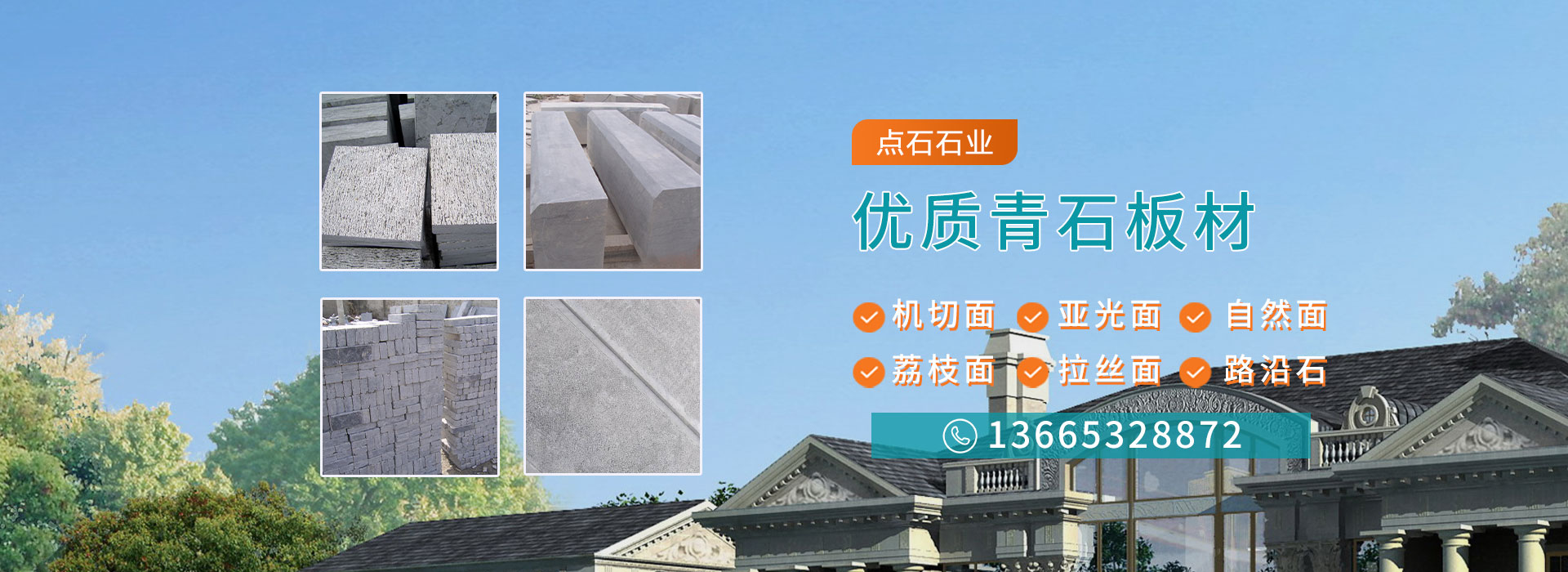
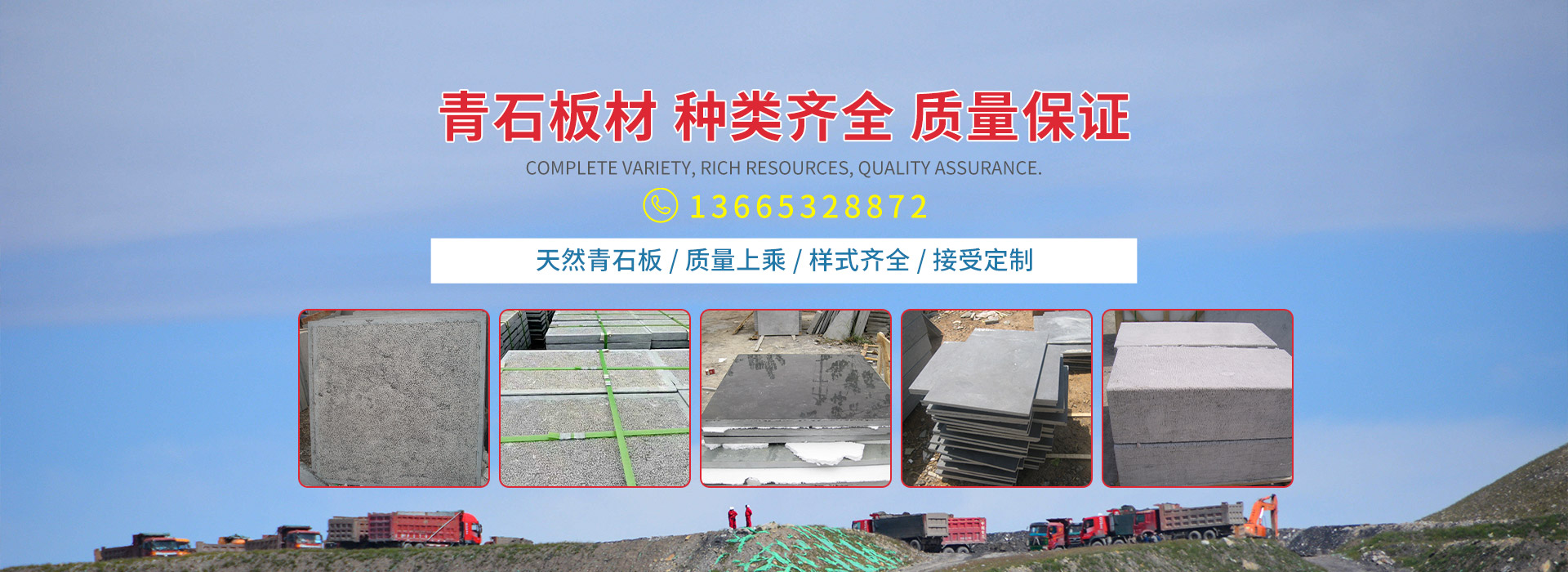
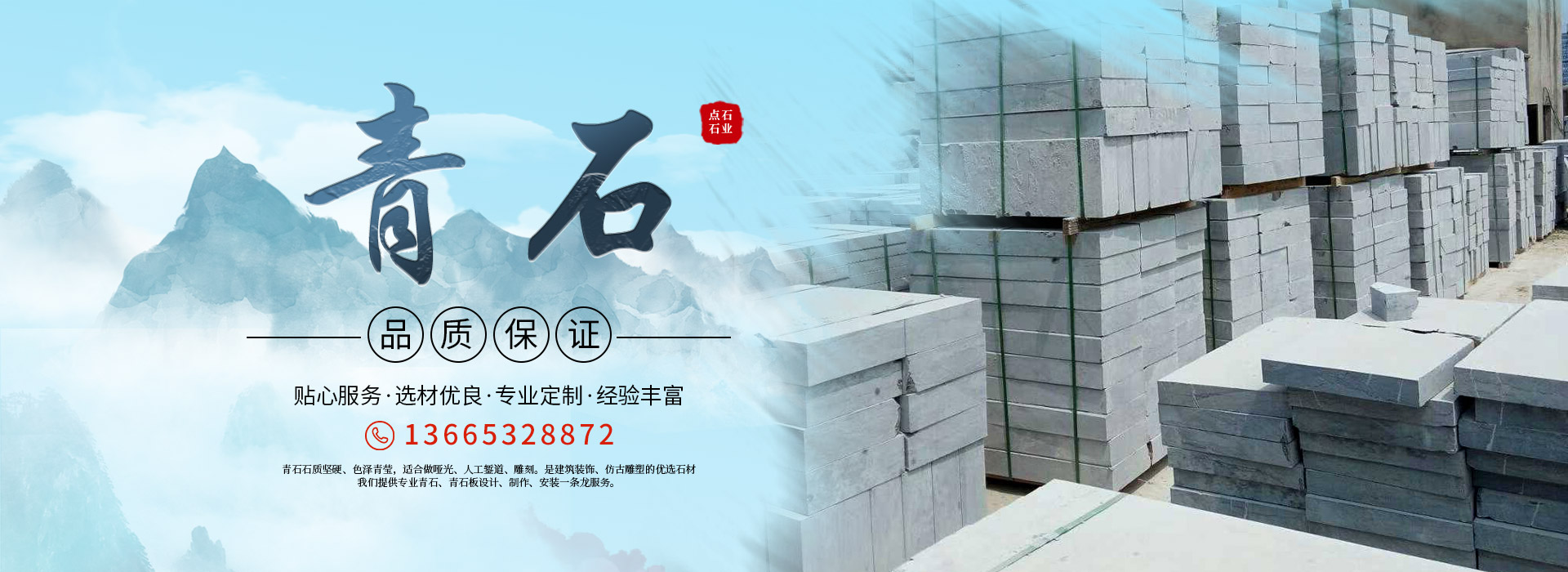

The ground paved with bluestone has a very good effect, especially its antique look. Now, most streets in antique architectural areas are paved with bluestone. After being walked on by passersby, the bluestone will develop an antique patina in a few years. Therefore, the demand for bluestone in pavement is still considerable. However, since bluestone is composed of limestone with a hardness of around 4.2, it is relatively brittle, leading to more breakage during production. Additionally, bluestone has its natural grain, known as the "black line." Some may say that if this type of stone is split, it is considered damaged. Pointstone Industry briefly introduces the material differentiation of bluestone slabs and how to correctly choose high-quality bluestone.

Greenslate Stone maintains strict grading standards from the initial mining stage. High-quality greenslate, without yellowing, large white veins, or poor cohesion, is classified as Grade A. Most of this grade features large stone sizes, sourced only from superior quarries. The less-than-perfect greenslate slabs we commonly use for processing are often selected from this category. When selecting greenslate, pay attention to the vertical water lines, avoid excessive white veins and large yellow spots. Check the flatness of the corners and measure the processing size for any significant errors. The key is to ensure the diagonal lines of the greenslate are not too inaccurate, as this affects installation. During packaging, ensure the edges are not damaged and are well-protected. A protective strip must be added in the center to prevent breakage during transportation. When loading, the vehicle must be stable to minimize damage to the greenslate within reasonable limits.
