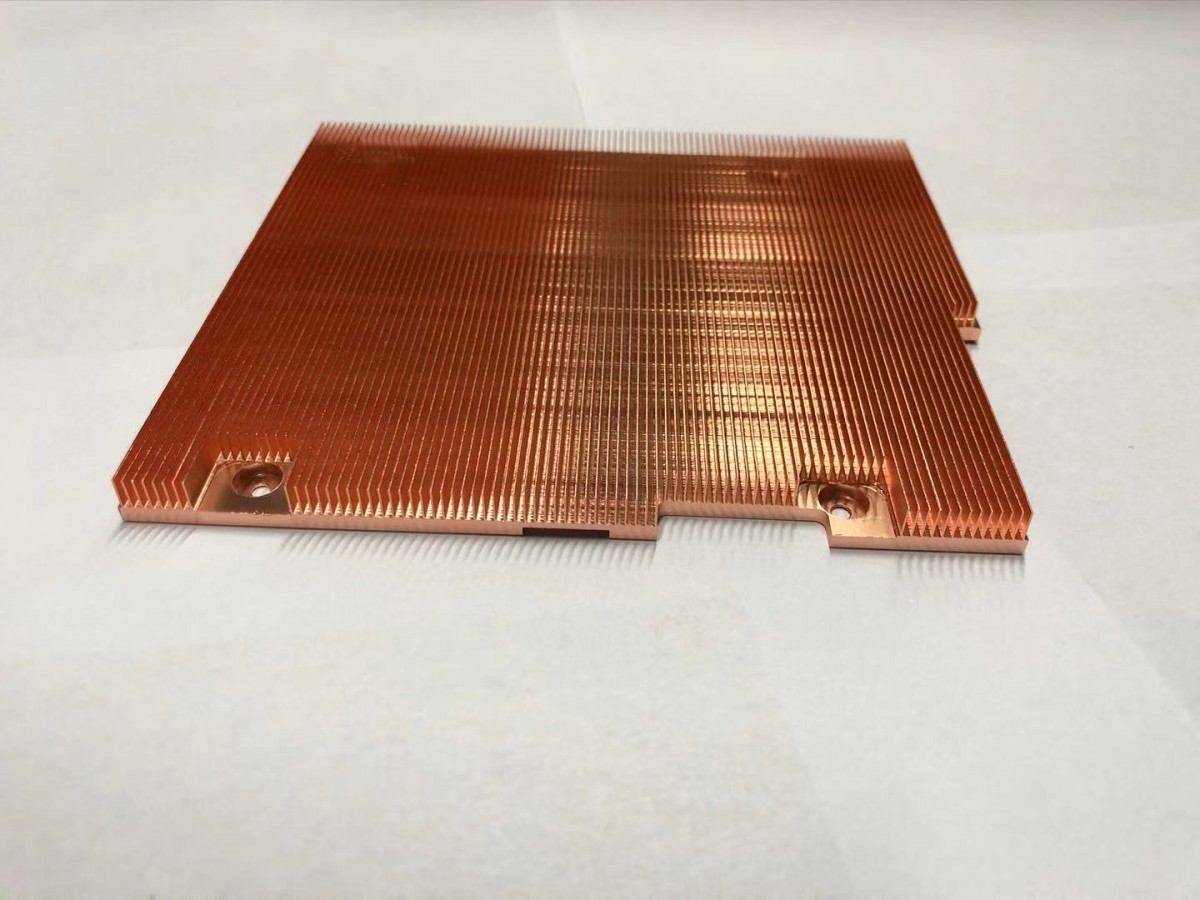

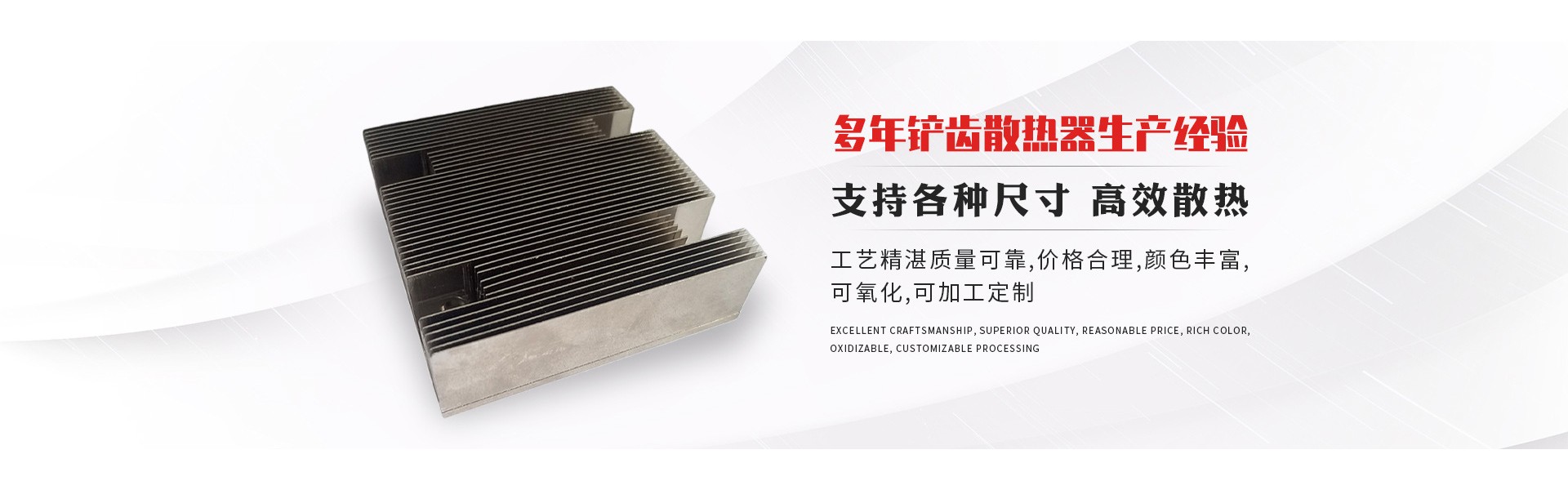

Aluminum alloy sheets are primarily made from 1060 aluminum alloy hot-rolled sheets, with a hardness of 24-38HB, sheet widths ranging from 50 to 500mm, and a tooth height of 100mm, with the tooth thickness approximately 1mm. There are also sheets made from 6063 aluminum alloy extruded plates, featuring a hardness of about 34-42HB, a tooth height of 50mm, and a tooth thickness of approximately 1mm.
Tined radiatorThe radiator is manufactured using the rake tooth technology, which is commonly employed for dissipating heat in high-power components. This method offers a one-time molding process without compromising the heat dissipation properties of the material, ensuring the original performance. Additionally, it boasts large size and high-power characteristics, making it widely used in high-power motor applications. For instance, Wenxuan Thermal Energy, with its independently developed high-power rake tooth radiator technology, is frequently utilized in large-scale heat dissipation devices such as photovoltaic inverters, wind power converters, electric vehicle controllers, and power battery packs.
The scraper radiator features a higher fin density, increasing the surface area for improved heat dissipation performance.
(2) The fin height of the scraper radiator can reach 120mm, fully meeting the production requirements of most radiators.
(3) The fins of the scraper radiator can be made thinner, typically around 1.5mm, even 1.0mm, which allows for a lighter radiator design.
(4) The finned radiators are milled directly onto the original material, ensuring no loss in heat dissipation efficiency and achieving the same level as the original material. Additionally, there is no risk of loosening or detachment, enhancing the reliability of machine operation.
(5) The shoveling fin radiator boasts high compatibility and significant post-processing potential, and can also be paired with buried heat pipe technology for enhanced heat dissipation performance.