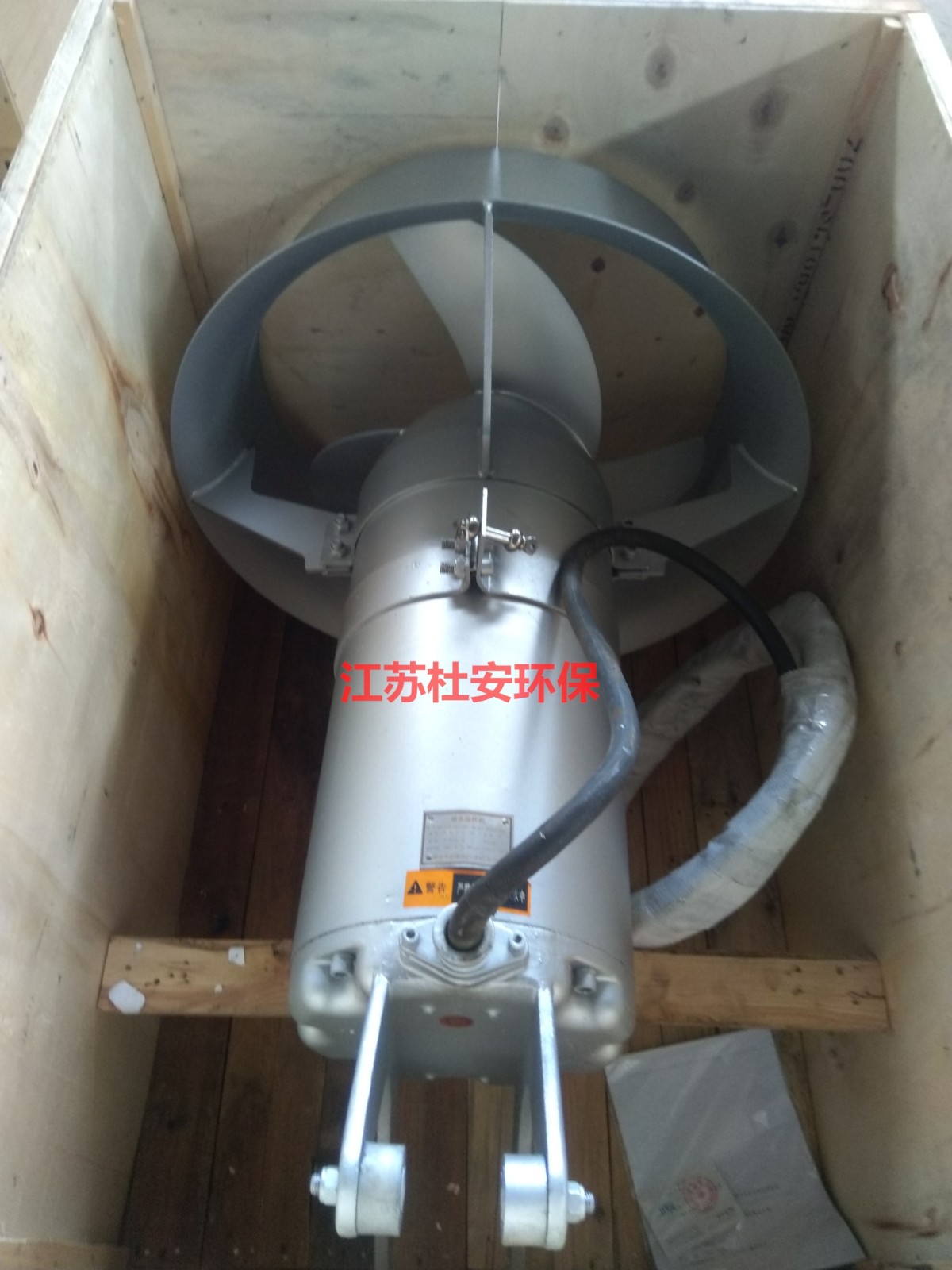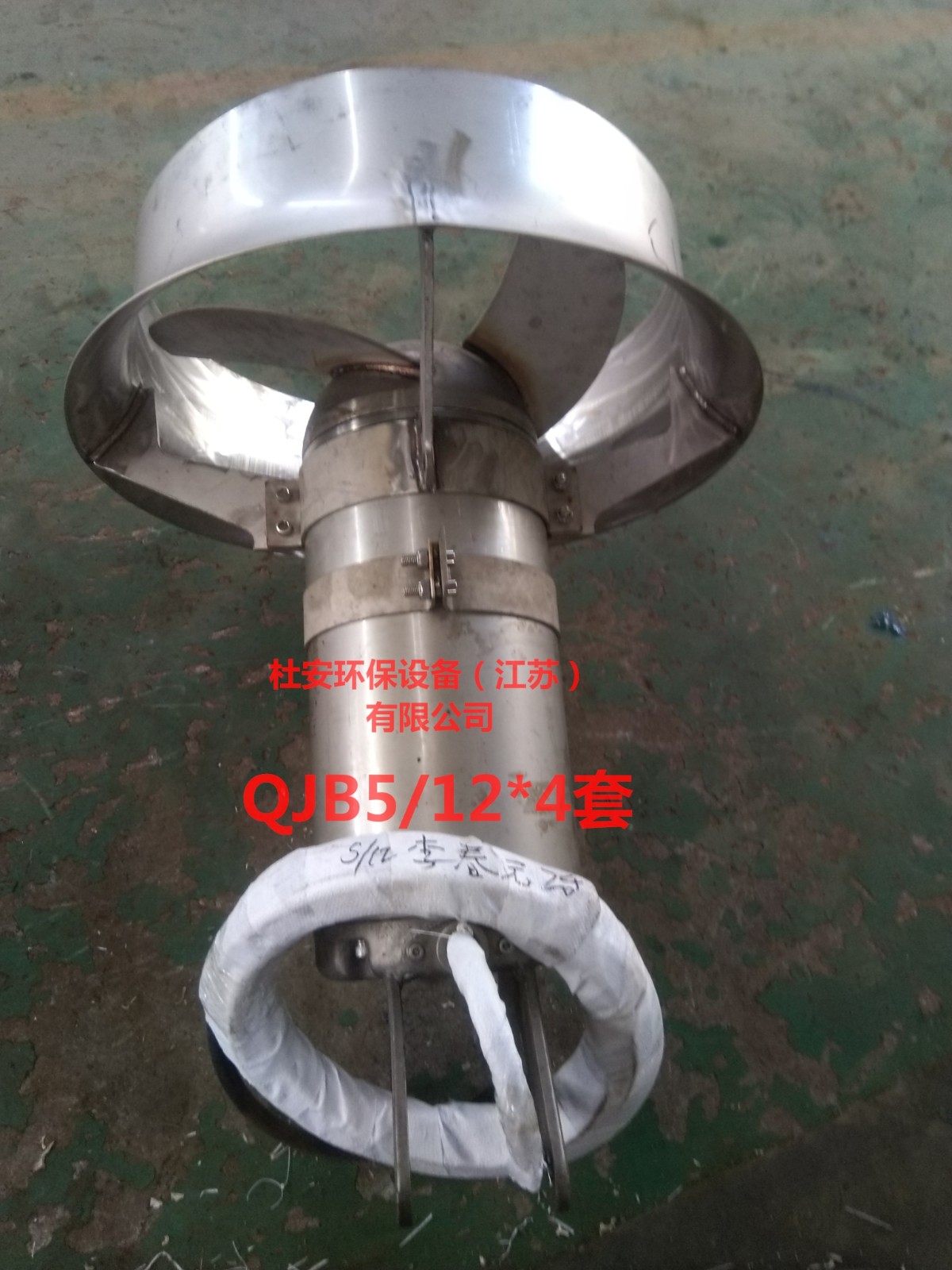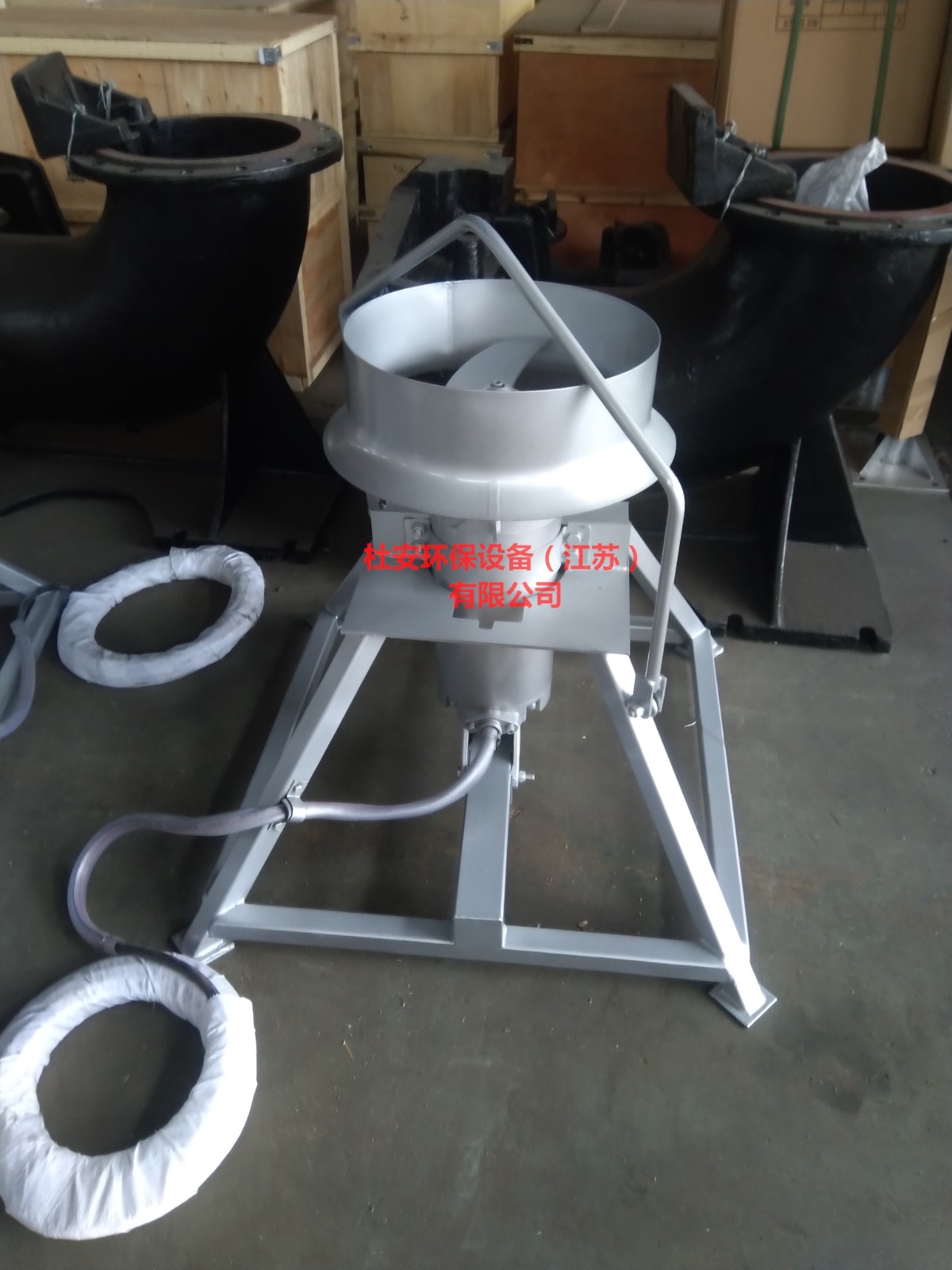
QJB4/6-400/3-980S Sludge Agitator
Selection Considerations and Application Methods for Submersible Mixers for Sludge Ponds
One,Diving mixerSelection Considerations:
1. For every 500 cubic meters of volume, the torque at 1KW power needs to exceed 60Nm, which has been proven effective through actual testing. Some small impellers with high speed may not achieve this effect.
2. Circular pools, track-shaped pools, and annular pools can reduce 10% of power, while square pools, rectangular pools, and triangular pools must increase 10% of power. Larger pool shapes can reduce power relatively.
3. For every 10% increase in medium density, the power must increase by 30%.
4. Square and rectangular pools can be designed to have minimal or no blind spots by considering factors such as impeller size, helix angle, installation position, and in/outlet water positions.
5. Regarding flow rate issues, for many types of agitator pumps, it is necessary to provide original flow rate, pool cross-sectional area, length, and other relevant data, as well as the required flow rate. Our company can offer the corresponding products. This is a relatively complex process. For selection matters, please contact the supplier.
6Diving mixerInstallation Height
(1) The distance from the bottom of the tank with a diameter less than 1 meter to the center of the mixer, X, is equal to the impeller radius plus 0.7 meters.
(2) Impeller diameter of 1 meter or more is calculated by adding 1 meter to the radius.
(3) Installation height can be appropriately adjusted up or down based on pond depth.
Section II: Actual Applications of Submersible Mixers
Compared to traditional long-axis mixers,The advantage of the GST type submersible mixer lies in its ability to produce various flow directions. Different installation positions of the submersible mixer can result in multiple flow patterns with different effects, thus creating better flow patterns in the pool and eliminating dead mixing zones. The required配套 power for the submersible mixer is determined by factors such as the pool volume, medium density, viscosity, and mixing medium depth. Depending on the specific situation, one or more submersible mixers can be selected.
Special Note:
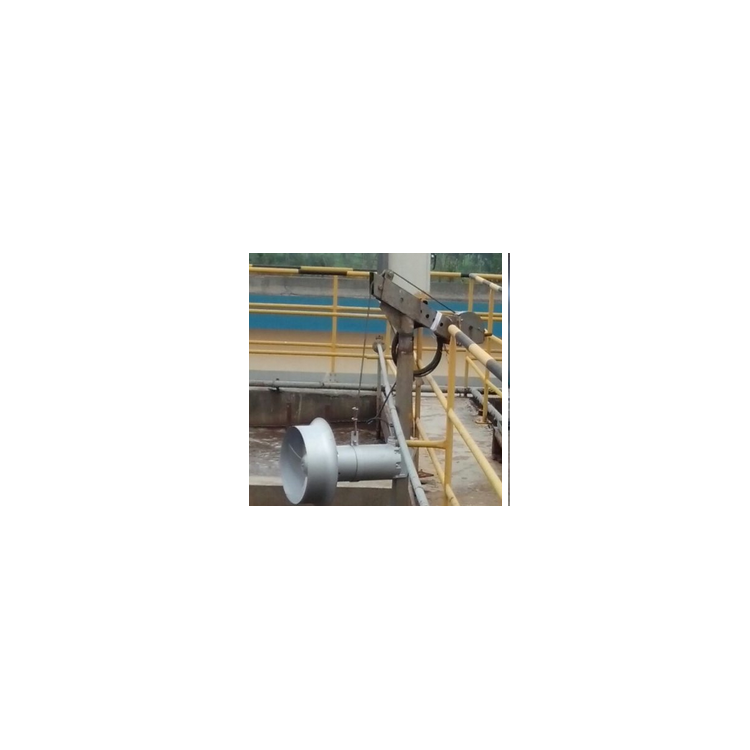
Submersible mixers must be fully submerged in water for operation and cannot be used in flammable, explosive environments or in environments with highly corrosive liquids. To ensure efficient and energy-saving operation of the mixer in different pond types, refer to the following typical installation forms.
Aeration Tank Configuration:
Square pond: Installation of a mixer allows for a smooth blending effect in the square pond. When using one mixer, the length-to-width ratio of the pond should not exceed5. Otherwise, multiple submersible mixers should be installed. An operating effect can be achieved if the length-to-width ratio is not greater than 2.5.
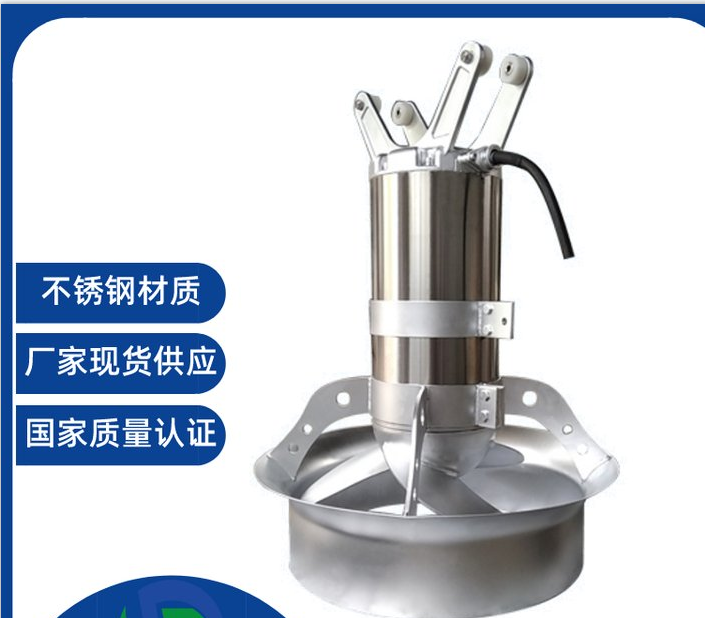
Submersible mixers are a key piece of equipment in water treatment processes, meeting the process requirements for homogeneous and flowing solid-liquid and solid-liquid-gas three-phase mixtures during biochemical processes. They consist of parts such as the submersible motor, impeller, and installation system. Depending on the transmission method, submersible mixers can be divided into two main series: mixing mixers and low-speed push flow mixers.
Model Description
QJB0.85/8-260/3-740C/S
QJB------Submersible Mixing Pump Abbreviation
0.85/8 ------ Motor Power (KW) / Motor Grade
260/3-----Impeller Diameter (mm) / Number of Impellers
740-------Impeller Speed (r/min)
C/S - Material: Carbon Steel/SS (Stainless Steel)
Power Rating Range:0.85-22KW
Impeller diameter range:260-900mm
Impeller speed range:180-980r/min
Thrust Range:≤2900N
Material: Cast IronStainless Steel
Available for customization according to customer requirements
Submersible mixerPerformance Parameters:
Model | PowerKW) | Blade Diametermm) | Axial ThrustN) | Weight:kg) |
QJBO.85/8-260/3-740C/S | 0.85 | 260 | 163 | 55 |
QJB1.5/6-260/3-980C/S | 1.5 | 260 | 290 | 55 |
QJB2.2/8-320/3-740C/S | 2.2 | 320 | 582 | 110 |
QJB4/6-320/3-980C/S | 4 | 320 | 609 | 115 |
QJB1.5/8-400/3-740S | 1.5 | 400 | 600 | 70 |
QJB2.5/8-400/3-740S | 2.5 | 400 | 800 | 70 |
QJB3/8-400/3-740S | 3 | 400 | 850 | 70 |
QJB4/6-400/3-980S | 4 | 400 | 1200 | 73 |
QJB4/12-620/3-480S | 4 | 620 | 1100 | 184 |
QJB5/12-620/3-480S | 5 | 620 | 1800 | 184 |
QJB7.5/12-620/3-480S | 7.5 | 620 | 2600 | 229 |
QJB10/12-620/3-480S | 10 | 620 | 2900 | 229 |
QJB12/12-700/3-480S | 12 | 700 | 3100 | 250 |
QJB15/6-900/3-200S | 15 | 900 | 4200 | 305 |
QJB18.5/4-900/3-290S | 18.5 | 900 | 5300 | 315 |
QJB22/4-900/3-290S | 22 | 900 | 6100 | 335 |
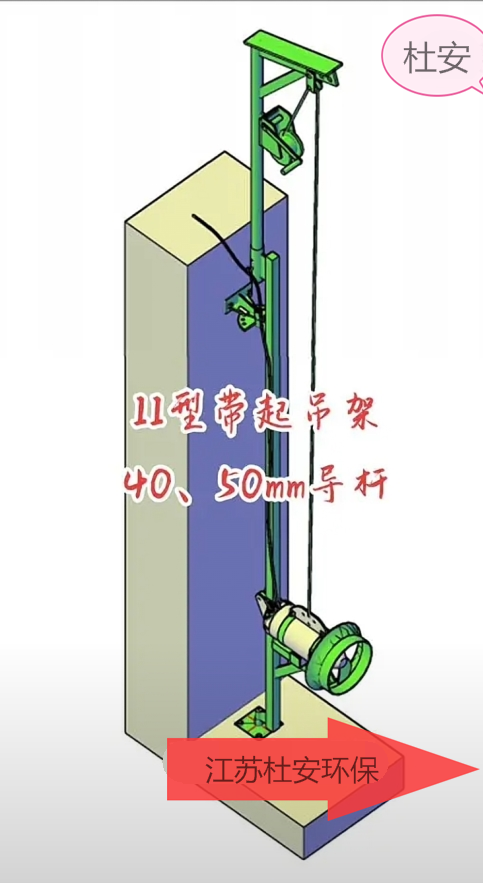
Diving Stirrer and its Matching EquipmentControlControl cabinet
Duwan Environmental QJB Submersible Non-Blade Mixer配套Control Cabinet and On-Site Pushbutton Box (one control, one box).
Field control box byJiangsu Du'an Environmental ProtectionSupplied as a set, the control box features a see-through double door made of stainless steel.304 material, the bracket is also made of stainless steel 304 for firm fixation; the panel thickness is not less than 1.5mm, outdoor protection rating is IP55, indoor protection rating is not less than IP4X, equipped with protective switches, control switches, and logic components inside the box, with a multi-functional meter, conversion switch, start/stop buttons, and emergency stop button, as well as running indicator lights on the panel. The device can stop operation when a fault occurs.
Duwan Environmental ProtectionBased on the performance requirements of the provided equipment and the aforementioned control requirements,ManufacturingProvide complete electrical control diagrams for each control box, including wiring diagrams, general layout of electrical component positions, specific wiring diagram numbering, and a list of electrical component configurations.
RequiredCircuit breakers, AC contactors, thermal relays (if required), inverters (if required), and primary components with operational functions, mainly electrical components (circuit breakers, contactors, thermal relays) are from Schneider, ABB, or Siemens.
Control the remaining space in the cabinetConnect and label the terminal blocks for the PLC system clearly, provide complete control drawings, and enable automatic PLC control.