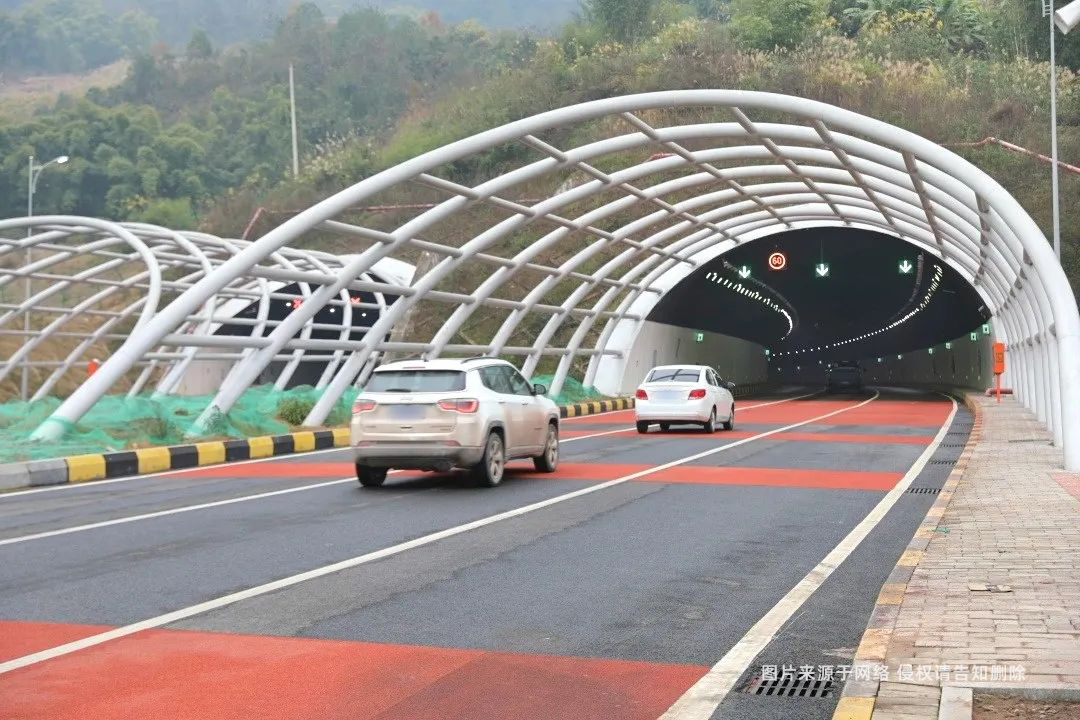

The development journey of the Smart Tunnel has mainly gone through the following stages:
Early Stage (Late 1990s - Early 2000s)
BackgroundThe issue of urban traffic congestion is becoming increasingly severe, and traditional transportation methods are struggling to meet travel demands. The informatization and intelligence of traffic construction are beginning to gain attention.
EventSome developed countries abroad are leading the exploration of intelligent tunnel technology applications, such as installing simple monitoring equipment and sensors inside tunnels to monitor basic environmental parameters like temperature, humidity, and smoke, laying the groundwork for the development of smart tunnels.
Early Development Phase (2003 - around 2010)
Significant EventIn 2003, China's first intelligent tunnel, the Shanghai Changning Road Tunnel, was officially opened, marking the official launch of intelligent tunnel construction. Since then, some major cities in China, such as Beijing and Guangzhou, have also begun to experiment with building intelligent tunnels, primarily by installing more types of sensors and surveillance cameras within the tunnels to enhance safety and management efficiency.
Technology ApplicationCommunications technology has begun to be applied in tunnels, enabling preliminary information transmission and sharing within them. At the same time, some simple data analysis and processing systems have also been introduced, capable of performing basic analysis and judgment on the collected tunnel data.
Rapid Growth Phase (2010 - around 2018)
Technical BreakthroughWith the rapid development of technologies such as the Internet of Things, big data, and cloud computing, the technical level of smart tunnels has significantly improved. The number and variety of sensors within tunnels are increasing, enabling real-time collection of more dimensional data, such as vehicle traffic, speed, and air quality. The application of big data and cloud computing technologies makes it possible to store, analyze, and process massive amounts of data, providing strong support for the intelligent management of tunnels.
System IntegrationIntelligent tunnels are no longer the application of a single piece of equipment or technology; instead, they are gradually evolving into an integrated system. Multiple subsystems, including monitoring systems, communication systems, ventilation systems, and lighting systems, are beginning to work in synergy, controlled and managed centrally through a unified management platform.
Case Studies Grow in NumberMany successful smart tunnel cases have emerged domestically and internationally, such as the Lysaker Tunnel in Norway and the Hong Kong-Zhuhai-Macau Bridge Subsea Tunnel in China. These tunnels have achieved remarkable results in intelligent lighting, ventilation control, traffic guidance, and safety monitoring, providing references for the promotion and application of smart tunnels.
Mature Phase (from 2018 to present)
Applications of Artificial Intelligence and Deep LearningArtificial Intelligence (AI) technology is widely applied in smart tunnels, such as analyzing video images within the tunnels using deep learning algorithms, which can accurately identify vehicle types, license plate numbers, and abnormal behaviors, enhancing the safety management of tunnels. Additionally, AI can be used to predict traffic flow and equipment failures within tunnels, providing decision support for their operation and maintenance.
Vehicle-to-Vehicle Communication and Autonomous DrivingAs autonomous vehicle technology advances, smart tunnels are now integrating with road-to-vehicle collaboration technology, providing an improved driving environment for autonomous vehicles. More intelligent devices, such as road-to-vehicle communication equipment and high-precision positioning devices, have been installed inside the tunnels, enabling information exchange between vehicles and the tunnels, thereby enhancing traffic efficiency and safety.3Sex.
Green Energy Efficiency and Sustainable DevelopmentWith growing environmental awareness, Smart Tunnels are placing a greater emphasis on green energy saving and sustainable development. By utilizing energy-efficient lighting and ventilation systems, as well as intelligent energy management systems, the energy consumption and operational costs of tunnels are reduced. Additionally, some Smart Tunnels are beginning to explore the use of renewable energy sources such as solar and wind power to provide electricity support for tunnel operations.