
In recent years, the construction of smart expressways has gradually become a hot topic in the industry. As a crucial component of expressways, tunneling has also seen its smart construction move up the agenda.
According to the "Statistical Bulletin on the Development of the Transportation Industry in 2020," issued by the Ministry of Transport in May 2021, as of the end of 2020, there were 21,316 road tunnels nationwide, totaling 21.99 million meters in length. There were 1,394 long tunnels, amounting to 6.2355 million meters, and 5,541 medium-length tunnels, totaling 9.6332 million meters. An incomplete count indicates that as of April 2021, there were 17 ultra-long road tunnels over 10 kilometers under construction in China. Against this backdrop, tunnel management issues have always been one of the pressing challenges for highway administrators. Particularly, the monitoring of tunnel conditions is a significant concern. Despite the presence of relatively comprehensive video detection equipment and lighting supplement facilities within the tunnels, the unique environmental conditions often hinder the equipment from performing as effectively as it would in normal circumstances. Issues such as low information collection accuracy and poor quality are inevitable, directly impacting the efficiency of manual monitoring and identification, and increasing the difficulty of detecting tunnel blockages and traffic incidents. Additionally, the limited resources of road management personnel and the fatigue of inspectors contribute to the low management efficiency of tunnels by highway operators. Furthermore, with the rapid development of vehicle-road collaboration and autonomous driving technologies in recent years, the production of intelligent connected vehicles is gradually entering the mass production stage. As the importance of road traffic information increases, so does the demand for higher standards in tunnel infrastructure construction. The collection of traffic information is limited, with low parameter collection and low data mining levels, which fail to provide comprehensive information and support for scientific decision-making in highway traffic management. This also does not meet the operational and maintenance needs of tunnel management departments, nor can it support the high demand for traffic road information from future vehicle-road collaboration and autonomous driving. Therefore, in response to the growing demands from construction, management, maintenance, and operation, highway management departments are increasingly in need of new technologies and products.
1. Tunnel construction in regional smart expressway guides
With the Ministry of Transport advancing the new-generation national traffic control network and smart highway pilot projects, multiple provinces including Beijing, Hebei, Zhejiang, Shandong, Guangdong, Gansu, Jiangsu, and others have successively initiated exploratory practices in smart expressways. Among them, Shandong, Zhejiang, Beijing, Yunnan, Ningxia, and other regions have introduced guidelines for smart expressway construction, while the Sichuan-Chongqing area has issued regional standards. These efforts aim to provide direction for smart expressway development at the planning level, including practical experience summaries on tunnel construction, particularly focusing on full-sensing detection. The "Technical Guidelines for the Construction of Smart Highways in Gansu Province" specifies detailed requirements in the "5.2.2 Tunnel Condition Monitoring" section. These include data collection objectives and requirements, such as detecting CO concentration, wind speed and direction, brightness, fires, traffic incidents, arch subsidence, horizontal convergence, and more. It also outlines facility layout requirements, such as installing traffic flow detection equipment at tunnel entrances and exits, considering actual construction conditions, and deploying edge computing units within the tunnel with multi-source data access and local computing capabilities. Vehicle-road cooperation facilities and variable message signs are to be set up at the entrances and exits to provide safety warning information, and electronic tags are to be placed in the上行 and下行 channels to improve satellite positioning signal accuracy within the tunnel. Additionally, the guidelines highlight the importance of considering local climate and temperature changes and the need for equipment to withstand cold and freezing conditions. In the "Technical Guidelines for the Construction of Smart Highways in Jiangsu Province," the "5.2.2 Tunnel Condition Monitoring" section also presents requirements for tunnel construction, focusing on key indicators, monitoring scope, and types of structural safety inspections. It also suggests the construction of lane-level services and smart information boards. The "Interim Guidelines for the Construction of Smart Highways in Zhejiang Province" has a more scattered approach to tunnel construction, primarily including the installation of license plate recognition detection equipment in upstream sections of long tunnels and the setting up of RSU devices at tunnel entrances and exits. It also recommends installing variable message signs before the entrances of long or extra-long tunnels and provides detailed installation requirements for various facilities and equipment within the tunnel, such as improving satellite positioning signal accuracy within the tunnel for tunnels 5,000 meters and above, and setting up tunnel expansion positioning systems for tunnels 5,000 meters and above. It also emphasizes enhancing emergency response capabilities. The "Trial Guidelines for the Construction of Smart Highways in Shandong Province" focuses more on emergency support construction, with a dedicated section on "6.24 Emergency Support," mentioning the need for tunnel traffic safety monitoring, emergency incident handling (secondary accident prevention), and major event support. It suggests real-time perception of traffic incidents, vehicle types and quantities, and personnel situations in long and extra-long tunnels, and the integration of emergency broadcasting systems, variable message signs, and auxiliary rescue robots with remote fire suppression control devices. The focus of tunnel construction in these four regions varies, potentially due to their respective geographic locations. Gansu, with its cold climate, prioritizes infrastructure construction for tunnels, placing higher requirements on equipment. Jiangsu and Zhejiang, with relatively stable environments, emphasize pilot demonstration construction of tunnels and pay close attention to the installation details of tunnel equipment, accumulating scaled construction experience. Shandong, with its mountainous terrain prone to typhoons, focuses on tunnel emergency support, improving tunnel safety construction and emergency measures.
2. Tunnel Construction, Management, Maintenance, and Operation: New Technologies, New Products, and New Applications
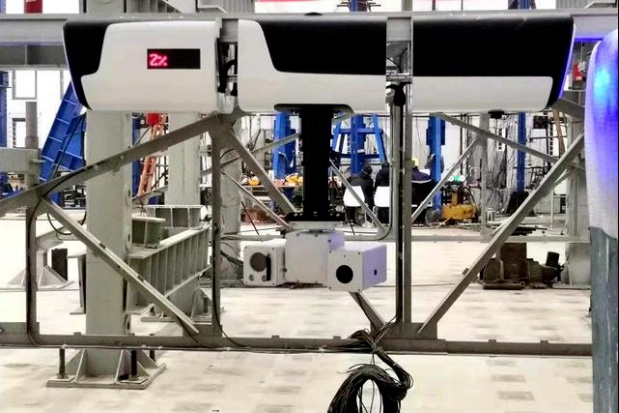
Returning to the actual construction of the current tunnel, local highway management departments focus on three main aspects in the construction, management, and operation of the tunnel: traffic perception, tunnel operation and maintenance, and platform management. Tunnel perception construction is the foundation of smart tunnels, so traffic management departments install various perception devices to detect traffic conditions inside and outside the tunnel, thereby providing basic information support for traffic management decisions. Among them, new equipment such as traffic radar, A1 video, and integrated radar and camera systems are gradually becoming favorites in tunnel perception construction. For example, in the traffic perception project of the Jiaojin Highway (Jinhua section) in Zhejiang Province, Suzhou莱斯恩 used millimeter-wave radar to collect comprehensive traffic road information. Tunnel traffic perception construction involves detecting and collecting traffic conditions inside the tunnel, while tunnel operation and maintenance requires the detection of the tunnel itself. Issues such as cracking, damage, and detachment of concrete lining, as well as fire situations, poor lighting, and road积水 within the tunnel can lead to accidents and casualties. These present severe challenges to tunnel traffic operation and maintenance, necessitating frequent and intense inspections. With this, the emergence of tunnel inspection robots as a new product follows suit. Compared to traditional manual inspections, tunnel inspection robots can navigate through dangerous areas flexibly, with significantly higher work efficiency and inspection intensity. They also enable around-the-clock monitoring of the tunnel's condition and can assist in guiding vehicle traffic. For instance, in the Ministry of Transport's intelligent highway pilot project, the Yanchong (Yanqing to Chongli) Highway in Hebei Province, the Jinfangzhuang special tunnel in the Chongli direction has had its intelligent inspection robot completed and operational; Tianjin University's Large Span Space Structure Research Center has developed an intelligent inspection robot, which has been tested at the Tianjin Lianhua岭 Tunnel; and within the Dalian Shan Tunnel on the Jindianwun Highway in Zhejiang Province, the tunnel emergency rescue inspection robot developed by Zhejiang Traffic Group's Zhegao Wutiji Research Center has officially been put into operation.
With comprehensive collection of information both inside and outside the tunnel, how to deeply mine and apply the value of the collected information has become crucial, making the intelligent high-speed cloud control management platform a hot topic in the current construction of intelligent high-speed roads. In the current construction of management platforms, digital twin technology has emerged as one of the most attention-grabbing and welcomed key technologies. The advantage of digital twin technology lies in its ability to re-construct the tunnel in a digital space using data collected from sensing equipment both inside and outside the tunnel, and to interact with the real tunnel in real-time, thereby displaying it on the software platform and achieving full knowledge and control over the tunnel. Therefore, internet companies and technology firms that master the advantages of this technology are focusing on this field of construction, not only on tunnel construction but also on empowering the overall management of highway networks through new technologies like digital twin, building highway management platform systems, and releasing comprehensive solutions for highway management. Traditional enterprises are also re-integrating their business lines and launching comprehensive solutions, including the construction of management platforms. For example, Alibaba has launched the intelligent operation solution for highways and the high-speed cloud control solution; Huawei has introduced the intelligent high-speed intelligent body technology architecture and all-weather solution; Baidu has launched the ACE intelligent high-speed solution; Tencent has released the "Digital AnTu" intelligent high-speed solution; China Communications Construction has launched the "All-Space-Time Digital Twin Intelligent Highway Operation Platform -- ZhiXing GoTech 2.0"; Andax has launched the intelligent high-speed cloud control platform; Littelfuse has launched the intelligent highway solution, and so on.
3. Conclusion
By the end of April, the news of the heavy rain in Henan Province immediately became a hot topic on Weibo, sparking discussions among many netizens. It also prompted many to recall the rare heavy rainfall event in July last year. The accident that occurred at the Zhengzhou Jingguang Tunnel section became a source of concern for many traffic professionals. A tunnel branded as "Smart Tunnel" failed to function during the heavy rain, resulting in casualties and property losses, casting a heavy shadow on the traffic industry. Ensuring traffic safety is the foundation of traffic construction. Therefore, whether it's the application of new technologies or new products during the construction process, they must prioritize the aspect of traffic safety rather than excessively pursuing so-called "smart construction." This applies to tunnel construction as well as highway construction. Traffic safety is paramount.