



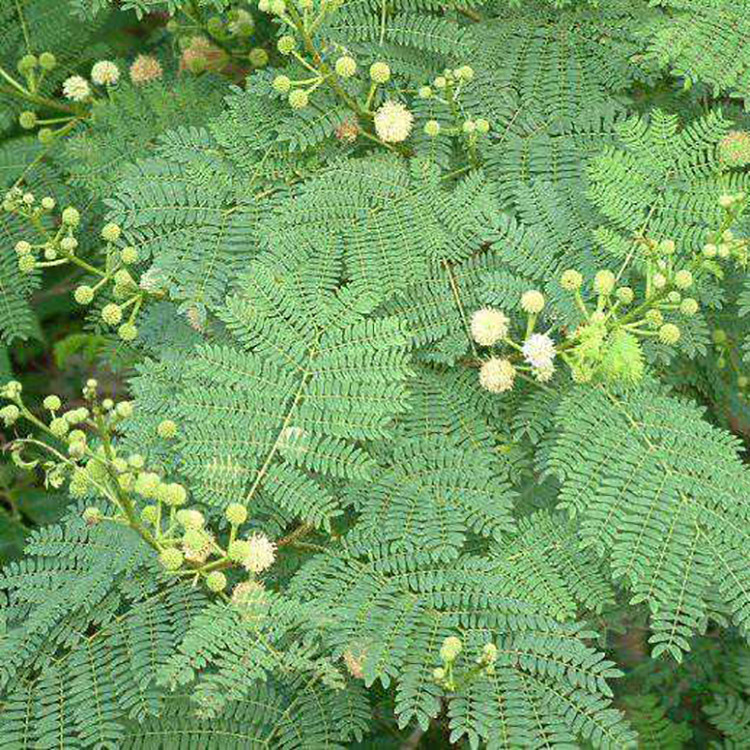
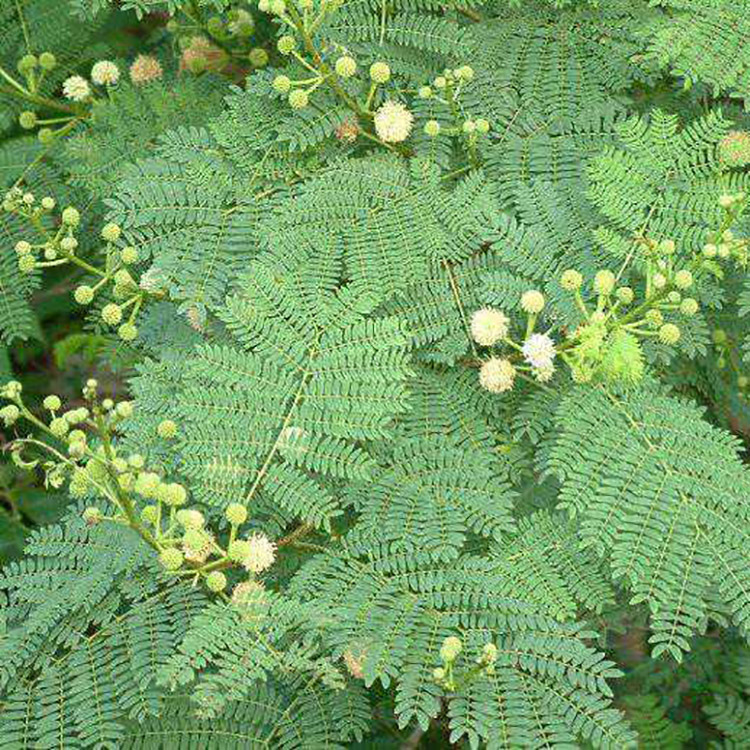
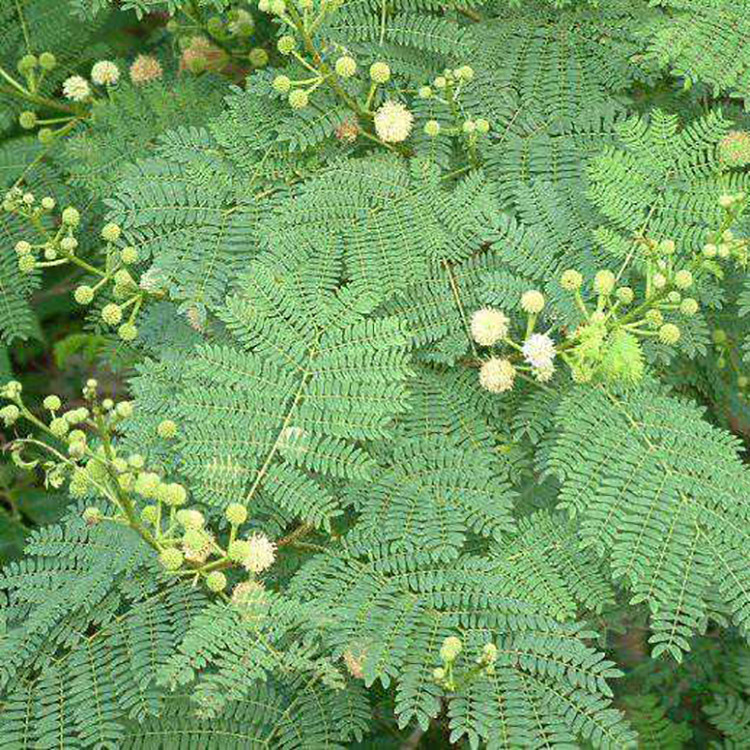


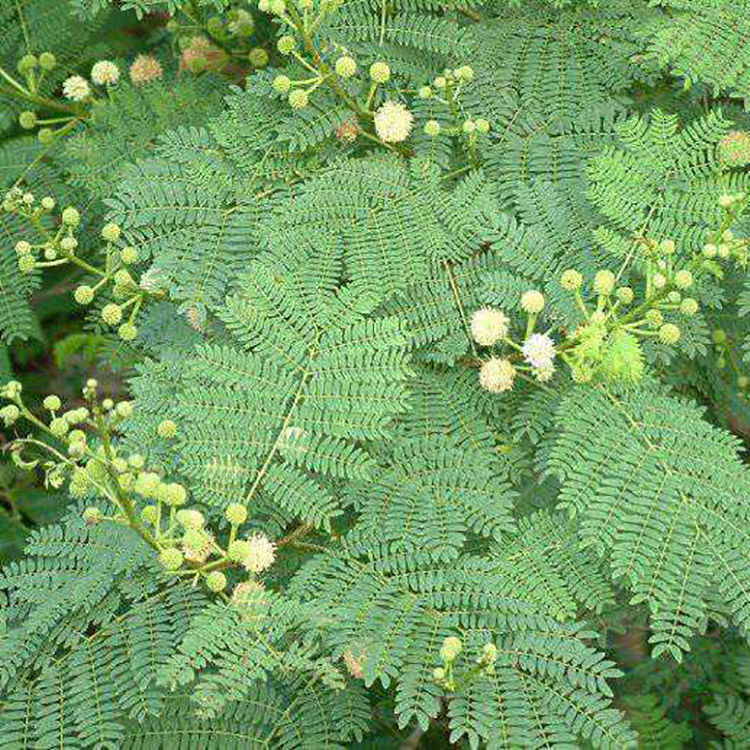
Leucaena leucocephala (Lam.) de Wit, a leguminous shrub or small tree, reaches heights of 2-6 meters; young branches are covered in short, soft hairs, while older branches are hairless with brown lenticels and no thorns; stipules are triangular and small. Pinnate leaves have 4-8 pairs of leaflets, with the rachis covered in soft hairs; leaflets are 5-15 pairs, linear-oblong, with acute apices, cuneate bases, and margins covered in short, soft hairs. Inflorescences are usually 1-2 axillary, bracts are close and hairy, and fall early; peduncles are 2-4 cm long; flowers are white, with a calyx tip having 5 fine teeth and the exterior covered in soft hairs; petals are narrowly oblong, with sparse soft hairs on the back. Pods are strap-like, with acute tips, a peduncle at the base, longitudinally开裂, and covered in fine hairs; seeds are ovate, brown, flat, and glossy. Flowering period is April to July; fruiting period is August to October. Native to Taiwan, Fujian, Guangdong, Guangxi, and Yunnan, China, it grows in low-altitude wastelands or sparse forests. Originally from tropical America, it is now widely distributed in tropical regions. Leucaena is drought-resistant, suitable for afforestation on barren hills, as shade trees for coffee or cocoa, or for hedging; its hard wood is good for fuel. Leaves can be used as green manure and livestock feed, but due to the presence of acacia saponin, α-amino acids, etc., horses, donkeys, mules, and castrated pigs should not be fed in large quantities.