



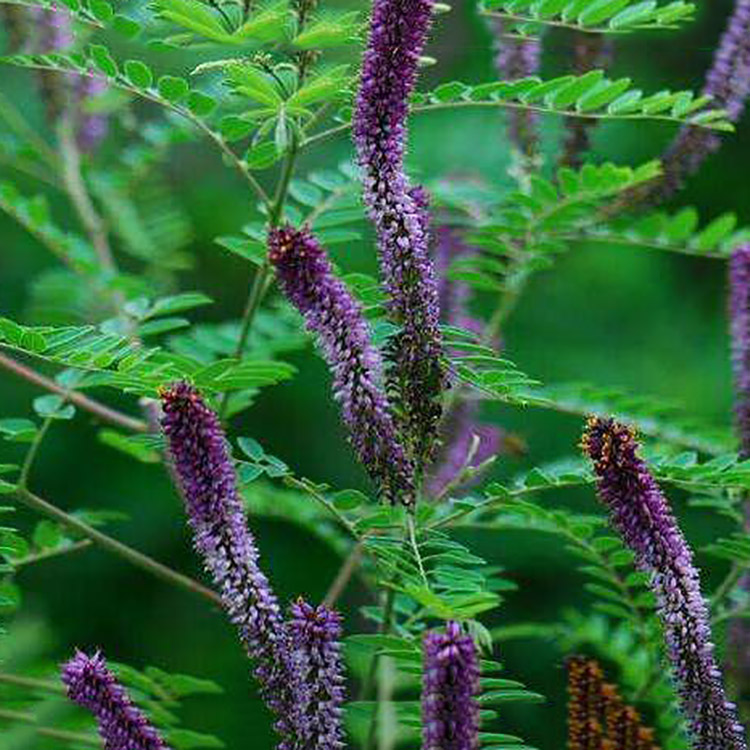
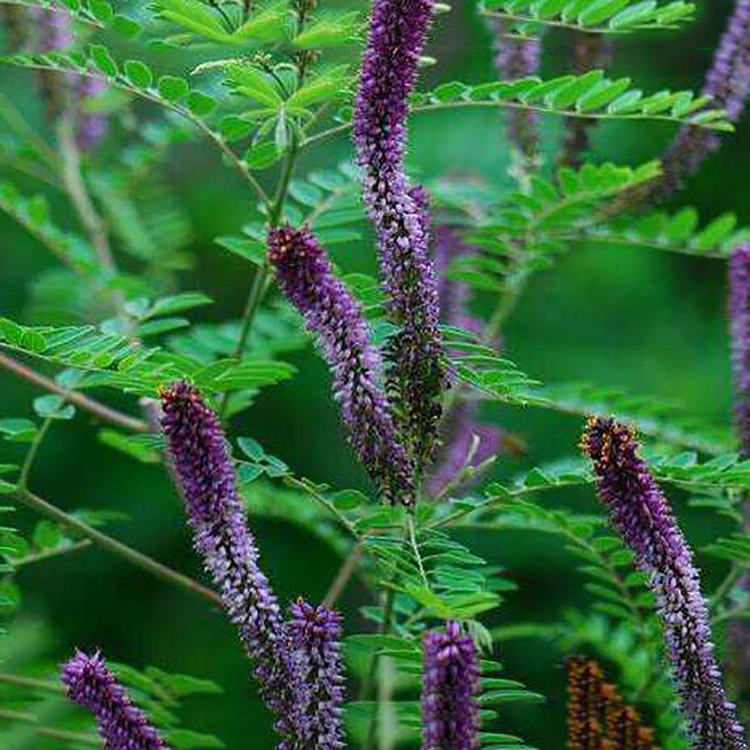


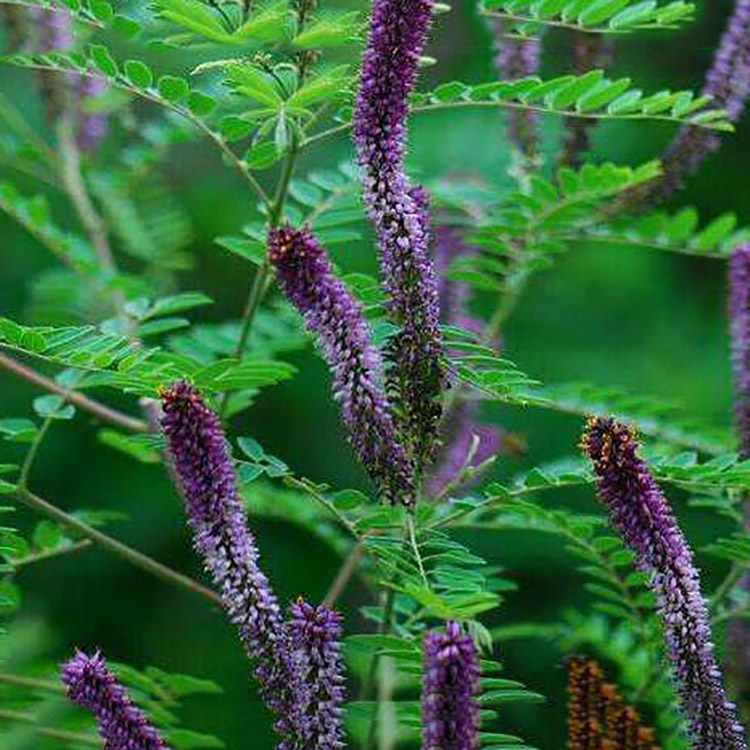
Currently, both Robinia and Amorpha are very popular in our country, often used as avenue trees and garden ornamentals, and are common greenery species. Many people, however, often can't tell the difference between them, and even mistake one for the other. In fact, there are significant distinctions between them. Let's take a look at their differences below.
Firstly, the size of the trees differs between Robinia pseudoacacia and Amorpha fruticosa. Robinia pseudoacacia is a deciduous tree, typically reaching heights of about 10 to 20 meters upon maturity, making it a rather tall species. In contrast, Amorpha fruticosa is a deciduous shrub that tends to grow in clumps, with an average height of about 1 to 4 meters upon maturity. So, by simply looking at the size of the plants, one can distinguish between mature Robinia pseudoacacia and Amorpha fruticosa.
Next, their bark is also different. The bark of the Robinia typically appears grayish-black, with longitudinal cracks, whereas the bark of the Amorpha is usually dark gray and smoother. So, by paying attention to their bark, one can distinguish which tree is a Robinia and which is an Amorpha.
Of course, besides these two more obvious distinctions, there are still some subtle differences in the size of their flowers, leaves, and fruits. These can be easily noticed with a careful observation. Currently, at Changjing Garden Landscape Tree Seedling Base, we offer a wide variety of acacia and amur corktree seedlings and seeds. If you wish to learn more about their differences or to purchase them, please feel free to consult Changjing Garden. We can directly supply to you from anywhere in the country.