

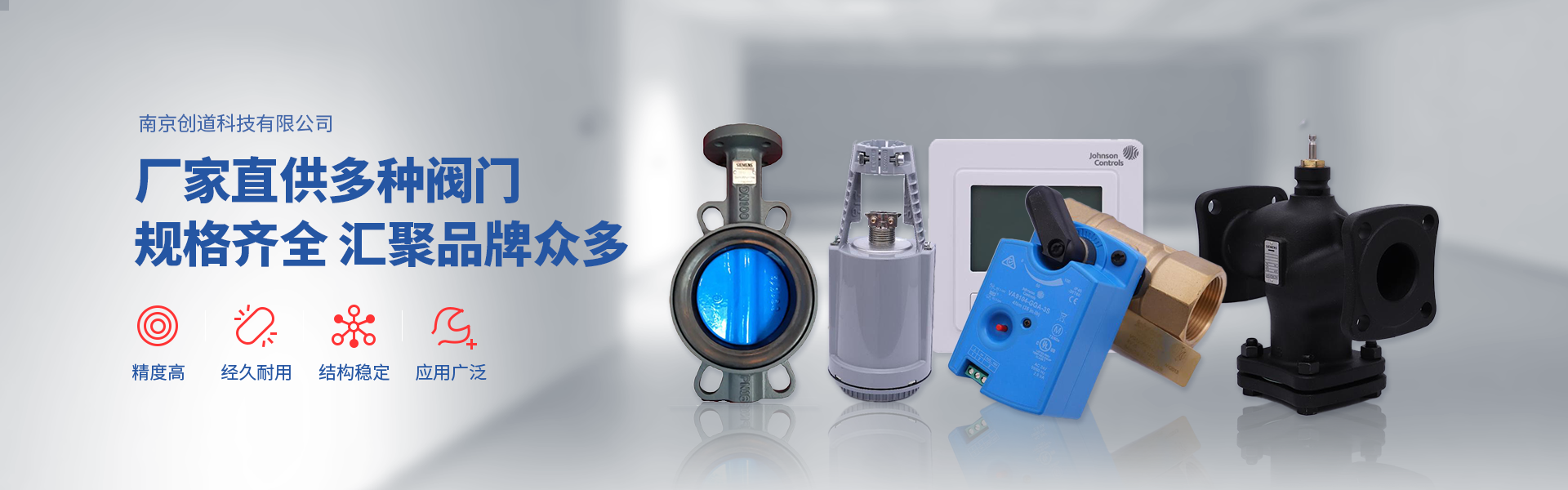

Ball valves and check valves belong to the same type of valves. The only difference is that the closure piece in a ball valve is spherical, which rotates around the centerline of the valve body to achieve opening and closing.
Ball valves are primarily used in pipelines for cutting off, distributing, and changing the flow direction of media. This type of valve has gained widespread adoption in recent years and boasts the following advantages:
The fluid resistance is low, with the resistance coefficient equal to that of a pipe segment of the same length.
2. Simple structure, compact size, and lightweight.
3. Rigid and reliable, plastic materials are widely used for the sealing surfaces of ball valves, offering excellent sealing properties, and their application in vacuum systems is also widespread.
4. Easy to operate, with rapid opening and closing; it takes just a 90-degree rotation to go from fully open to fully closed, making it convenient for long-distance control.
5. Easy maintenance, the ball valve structure is simple, and the sealing rings are generally movable, making disassembly and replacement quite convenient.
6. When fully open or fully closed, the sealing surfaces of the ball and valve seat are isolated from the medium. During passage of the medium, there is no erosion of the valve sealing surface.
7. Wide application range, from a few millimeters to several meters in diameter, and from high vacuum to high pressure.
Ball valves have been widely used in various industries such as oil, chemical, power generation, papermaking, atomic energy, aviation, and rocketry, as well as in everyday life.
Ball valves can be categorized according to their structural forms:
Floating Ball Valve
The ball of the globe valve is floating. Under the action of medium pressure, the ball can produce a certain displacement and press tightly against the sealing surface at the outlet end, ensuring the outlet is sealed.
The floating ball valve has a simple structure and good sealing properties; however, the ball carries the entire load of the working medium, transferring it to the outlet sealing ring. Therefore, it is necessary to consider whether the sealing material can withstand the working load of the ball medium. This design is widely used in medium and low-pressure ball valves.
Secondly, Fixed Ball Valve
The ball of the ball valve is fixed and does not move upon pressure application. Fixed ball ball valves are equipped with a floating valve seat, which moves under medium pressure, causing the sealing ring to be tightly pressed against the ball to ensure a seal. Typically, bearings are mounted on the upper and lower axes of the ball, allowing for low torque operation and making them suitable for high-pressure and large-diameter valves.
To reduce the operating torque of ball valves and enhance the reliability of sealing, oil-sealed ball valves have emerged in recent years. These valves inject a specially formulated lubricating oil between the sealing surfaces to form a film of oil, thereby improving the sealing and decreasing the operating torque, making them more suitable for high-pressure and large-diameter ball valves.
Three: Elastic Ball Valve
The ball of the ball valve is elastic. Both the ball and the valve seat seal are made of metal materials, with a high sealing pressure ratio. Relying on the pressure of the medium itself is not sufficient to achieve the sealing requirements; external force must be applied. This type of valve is suitable for high-temperature and high-pressure media.
The elastic sphere is obtained by creating an elastic groove at the bottom of the inner wall of the sphere. When the passage is closed, the wedge-shaped head of the valve rod expands the sphere and tightens it against the valve seat to achieve sealing. Before rotating the sphere, the wedge-shaped head is first released, allowing the sphere to return to its original shape. This creates a small gap between the sphere and the valve seat, reducing friction on the sealing surface and the operating torque.
Ball valves are categorized by their passage position, including straight-through, three-way, and right-angle types. The latter two ball valves are used for medium distribution and flow redirection.
