

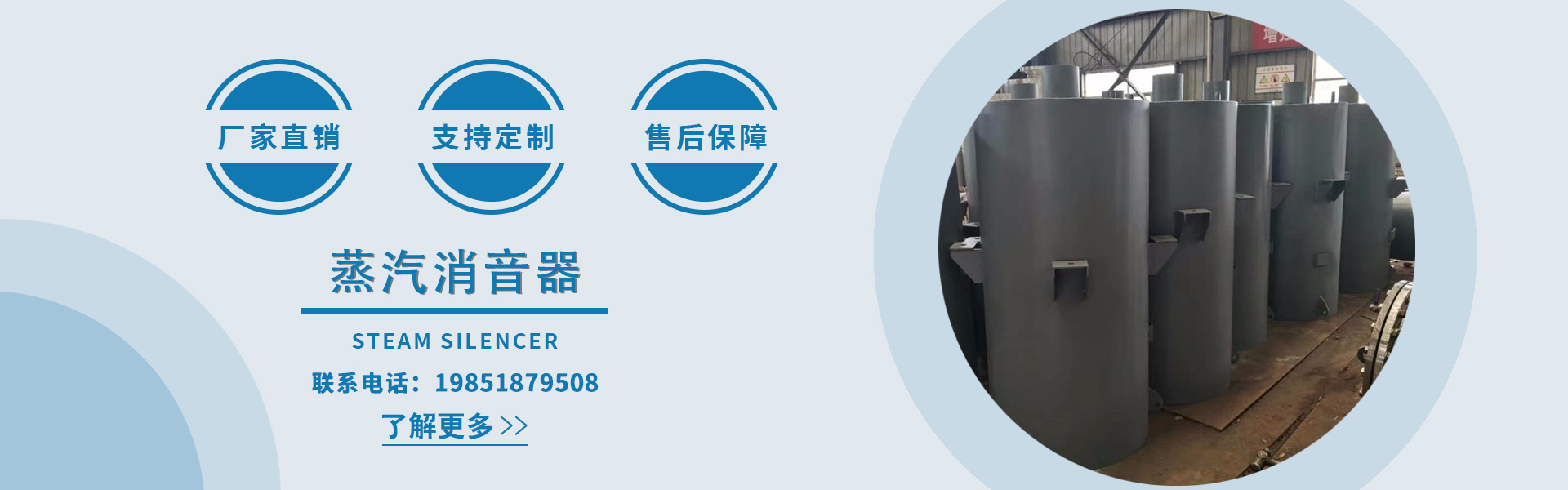


A silencer refers to a noise reduction device that can be used for air ducts with noise propagation, which includes pipes and elbows lined with sound-absorbing materials, as well as sections with sudden changes in cross-sectional area and other discontinuities in acoustic impedance, to attenuate or reflect back the noise within the pipe.
I. Classification and Damping Principles:
Noise suppressors can be categorized into resistive and reactive types, each with distinct noise attenuation characteristics. Resistive suppressors primarily reduce medium to high-frequency noise, while reactive suppressors are more effective at eliminating medium to low-frequency noise. In practical engineering applications, a comprehensive impedance composite type of suppressor is often used.
1. Resistive muffler: Utilizing the sound-absorbing material installed on the pipe wall or the sound-absorbing structures arranged and combined in a certain manner within the pipeline, the muffler converts the noise energy propagating along the pipe into heat energy, thereby attenuating the noise to achieve the purpose of noise reduction.
2. Resistant silencer: Instead of directly absorbing sound energy, it utilizes the protrusion or contraction of the pipeline cross-section, or an auxiliary resonance chamber, to reflect a portion of the noise propagating along the pipeline back towards the sound source at the point of abrupt change, without passing through the silencer, thereby achieving the noise reduction goal.
Section 2: Silencer Design Principles:
1. Select the type of silencer based on the required noise level from the noise source, air dynamic performance requirements, and the requirements for moisture prevention, corrosion resistance, fireproofing, and high-temperature resistance in the air dynamic equipment pipelines.
2. Considering the aerodynamic performance of the muffler, based on the requirements of the sound source's aerodynamic properties.
When designing mufflers, consider the impact of regenerative noise.
4. Be mindful of the airflow velocity through the mufflers and piping.
5. Consideration should also be given to soundproofing, durability, and the size to match with air handling equipment.
Basic Requirements for Mufflers:
Acoustic performance requirements: High noise reduction value and wide noise reduction frequency range.
2. Aerodynamic performance requirements
3. Mechanical structure performance requirements: compact in size, light in weight, simple in structure, easy to process, install, and maintain.
4. Aesthetics and Decorative Requirements: Adaptable to the actual installation space, the design is stylish and generous, with surface decorations that complement the equipment and offer a long service life.
