

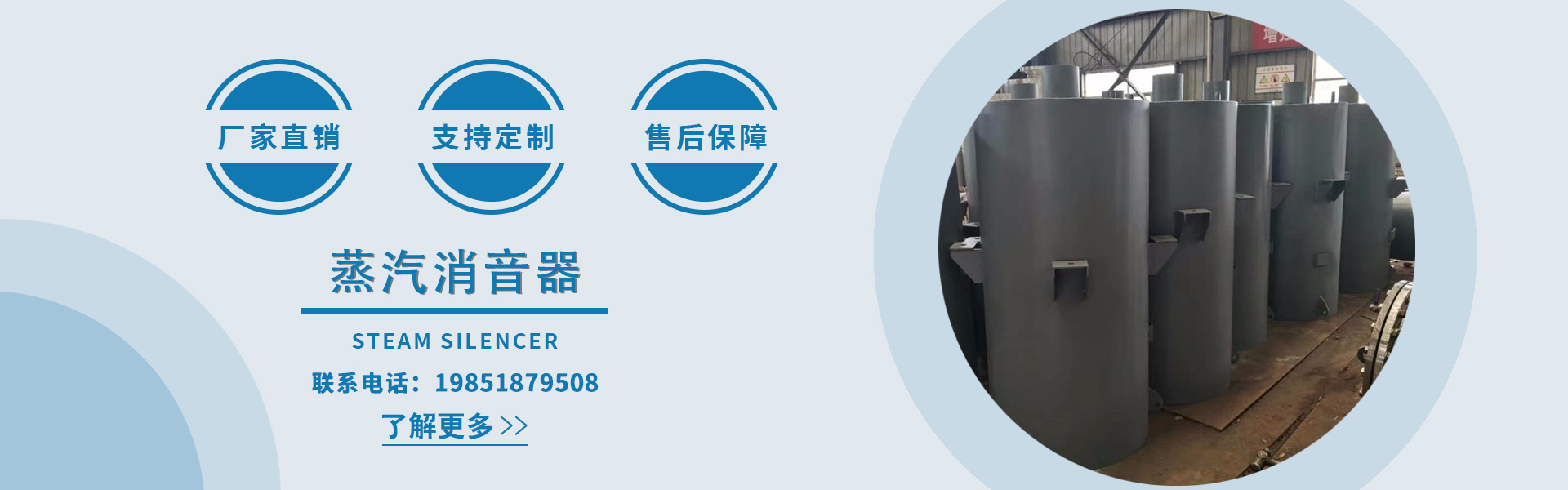


A muffler is a device that prevents sound from propagating while allowing airflow to pass through, serving as an important measure for eliminating aerodynamic noise. Mufflers are installed on the airflow channels of aerodynamic equipment (such as blowers, air compressors, etc., which have significant exhaust noise) or within the intake and exhaust systems to reduce noise.
The muffler is composed of components such as the muffler tube, muffler panels, top and bottom covers (or heads), rain hat, throttle tube, throttle plate, connecting pipe (or flange), bracket, lifting ring, and nameplate, among other parts.
Section 2: Categories and Scope of Use:
1. The resistive silencer is designed to absorb mid-to-high-frequency noise and is commonly used for noise reduction in air conditioners, compressors, gas turbines, blowers, and other types of fans.
2. The resistance muffler features strong specificity and significant absorption effect on mid-to-low frequencies. Generally, it is only used for exhaust noise reduction in vehicles, ships, and diesel engines.
3. The impedance silencer features a broad noise reduction frequency bandwidth and ease of use. It is primarily used for steam turbines, deaerators, expanders, and exhaust steam from low-displacement turbines.
4. The small-hole silencer features low and medium frequency broadband noise reduction performance and is generally used for exhaust venting of high-pressure equipment such as boilers and compressors.
The anti-spray and resistance composite silencer boasts wide noise reduction frequency bandwidth, broad application range, high noise reduction efficiency, resistance to high temperature and pressure, and immunity to moisture and oil mist. It is a structural exhaust silencer, commonly chosen for use in power plants.
The perforated exhaust muffler boasts advantages such as smooth exhaust, high-temperature resistance, and strong anti-interference capabilities. It is generally used for exhaust noise reduction in safety valves, exhaust valves, steam turbines, and blow pipes.
Three: Characteristics of the muffler:
1. Easy to install, excellent sound-dampening effect, and long lifespan.
The muffler can be independently supported, allowing for free expansion during operation and shutdown.
3. Special activity connecting devices can be adopted according to design or customer requirements.
4. Equipped with sufficient heat resistance and corrosion resistance, the equipment ensures long-lasting durability.
Four: Criteria for judging quality and superiority:
1. The muffler's noise reduction performance (noise reduction level and spectral characteristics).
2. The muffler's aerodynamic performance (pressure loss, etc.).
3. The structural properties of the muffler.
