






详情描述
Casting
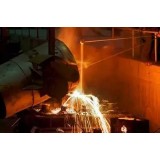
Casting is a production method that involves pouring molten metal into a mold cavity, allowing it to cool and solidify into the final product. In the automotive manufacturing process, many parts are made from cast iron, accounting for about 10% of the vehicle's total weight, such as cylinder blocks, transmission cases, steering gear cases, rear axle cases, brake drums, and various brackets. Cast iron parts are typically made using sand molds, which are primarily composed of sand mixed with binders and water. The sand mold material must have sufficient bonding strength to be shaped into the required form and withstand the erosion of the hot iron without collapsing. To create a cavity in the sand mold that matches the shape of the casting, a wooden model, known as a pattern, must first be made. Since molten iron contracts upon cooling, the pattern dimensions need to be increased based on the shrinkage rate of the casting, with the surfaces requiring machining made thicker. Hollow castings require sand cores and corresponding core pattern wood molds (core boxes). With the pattern in place, the hollow sand mold (also known as sand casting) can be made. When making the sand mold, consideration must be given to how the top and bottom sand boxes are separated to remove the pattern, as well as where the molten iron will enter and how to fill the cavity to achieve a high-quality casting. After the sand mold is ready, it can be poured, which means the molten iron is poured into the mold cavity. During pouring, the iron temperature is between 1250-1350 degrees Celsius, with a higher temperature during melting.
Forging
During the automotive manufacturing process, forging is widely used as a processing method. Forging is divided into free forging and die forging. Free forging is a method of shaping metal billets by placing them on an anvil and subjecting them to impact or pressure (commonly referred to as "blacksmithing"). The blanks for gears and shafts in cars, for example, are processed using free forging. Die forging involves placing metal billets into a die cavity and shaping them through impact or pressure. It's akin to the process of dough being pressed into cookie shapes in a mold. Compared to free forging, die forging produces parts with more complex shapes and greater precision in dimensions. Typical examples of die forged parts in cars include engine connecting rods and crankshafts, front axles, and steering knuckles, etc.
Cold stamping
Cold stamping or sheet metal stamping is a method of forming metal sheets by applying pressure in a die, which cuts or shapes the material. Everyday items such as women's aluminum pots, lunch boxes, basins, and so on are manufactured using cold stamping processes. For example, to make a lunch box, it first requires cutting out a rectangular blank with four rounded corners (referred to as "cutting" by experts), and then using a male die to press this blank into a female die to form it (referred to as "deep drawing" by experts). In the deep drawing process, the flat sheet material becomes box-shaped, with the four sides bending upwards vertically, causing material accumulation at the corners and visible creases. Auto parts that use cold stamping processing include engine oil pans, brake plates, car frames, and most body parts. These parts are generally formed through processes such as cutting, punching, deep drawing, bending, flanging, and trimming. To manufacture cold-stamped parts, dies must be prepared. Dies are typically divided into two pieces, one installed above the press and capable of sliding up and down, and the other installed below the press and fixed in place. During production, the blank is placed between the two dies, and the stamping process is completed when the upper and lower dies come together. Cold stamping processing has high production efficiency and can produce complex-shaped parts with high precision.
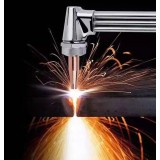
Welding is a process of joining two pieces of metal by locally heating or simultaneously heating and applying pressure. The method of welding commonly seen, where a worker holds a mask in one hand and a welding clamp connected to an electrode and a welding rod in the other, is called manual arc welding. This technique utilizes the high temperature produced by arc discharge to melt the welding rod and the workpiece, thereby fusing them together. Manual arc welding is not extensively used in automotive manufacturing. The most widely used method in automotive body manufacturing is spot welding. Spot welding is suitable for thin steel plates; during operation, two electrodes apply pressure to two steel plates, causing them to adhere while simultaneously passing an electric current through the contact point (a circular area with a diameter of 5-6 mm) to heat and melt it, ensuring a strong bond. When welding two body parts, a spot is welded every 50-100 seconds along the edges, creating a discontinuous multi-point connection between the two parts. To complete the entire car body, thousands of weld points are typically required. The strength of the weld points is very high, as each can withstand a tensile force of up to 5 kN, even if the steel plate is torn, the weld point itself remains intact. In repair shops, oxy-acetylene welding is a common method, which involves burning acetylene and using oxygen to support combustion, producing a high-temperature flame to melt the welding rod and the workpiece for joining. This high-temperature flame can also be used to cut metal, known as gas cutting. Oxy-acetylene welding and gas cutting are quite versatile, but the heat affected area of oxy-acetylene welding is large, causing deformation of the workpiece and changes in its microstructure, leading to a decrease in performance. Therefore, oxy-acetylene welding is rarely used in automotive manufacturing.
Metal Cutting Processing
Metal cutting is the process of gradually removing material from a metal blank using cutting tools to achieve the desired shape, size, and surface roughness of the workpiece. Metal cutting encompasses two methods: machining and manual work. Machining involves the use of hand tools by workers for cutting, offering flexibility and convenience, widely applied in assembly and repair. Machine cutting is accomplished with the aid of machine tools and includes operations such as turning, planning, milling, drilling, and grinding.
1) Turning: Turning is the process of machining workpieces using a lathe and a cutting tool. Lathes are suitable for cutting various rotating surfaces, such as internal and external cylindrical or conical surfaces, as well as end faces. Many automotive shaft components and gear blanks are machined on lathes.
2) Planing: Planing is the process of machining workpieces using a planer and a planer blade. Planers are suitable for processing horizontal, vertical, oblique surfaces, and grooves, among others. Surfaces on car cylinder blocks and cylinder heads, as well as mating planes on transmission cases and covers, are typically machined on planers.
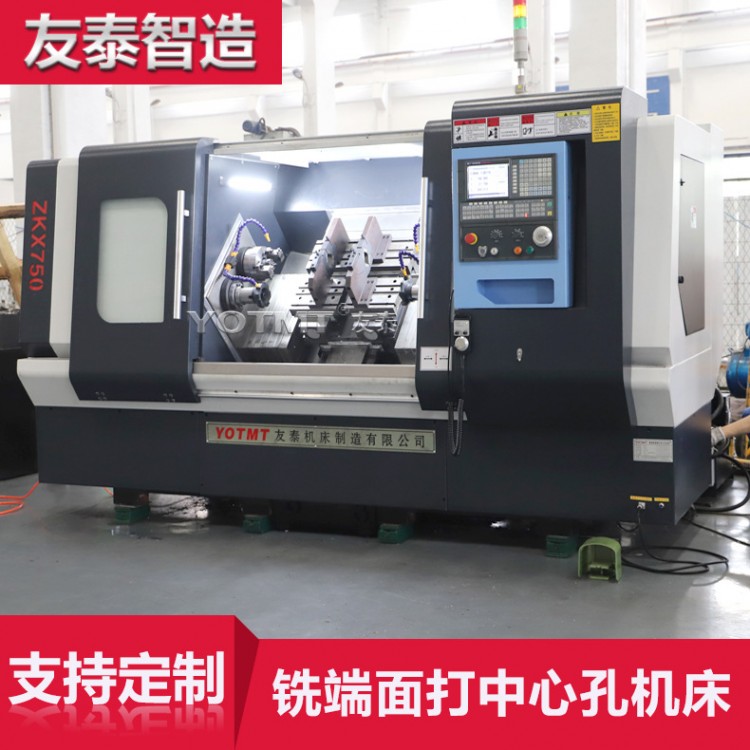
3) Milling: Milling is the process of machining workpieces using a milling cutter on a milling machine. Milling machines can process inclined surfaces, grooves, and even gears and curved surfaces, with traditional milling widely used in the production of various automotive parts. The molds for cold stamping of car bodies are all machined by milling. CNC milling machines controlled by computers can process highly complex shapes and are the main machine tools in modern mechanical processing.
4) Drilling and boring: Drilling and boring are the primary cutting methods for processing holes.
5) Grinding: Grinding is the process of machining workpieces using a grinding wheel on a grinding machine. It is a precision finishing method that can produce high-precision and roughness workpieces, and is capable of grinding hard materials. Many automotive parts that have been heat treated are finished on a grinding machine.
Heat Treatment
Heat treatment is a method that involves reheating, holding, or cooling solid steel to alter its microstructure, thereby meeting the requirements of the parts for use or processing. The temperature of heating, the duration of holding, and the rate of cooling can induce various microstructural changes in the steel. Blacksmiths immerse heated steel into water for rapid cooling (known as quenching) to increase the hardness of the steel, which is an example of heat treatment. Heat treatment processes include annealing, normalizing, quenching, and tempering. Annealing involves heating the steel, holding it for a certain period, and then cooling it slowly along with the furnace to achieve a finer and more uniform structure, reduce hardness, and facilitate machining. Normalizing consists of heating the steel, holding it, and then cooling it in the air, suitable for refining low-carbon steel. Quenching is the process of heating the steel, holding it, and then rapidly cooling it in water or oil to enhance hardness. Tempering is usually a subsequent process to quenching, where the quenched steel is reheated, held, and then cooled to stabilize the structure and eliminate brittleness. Many automotive parts require both retaining toughness in the core and altering the surface microstructure to increase hardness, necessitating surface high-frequency quenching or carbonitriding, and other heat treatment processes.
Assembled


