







详情描述
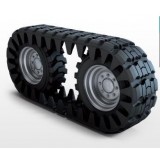
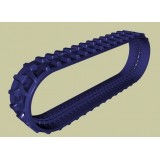
(1) Driven by the driving method, rubber tracks can be divided into toothed, hub, and rubber-tooth driving (coreless) types. Toothed rubber tracks are equipped with driving holes, where the driving wheel's drive teeth fit into the holes to move the track. Hub-type rubber tracks have metal drive teeth, which are inserted into the holes of the belt wheel for engagement and transmission. Rubber-tooth driving rubber tracks use rubber protrusions instead of metal drive parts, with the track's inner surface contacting the driving wheel's surface for friction transmission.
(2) By Application, rubber tracks can be categorized into agricultural machinery rubber tracks, construction machinery rubber tracks, transportation vehicle rubber tracks, snowplow vehicle rubber tracks, and military vehicle rubber tracks, among others.
2 Basic Performance Requirements
Basic performance requirements for rubber tracks include traction, wheel retention, vibration resistance, and durability. The traction of rubber tracks is related to their tensile strength, shear strength, track width, lateral stiffness, pitch, and tread block height, and is also affected by road conditions and load. Tracks with straight-line and side elongated pitch patterns are used.
Rubber track chains have good traction performance. The non-skid property mainly depends on the diameter of the driving wheel, the configuration of the wheel, and the length of the track guide. Wheel脱离 often occurs between the driven wheel or tension wheel and the wheel, and the torsional rigidity, lateral rigidity, longitudinal flexibility, pitch, and flange height of the rubber track also have a significant impact on the non-skid property. Eliminating the vibration source is an effective method to reduce vibration and noise. The vibration of the rubber track is related to the pitch, wheel configuration, center of gravity position, material properties, and tread block configuration. Durability is expressed by the rubber track's ability to withstand wear, cutting, piercing, cracking, and fracturing. Currently, rubber track chains are still considered wear items, and the lifespan of advanced foreign products is only about 10,000 km. In addition to the quality of the transmission and traction parts, the material properties are a crucial factor affecting the durability of the rubber track. The rubber material must have excellent physical properties, dynamic properties, and resistance to weather aging, as well as superior bonding properties. For some special-purpose products, the rubber material also needs to have salt and alkali resistance, oil resistance, cold resistance, and fire retardant properties. 2 Product Design Rubber track chains are typically composed of core metal, reinforcing layers, buffer layers, and rubber components (see Figure 1). Currently, most rubber track manufacturing companies use physical measurement and dissection analysis for track design. Theoretical mechanics, material mechanics, and finite element analysis and application of rubber track chains are still in the preliminary stage.


