

公司主营:Anti-static Floor
13880223753
企业资质
How to Choose Anti-Static Flooring?
2024-11-26
There's a vast array of anti-static flooring available on the market, with a myriad of styles and types to choose from, making it overwhelming. So, what are the specific types of anti-static flooring, and how should we select them?
Specific types of anti-static flooring include:
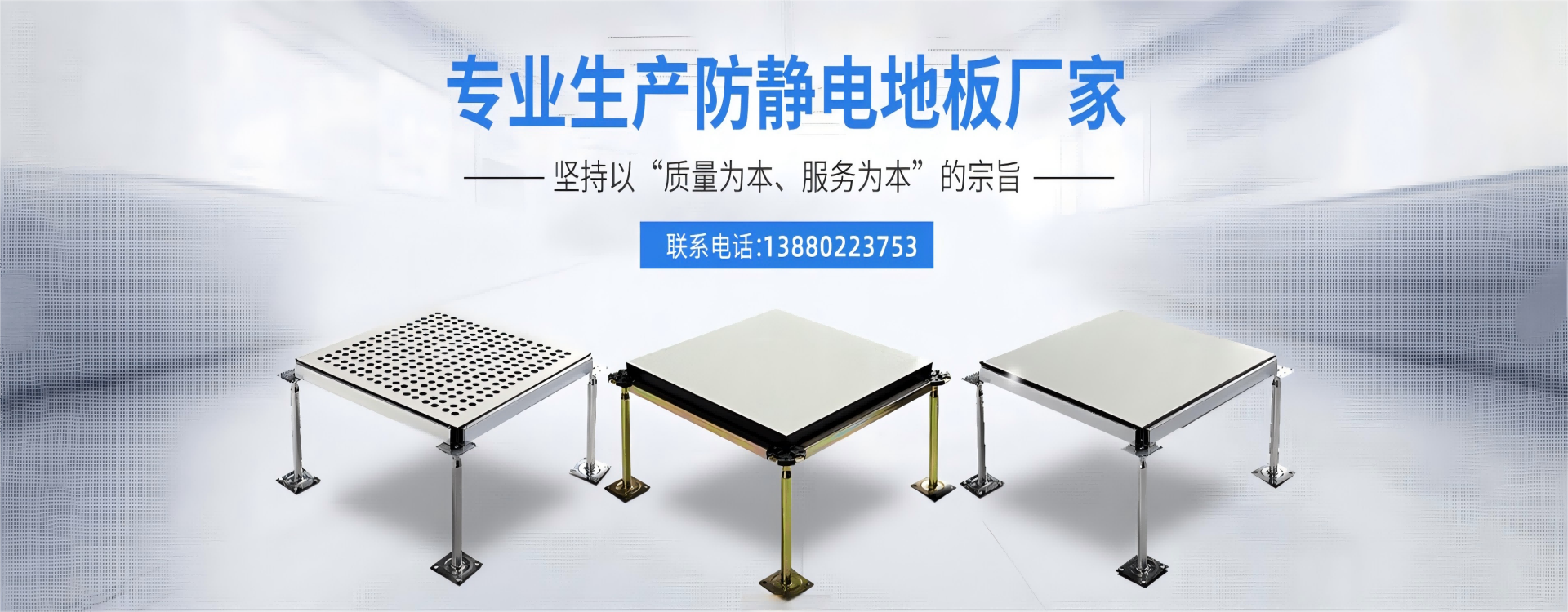
Full Steel Anti-Static Flooring
The surface material is typically made of high-wear-resistant melamine HPL fire-resistant panels or PVC (in northern regions, due to the dry climate, HPL fire-resistant panels are not easily used for surface application), with a steel shell structural base. Additionally, there are options with and without black sealing strips, as well as edgeless and bordered versions. Most contractors opt for non-standard models (which struggle to meet requirements in terms of electrostatic conductivity and load-bearing capacity) due to their lower cost. For higher requirements, the national standard models are recommended.
2. Aluminum Alloy Static-Dissipative Flooring
The product is made of cast aluminum profiles, stretched and formed, with a surface layer of high-wear-resistant PVC or HPL facing and conductive adhesive. It boasts the effect of the base material not rusting and being durable for repeated use, effectively addressing the shortcomings of composite flooring and all-steel flooring. However, the customized anti-static flooring is quite expensive.
3. Ceramics
Anti-static Flooring
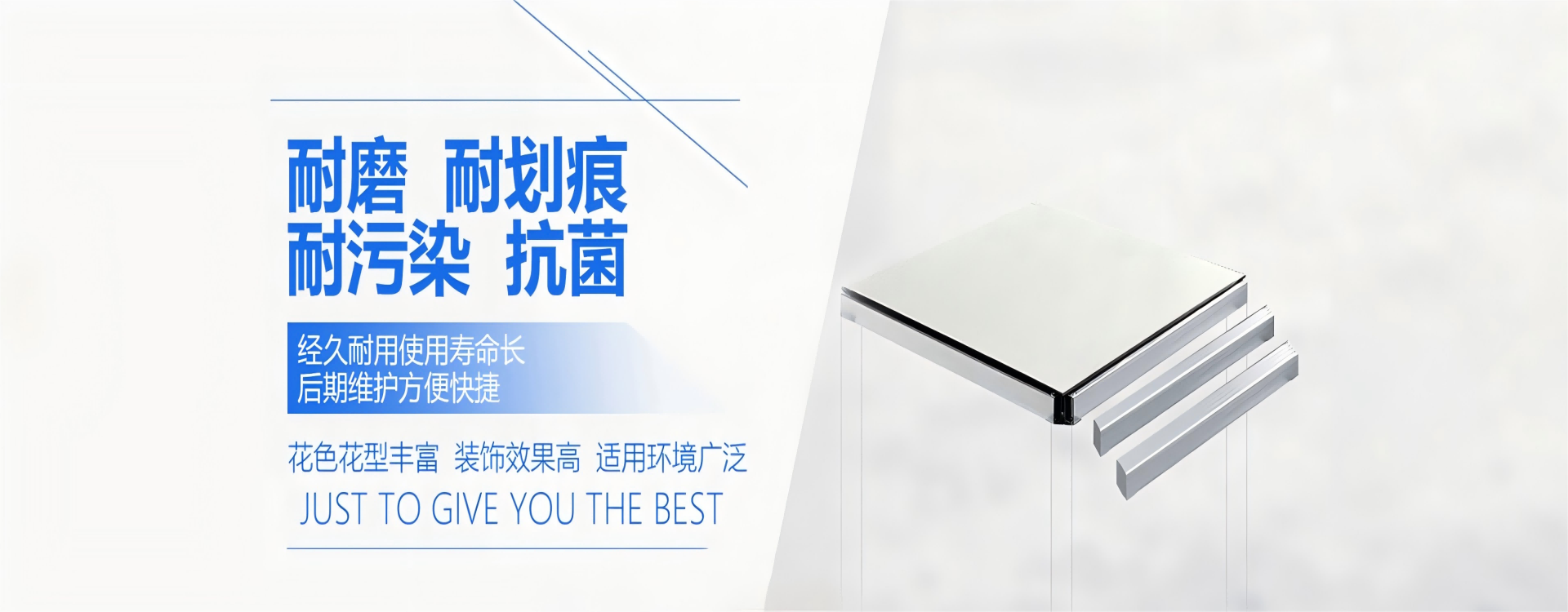
The flooring is made from anti-static tiles as the surface layer, composite full steel flooring, or cement particleboard, with edge sealing using conductive strips (ceramic tiles without strips can easily chip upon impact). It boasts anti-static functionality, stability, environmental friendliness, fire resistance, high wear resistance, long service life (over 30 years), high load-bearing capacity (over 1200 kg/square meter), waterproofing, moisture resistance, and good decorative effects, making it suitable for various machine rooms. The drawbacks include the floor's own weight (over 15 kg per tile), which can affect the floor's load-bearing capacity, and the need for professional installers to ensure proper installation; otherwise, the floor may not be level.
Choosing Anti-Static Flooring Methods:
Firstly, accurately calculate the total area (or number of pieces) of antistatic flooring required for the computer room construction, as well as the quantity of various accessories, and leave some allowance to avoid waste or shortages.
2. Prolific is well-acquainted with the types and quality of antistatic flooring produced by manufacturers, as well as various technical performance indicators. The technical functions of antistatic flooring primarily refer to its mechanical and electrical properties.
3. The load capacity of antistatic flooring should be determined based on the weight of the heaviest equipment within the server room, to prevent the floor from sustaining permanent deformation or damage due to the excessive weight of certain equipment.
4. Anti-static flooring is minimally affected by external environmental conditions. This means it does not exhibit significant expansion or contraction due to extreme temperatures, i.e., when the room temperature is slightly high, the anti-static flooring expands and becomes difficult to remove or replace; when it's cold, the flooring contracts and feels loose. The shrinkage of the anti-static flooring due to environmental factors should be less than 0.5mm, and the deflection of the board surface should be less than 0.25mm.
When considering the mechanical functionality of an antistatic floor, the primary factors to think about are its load-bearing capacity and wear resistance. After installing the entire antistatic floor on the interconnected trusses and leveling the antistatic flooring, the load-bearing capacity should reach a uniform load of more than 1000kg/m². The concentrated load on any part of the antistatic floor should be greater than 300kg. When a load of 300kg is applied at a loading point with a diameter of 6cm, the deflection should be less than 2mm without any permanent deformation. The adjustable support should be able to withstand a vertical load of more than 1000kg, and the surface of the board should have a certain level of wear resistance.
Electrical functionality primarily includes system resistance, static voltage, and surface resistance. The system resistance should be between 105Ω-108Ω. At a temperature of 21±1.5℃ and a relative humidity of 30%, the static voltage of the antistatic flooring should be less than 2500V, and the surface resistance value should be between 105Ω-108Ω.
杨威 (Mr.)
13880223753
13880223753
10 Group, Tangxing Community, Jiangyuan Street, Chongzhou City, Chengdu
b2b.china9.net © Zhongshang 114 Hebei Network Technology Co., Ltd.Address: Room 6009, Oriental New World Center, No.118 East Zhongshan Road, Qiaoxi District, Shijiazhuang City, Hebei ProvincePlatform Service Hotline: 4006299930
