

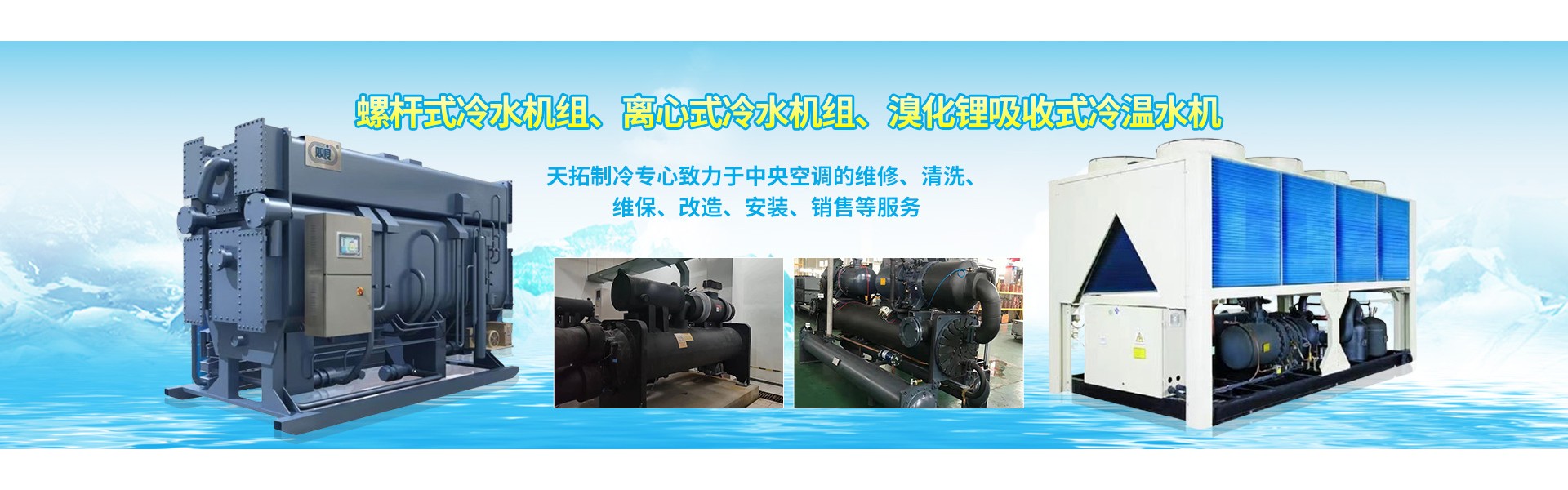


Maintenance requirements for screw-type water source heat pumps include the following aspects:
Regular cleaning and replacement of air filters: Air filters in heat pump systems should be cleaned or replaced regularly to ensure the system operates smoothly and maintains good air quality.
2. Regularly Clean Heat Exchangers: The heat exchangers of screw-type water source heat pumps require regular cleaning to remove accumulated dust and foreign objects, ensuring optimal heat exchange efficiency.
3. Inspect and Clean the Drainage System: Regularly inspect and clean the drainage system in the heat pump to ensure proper drainage and prevent abnormal operation of the pump unit due to blockages.
4. Inspect and calibrate control systems: Regularly check and verify the control system of the heat pump, ensuring the accuracy of parameters such as temperature and pressure, and perform necessary calibrations.
5. Regular inspection and maintenance of condensers and evaporators: Condensers and evaporators are crucial components of screw-type water source heat pumps, requiring regular inspection and maintenance to ensure proper operation and heat exchange.
Overall, the maintenance requirements for screw water-source heat pumps mainly include cleaning the filter, heat exchanger, and drainage system, checking and calibrating the control system, as well as inspecting and maintaining the condenser and evaporator. Regular maintenance and inspections can extend the life of the heat pump and enhance its efficiency.
The cleaning method for screw-type water source heat pumps is as follows:
Turn off the heat pump system and disconnect the power supply.
2. Open the heat pump unit's housing to locate the screw compressor and heat exchanger.
3. Clean the screw compressor and heat exchanger surfaces with compressed air or a water wash system. Be cautious not to collide or damage internal components.
Check all cooling water pipes and connections for blockages or leaks, and repair them promptly.
5. Clean the water source using high-pressure water or cooling tower cleaning equipment to thoroughly flush out silt and dirt from the water source.
6. Regularly inspect and replace the water source filter, to prevent dirt from entering the heat pump system.
7. After cleaning, recheck the system for any leaks to ensure all connections are sealed properly.
8. Restart the heat pump system and conduct a test run to observe if it operates normally.
Be reminded that when performing cleaning operations, it is crucial to adhere to the relevant safety procedures to ensure personal safety and the normal operation of the equipment. For more extensive cleaning or maintenance and repair of the heat pump, please consult a technician.
Maintenance methods for screw-type central air conditioners mainly include the following aspects:
Perform regular inspections on screw machinery at regular intervals, including cleaning internal components and external surfaces, checking for any leaks or oil spills, and conducting necessary repairs and replacements.
Regularly clean and replace air filters to maintain air quality and circulation efficiency.
3. Inspect the refrigerant in the cooling system to ensure proper operation. Add or replace refrigerant as needed to prevent a decline in the system's cooling efficiency.
Regularly inspect and clean the pipes and fins of the condenser and evaporator to prevent dust and dirt from blocking and affecting the heat exchange efficiency.
5. Regularly inspect the electrical wiring of the screw unit, including cables, switches, and terminal connectors, to ensure proper operation without any looseness or short circuits.
6. Regularly inspect and lubricate the bearings and transmission components of the screw unit to ensure smooth and safe operation.
7. Train maintenance personnel to enhance their operational skills and maintenance knowledge of screw compressor units and related equipment, thereby improving maintenance effectiveness.
Here are some basic principles for the maintenance and repair of screw-type central air conditioners. Specific maintenance measures may vary depending on the model and usage of the equipment. It is recommended to follow the instructions in the equipment manual and maintenance guide for related operations and maintenance. Additionally, maintenance work should be carried out by qualified technicians to ensure safety and reliability.
The maintenance methods for York screw jack units include the following:
Regular Cleaning: Perform regular cleaning of the unit's exterior surface and surrounding environment to prevent dust and debris from entering the unit, affecting its normal operation.
2. Inspect lubricating oil: Regularly check the lubrication system's oil condition to ensure proper system operation and prevent component damage.
3. Inspect the cooling system: Regularly check the unit's cooling system to ensure smooth flow of coolant, preventing blockages and leaks.
4. Clean Heat Exchangers: Regularly clean heat exchangers to prevent scaling and contamination on their surfaces, which can affect heat dissipation efficiency.
5. Inspect the electrical system: Regularly check the wiring and connections of the electrical system to ensure the proper functioning of electrical components and to prevent circuit malfunctions.
6. Regular Maintenance: Perform routine maintenance as specified in the York screw compressor maintenance manual, including tasks such as replacing filters and cleaning sensors.
7. Regular Maintenance: Conduct regular inspections to check all components and parts of the unit, promptly identify and fix issues, ensuring the smooth operation and performance of the unit.
Here are some maintenance methods for York screw compressor units; the specific procedures should be carried out according to the model of the unit and the maintenance manual. If you have any other questions, feel free to continue asking.
Methods for repairing Bitzer screw compressors include the following steps:
Inspect fault phenomena: Firstly, understand the specific fault phenomena of the screw compressor, such as loud noise, low pressure, etc.
2. Shutdown Inspection: Cease the operation of the screw compressor to ensure safety. Check if the power, gas supply, oil lines, etc., are functioning properly.
3. Clean Inspection: Clean the exterior surface of the screw compressor, check if there are any foreign objects blocking the cooler, heat exchanger, etc.
4. Oil Inspection: Check if the lubricating oil level of the screw compressor is normal and if the oil quality is contaminated.
5. Replacement Parts: Depending on the fault symptoms and inspection results, it may be necessary to replace some damaged components, such as seals, filter cores, etc.
6. Lubrication Maintenance: Maintain the lubrication system of the screw compressor, including adding or replacing lubricating oil.
7. Initiate pilot run: Prepare for startup, ensure the compressor's rotation direction is correct, check for tightness of pipeline connections, and then gradually increase the compressor's load operation.
8. Monitor Operation Status: Continuously monitor the operation of the screw compressor to ensure its proper and efficient functioning.
Be mindful that for the maintenance of Bitzer screw compressors, it's advisable to have the work performed by certified technicians or the manufacturer to ensure safety and effectiveness.
The maintenance steps for the screw-type chilled water unit are as follows:
Power Off: Firstly, disconnect the power supply to the chilled water unit to ensure the safety of the working environment.
2. Inspect the unit exterior: Check for any abnormalities on the exterior of the unit, such as leaks or damage.
3. Cleaning: Clean the cooling towers and coolers, ensuring their surfaces are clean and free of blockages or dirt.
4. Check Pressure: Verify the coolant's pressure to ensure it's within the normal range.
5. Inspect Refrigerant: Check the quality and pressure of the refrigerant to ensure they are in good working condition.
6. Inspect the cooling tower: Verify that the cooling tower is operating properly and check for any water leaks or other malfunctions.
7. Inspect the electrical system: Check the electrical system of the chilled water unit to ensure that the wires, plugs, and connections are secure and undamaged.
8. Repair or Replace Parts: If any faulty or damaged parts are found, they should be repaired or replaced promptly.
9. Adjustment and Testing: After repair or replacement, an adjustment and testing must be conducted to ensure the chiller operates normally.
Subsequently, routine maintenance tasks such as regular cleaning, lubrication, and inspection of all components are required to extend the lifespan of the chiller unit.
Beijing Screw-Type Water Source Heat Pump Maintenance
