
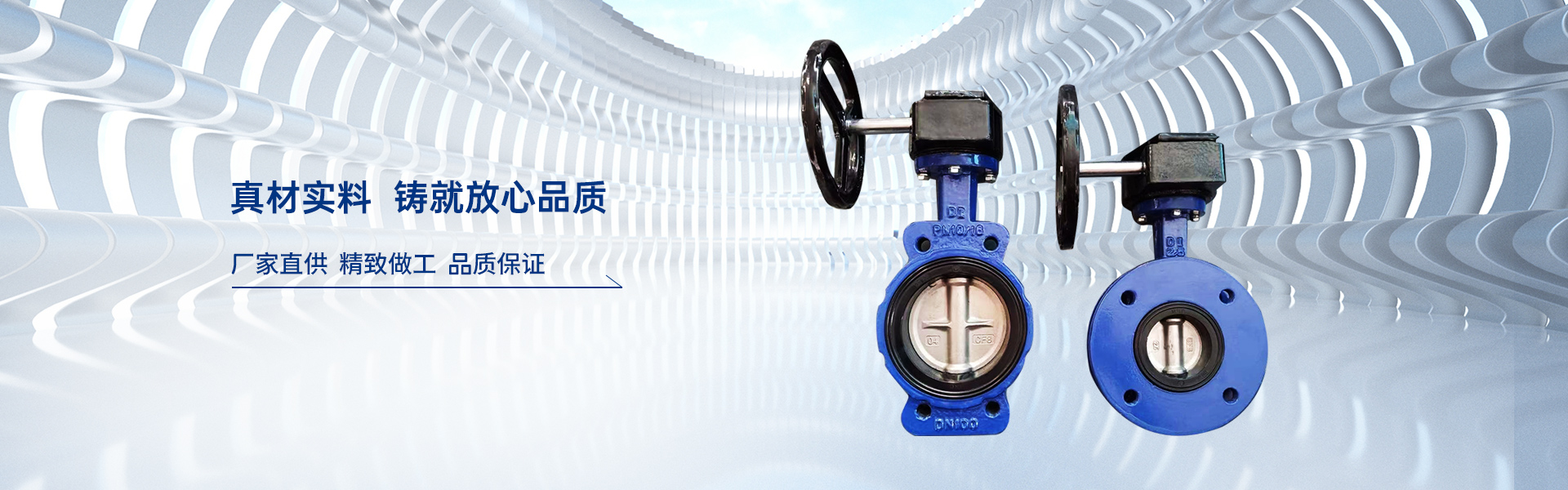
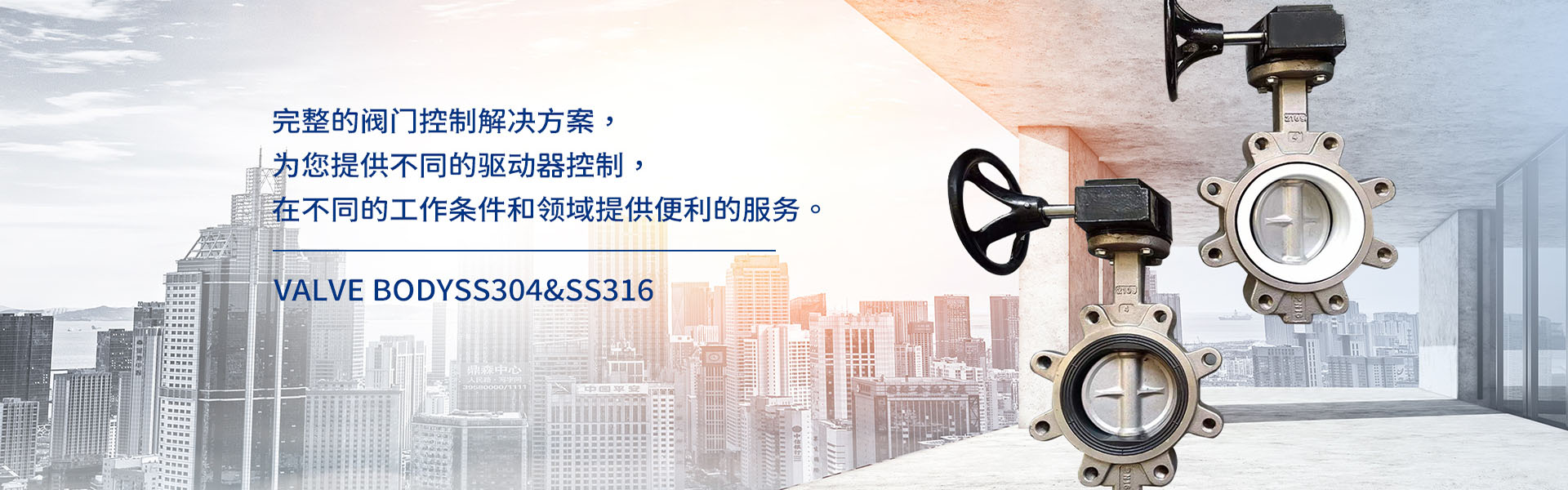

Butterfly valves are primarily used in water system pipelines, which are closely related to people's livelihoods, making butterfly valves a common type of valve. However, their applications are extremely diverse, not only in water systems but also across various industries as the types of butterfly valves increase. They can adapt to a wide range of working conditions and environments. This article will introduce you to the types of butterfly valves.
Butterfly valves are widely used due to their variety, offering different connection types, driving methods, and materials, which diversify their classifications.
In terms of connection types, butterfly valves come in clamping, flanged, clamping, and welding designs. The clamping-type butterfly valve has a short structure and compact size, commonly used in water passageways but not suitable for large diameters; the flanged butterfly valve has a wide application range, with diameters ranging from DN50 to as large as DN30,000; the band clamp butterfly valve is often seen in fire protection systems; and the welding butterfly valve can withstand high temperatures and pressures.
From the perspective of driving methods, butterfly valves include manual, pneumatic, and electric types. Manual butterfly valves offer moderate costs and are a popular choice among many users; pneumatic and electric butterfly valves are automatic control valves that do not require manual operation. They can be powered by air or electricity to drive the valve, and are commonly used in situations where manual operation is not feasible, with higher costs relative to manual valves.
In terms of materials, common butterfly valve materials include cast iron, cast steel, stainless steel, and aluminum alloy. Cast iron butterfly valves are commonly used in pipelines under normal temperature and pressure, and are a very conventional material configuration for butterfly valves; Cast steel butterfly valves are more expensive than cast iron ones, and are usually equipped with PTFE valve seats for use in chemical pipelines; Stainless steel butterfly valves are more costly and are widely used in environmental protection and food industries; Aluminum alloy butterfly valves are used in air conditioning systems.
The above materials are valve bodies. Depending on the valve seat material, butterfly valves also include rubber seat, PTFE seat, and metal hard sealing seat. Rubber-sealed butterfly valves are used for water and oil pipelines; PTFE-sealed butterfly valves are suitable for corrosive medium pipelines; metal hard sealing butterfly valves are employed for high-temperature and high-pressure pipelines.
